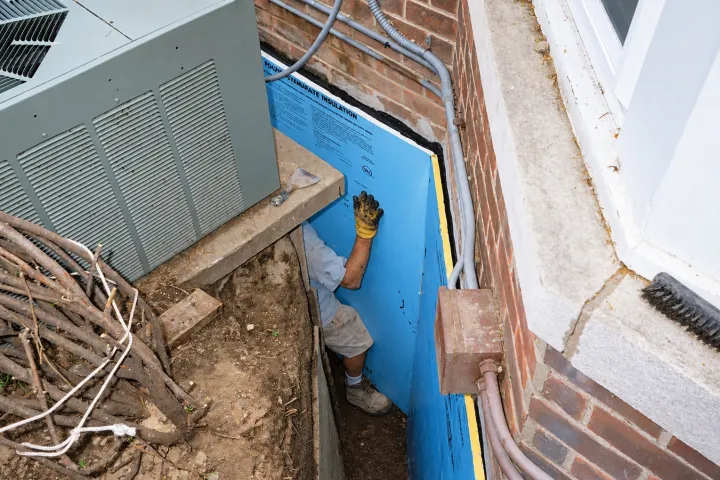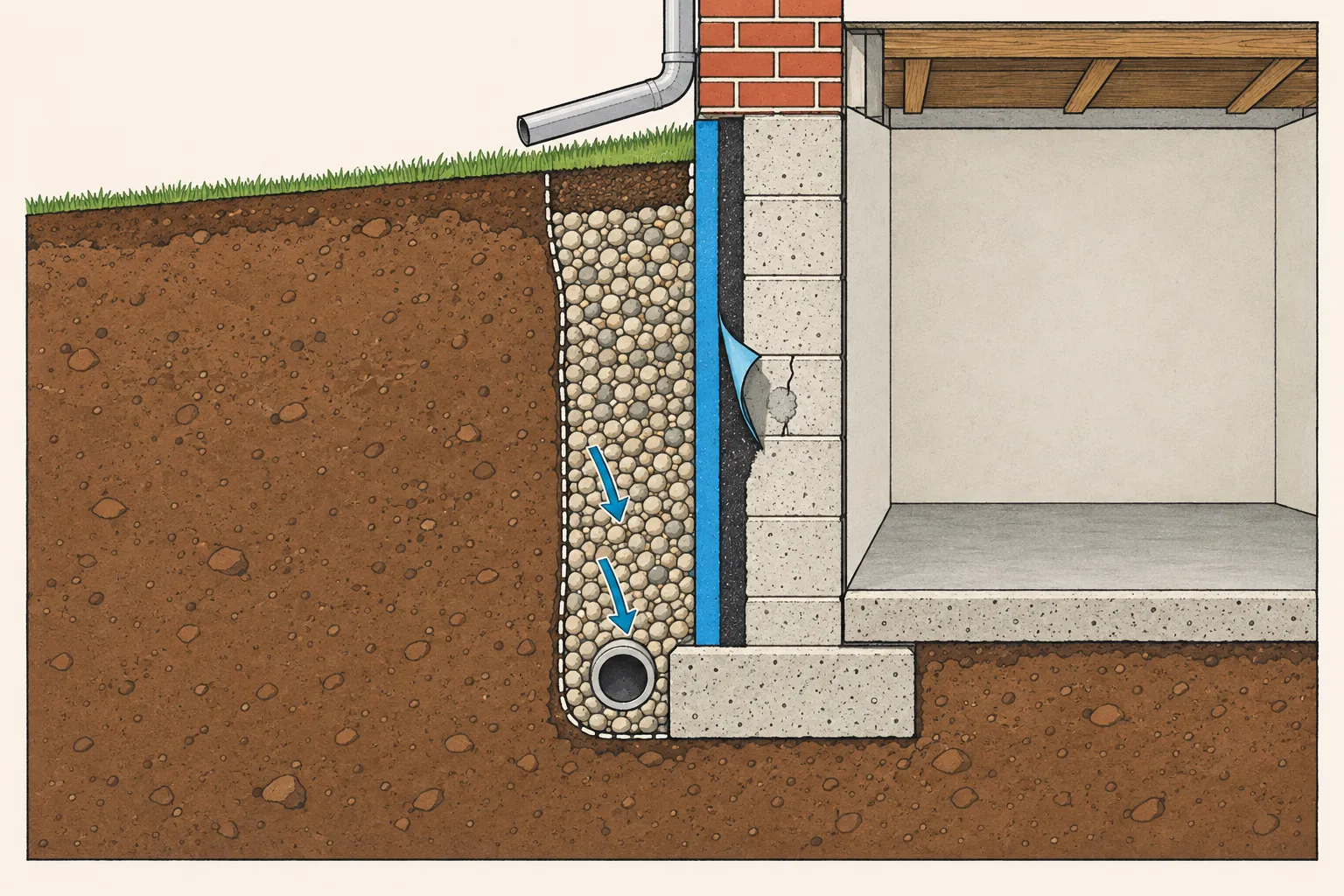
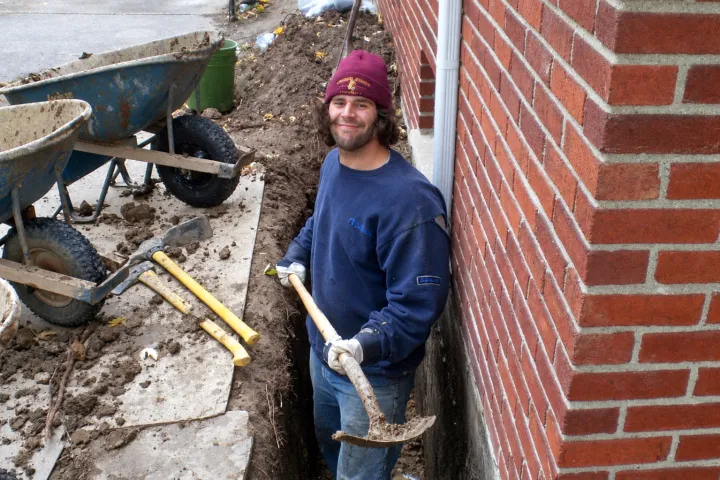
Clark Basement Waterproofing, a family-owned exterior waterproofing contractor founded in 1956, serves St. Clair Shores. About half of the city’s housing was built in the 1950s, mostly on poorly drained clay. Clark digs by hand to the footing, seals cracks, applies tar and a membrane, lays new drain tile in pea stone and restores the yard, usually in 3 to 7 days, with a written 10 to 15 year warranty. The length depends on the job.
Why do so many St. Clair Shores basements leak?
Two reasons: the age of the houses and the ground under them. St. Clair Shores grew sharply between 1950 and 1960 and was mostly built out by 1970, according to the city’s 2024 Master Plan. In the 2020–2024 American Community Survey, 50.3% of the city’s 28,321 housing units date from the 1950s alone, and the median year built is 1957. Macomb County’s median is 1975.
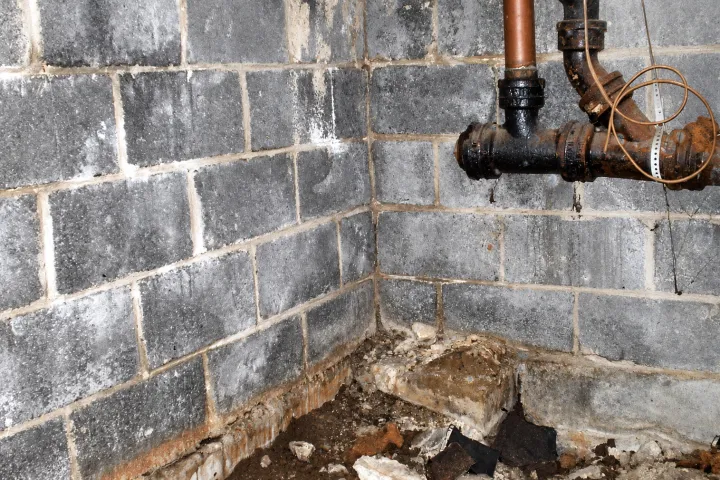
So most basement walls here have been sitting in wet soil for more than 65 years. Houses move and crack as they age, and the drains along an old footing can fill with silt. Water finds those weak spots, especially after a long soaking rain or the spring thaw.
Build years by ZIP code
The pattern holds in every part of the city. No ZIP code has a median year built later than 1958:
| ZIP | Units | Median year built | Built before 1960 |
|---|---|---|---|
| 48080 (south end) | 11,341 | 1958 | 60.3% |
| 48081 (central) | 9,573 | 1957 | 67.8% |
| 48082 (north end) | 7,400 | 1958 | 60.7% |
The ground makes those old walls work harder. In USDA’s soil survey for Macomb County, more than 80% of the city’s land is mapped as poorly or very poorly drained, and soils rated “Very limited” for dwellings with basements cover more than 90% of it, mostly because of ponding and a shallow saturated zone. The most common soil in the city, Toledo silty clay loam, formed in clay that settled on the bottom of glacial lakes. In its natural state, USDA describes its water table as ranging from a foot above the surface to a foot below it between November and May in normal years.
Clay holds water and gives it up slowly. When the backfill beside a basement stays saturated, the water in it presses on the wall, about 62.4 pounds per square foot for every foot of water depth, and pushes through cracks and joints. Our guide to hydrostatic pressure and spring leaks explains the physics.
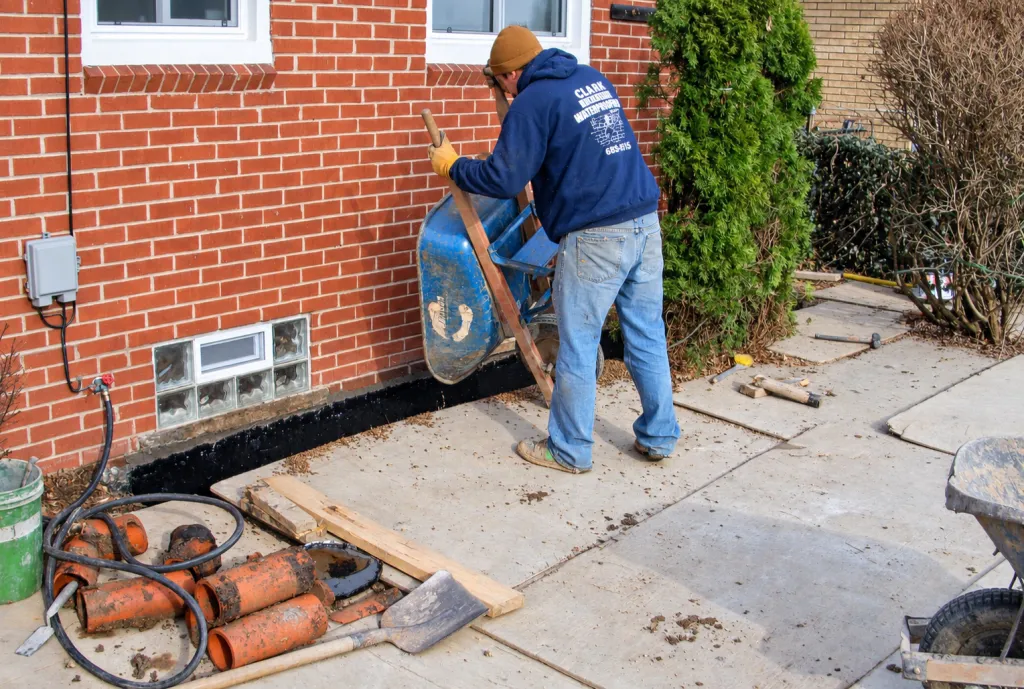
Sewer backup or seepage: what flooded your St. Clair Shores basement?
Look at where the water came in. Water that rises out of a floor drain is a sewer backup. Water that runs down a wall, weeps from a crack or spreads from where the wall meets the floor is seepage from the soil outside. Exterior waterproofing addresses seepage at its source, outside the wall. It does not stop a sewer backup. That is plumbing work, such as a backwater valve, which needs a city plumbing permit here, so talk to a licensed plumber. Our sewer backup vs. seepage guide walks through the signs.
The difference matters here because of how the city’s sewers are laid out. Most streets have separate storm and sanitary sewers, but three districts, mostly on the south end, are still combined, carrying storm water and sewage in the same pipe. The 8½ Mile and Nine Mile districts both lie between 8 Mile, I-94, Stephens and the lake. The Martin district runs through the center of the city along Frazho to Bon Heur. Each drains to a county retention treatment basin:
| District | Acres | Drains to |
|---|---|---|
| 8½ Mile | 941 | Chapaton basin |
| Nine Mile | 364 | Chapaton basin |
| Martin | 173 | Martin basin |
For most of the city, a separated street does not take your house out of the combined system downstream. Macomb County says the 8½ Mile Relief Drain carries combined storm and sanitary flow from all of Eastpointe and 80% of St. Clair Shores. When a cloudburst outruns that system, basements can back up. The Master Plan records it happening in July and August 2016, when nearly 3 inches of rain fell in one hour and then in three hours, and the flow exceeded the combined system, causing hundreds of basement backups.
After the Aug. 11, 2014 storm, FEMA logged 761 valid assistance registrations from the city’s three ZIP codes, and only 30 of those households had flood insurance (OpenFEMA data, pulled Sept. 27, 2026). On July 28, 2025, the National Weather Service recorded 4.00 inches of rain in two hours at St. Clair Shores. Neither number says how the water got in, so after a storm like that, find the source before you pay anyone to fix it. If you’re sorting out a claim, see what homeowners insurance usually covers.
What should lake and canal homeowners in St. Clair Shores watch for?
Surface water first. The NOAA gauge in St. Clair Shores recorded its highest monthly lake level, 577.55 feet (IGLD85), in July 2019, in records going back to 1968. The Master Plan says standing water sat on lakefront and lake-adjacent streets for months during the 2019 and 2020 high-water years, and that FEMA’s floodplain covers the entire shoreline and many properties west of it. The city’s FEMA flood maps page points you to the county GIS and FEMA’s Map Service Center to check your own lot.
The city has 14 miles of canals, according to its Master Plan. If your house backs onto one of them or onto the lake, keep the grade falling away from the house, carry downspouts well out and cover your window wells. The city’s own property maintenance guide recommends window well covers and sealing and waterproofing foundation cracks. Exterior waterproofing then handles the water that still reaches the wall through the soil.
What rules apply before anyone digs at a St. Clair Shores house?
Several city ordinances touch this work, and permit rules differ from one city to the next. We pull the permits the job needs ourselves. These are the local rules that come up most:
- No footing drains or downspouts into the sewer. City Code §42-23(g) bars connecting them to a building sewer that leads, directly or indirectly, to a public sanitary or combined sewer. Under §42-23(l), drainage that keeps breaking this rule is a public nuisance, and the cost of changing it falls on the owner, lessee or occupant.
- Drain tile is a permitted item. The city’s fee schedule has a plumbing line for basement drains, inside or outside. The Sewer Division also warns never to have a sewer line excavated without a permit and inspection from Community Development first.
- Work hours. Excavating is allowed from 7 a.m. to 6 p.m. unless the city issues a permit for other hours (City Code §24-3(8)).
- Near the water. Digging within 500 feet of the lake or a canal (the state rule says “a lake or stream”) can require a soil erosion permit under Michigan’s Part 91 rules, and the city’s permit carries a $200 bond and a $300 inspection bond. Rule R 323.1705 exempts minor earth changes that are stabilized within 24 hours and won’t send sediment into the water, and the city may waive changes under 225 square feet if the landowner signs an affidavit that the work won’t send sediment into the water.
- Call before digging. Michigan law (MCL 460.725) requires notice to MISS DIG at least 72 hours, and no more than 14 calendar days, before excavation starts. We call MISS DIG 811 before every job.
Which Clark service fits a St. Clair Shores house?
Clark works on the outside of the foundation only, and every trench is dug by hand. Here is how each service lines up with what is common in this city:
- Exterior basement waterproofing: for 1950s walls that seep after long rains or the thaw, the crew digs to the footing, seals cracks with hydraulic cement, tars the wall and adds a membrane.
- Foundation crack repair: a crack that only leaks when the clay outside is saturated gets sealed from the soil side, where the water enters.
- Basement leak diagnosis: where a floor-drain backup and wall seepage can hit the same basement in the same storm, the free on-site visit starts by working out which one you have.
- Drain tile replacement: new tile in pea stone relieves the wet clay along the footing. Because §42-23(g) keeps footing drains out of sanitary and combined sewer leads, Mark will show you where the water will go during the estimate.
- Exterior water management: city code already requires downspouts to discharge at least 5 feet from the walls, and on some lots, fixing downspouts and grade is all a damp basement needs. The city’s stormwater utility also credits rain barrels, rain gardens, cisterns and drywells.
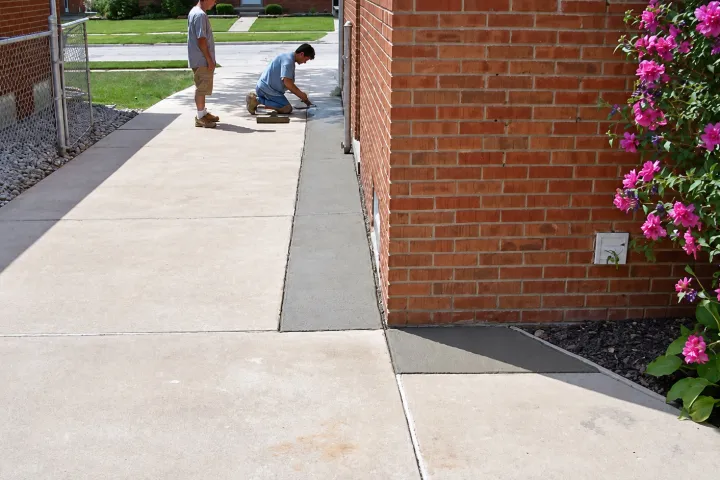
- Waterproofing under porches, decks and concrete: where a stoop, patio or driveway covers the leaking wall, Clark cuts the concrete, waterproofs the wall by hand and replaces the concrete.
Clark Basement Waterproofing is a licensed and insured, family-owned company founded in 1956. It serves St. Clair Shores, works only on the outside of the foundation and does not install interior drainage systems. If you want to see the full job before you call, here is how a Clark job runs, or request a free on-site estimate.
St. Clair Shores by the numbers
- The median St. Clair Shores home was built in 1957, compared with 1975 for Macomb County (American Community Survey 2020–2024). Source data.census.gov (opens in a new tab)
- 50.3% of the city’s 28,321 housing units were built from 1950 to 1959, and about 91% before 1980 (ACS 2020–2024). Source data.census.gov (opens in a new tab)
- Every St. Clair Shores ZIP code has a median year built of 1957 or 1958: 1958 in 48080 and 48082, 1957 in 48081 (ACS 2020–2024). Source data.census.gov (opens in a new tab)
- ZIPs 48080, 48081 and 48082 hold 11,341, 9,573 and 7,400 housing units; 60.3%, 67.8% and 60.7% were built before 1960 (ACS 2020–2024, computed). Source data.census.gov (opens in a new tab)
- More than 80% of the city’s land is mapped as poorly or very poorly drained soil in USDA’s Macomb County soil survey (SSURGO, queried Sept. 2026). Source websoilsurvey.nrcs.usda.gov (opens in a new tab)
- Soils rated “Very limited” for dwellings with basements cover more than 90% of the city, mainly for ponding and a shallow saturated zone (USDA SSURGO). Source websoilsurvey.nrcs.usda.gov (opens in a new tab)
- Toledo silty clay loam, the most common soil mapped in the city, formed in clayey glacial-lake sediments and is very poorly drained, per USDA. Source soilseries.sc.egov.usda.gov (opens in a new tab)
- USDA says Toledo soil’s water table ranges from 1 foot above to 1 foot below the surface between November and May in normal years. Source soilseries.sc.egov.usda.gov (opens in a new tab)
- About 1,478 acres, roughly 20% of the city’s land, lie in three combined sewer districts: 8½ Mile (941), Nine Mile (364) and Martin (173). Source scsmi.net (opens in a new tab)
- Macomb County says the 8½ Mile Relief Drain carries combined storm and sanitary flow from all of Eastpointe and 80% of St. Clair Shores (Oct. 2023). Source macombgov.org (opens in a new tab)
- Chapaton basin storage grew from 3 million to 17 million gallons when a $29 million canal project finished in August 2025, per Macomb County. Source macombgov.org (opens in a new tab)
- SEMSD’s 60-inch relief sewer under Jefferson, 9 Mile to Rio Vista, began Feb. 2025; its final stage is scheduled Jan. 5 to March 1, 2027 (city update, July 2026). Source scsmi.net (opens in a new tab)
- City Code §42-23(g) bars connecting footing drains or downspouts to a building sewer that leads to a public sanitary or combined sewer. Source library.municode.com (opens in a new tab)
- Downspouts must discharge at least 5 feet from building walls, onto ground that slopes away (City Code §42-23(k)). Source library.municode.com (opens in a new tab)
- City Code §8-58 puts splash blocks at least 5 feet out; houses less than 6 feet from the side lot line must run downspouts to the front or rear. Source library.municode.com (opens in a new tab)
- The city fee schedule (rev. Dec. 1, 2025) lists basement drains, inside and/or outside, at $20 each, plus a $50 non-refundable application fee. Source scsmi.net (opens in a new tab)
- Excavating is allowed only from 7 a.m. to 6 p.m. unless the city issues a permit for other hours (City Code §24-3(8)). Source library.municode.com (opens in a new tab)
- Michigan law requires notice to MISS DIG at least 72 hours, and no more than 14 calendar days, before excavation starts (MCL 460.725). Source legislature.mi.gov (opens in a new tab)
- Michigan’s Part 91 rules require a soil erosion permit for earth changes within 500 feet of a lake or stream, unless exempt under R 323.1705. Source ars.apps.lara.state.mi.us (opens in a new tab)
- R 323.1705 lets a local agency waive the permit for changes under 225 square feet if the landowner signs an affidavit that no sediment will reach the water. Source ars.apps.lara.state.mi.us (opens in a new tab)
- The city’s soil erosion and sedimentation control permit carries a $200 bond and a $300 inspection bond. Source scsmi.net (opens in a new tab)
- After the Aug. 11, 2014 storm, FEMA logged 761 valid registrations from ZIPs 48080, 48081 and 48082; only 30 had flood insurance (OpenFEMA, pulled Sept. 2026). Source fema.gov (opens in a new tab)
- In July and August 2016, nearly 3 inches of rain in 1 and 3 hours exceeded the combined sewer system, causing hundreds of basement backups (2024 Master Plan). Source scsmi.net (opens in a new tab)
- The National Weather Service recorded 4.00 inches of rain in 2 hours at St. Clair Shores on July 28, 2025. Source weather.gov (opens in a new tab)
- Michigan law requires written notice of a sewer backup claim within 45 days of discovering the damage (MCL 691.1419). Source legislature.mi.gov (opens in a new tab)
- St. Clair Shores has 14 miles of canals, and its entire eastern border is Lake St. Clair, per the city’s 2024 Master Plan. Source scsmi.net (opens in a new tab)
- The city’s 2024 Master Plan says FEMA’s floodplain covers the entire shoreline and many properties west of it. Source scsmi.net (opens in a new tab)
- Lake St. Clair’s highest monthly mean at the St. Clair Shores gauge was 577.55 ft (IGLD85), in July 2019, in records since 1968 (NOAA). Source tidesandcurrents.noaa.gov (opens in a new tab)
Neighborhoods we serve in St. Clair Shores
- Nautical Mile
- Downtown St. Clair Shores
- Eagle Pointe
- Stanley Park
- Lake View Gardens
Updated