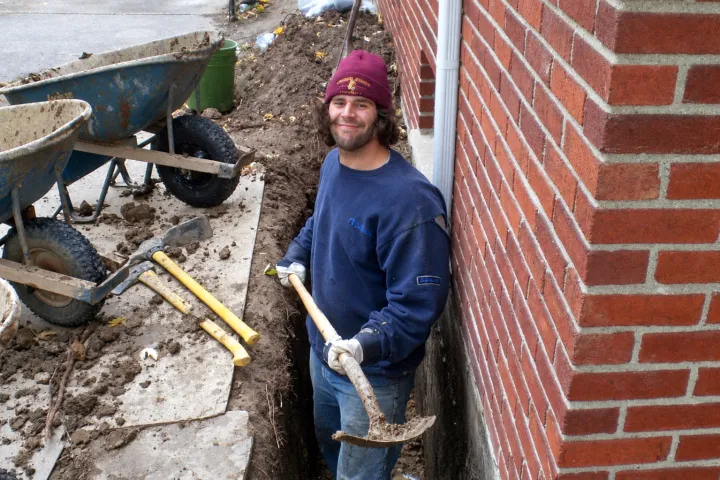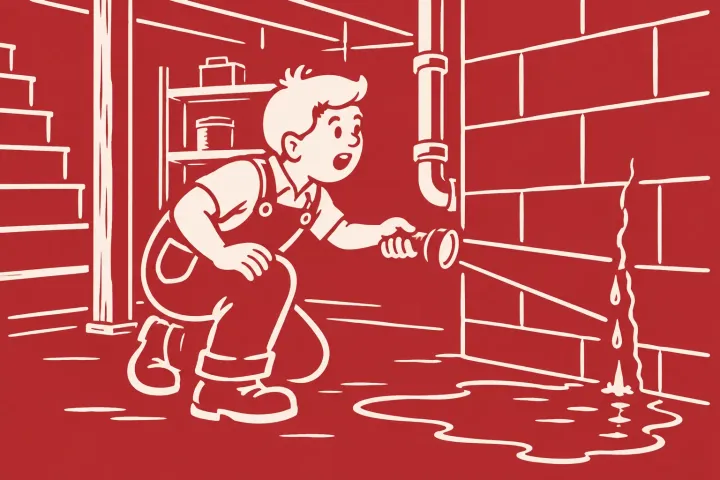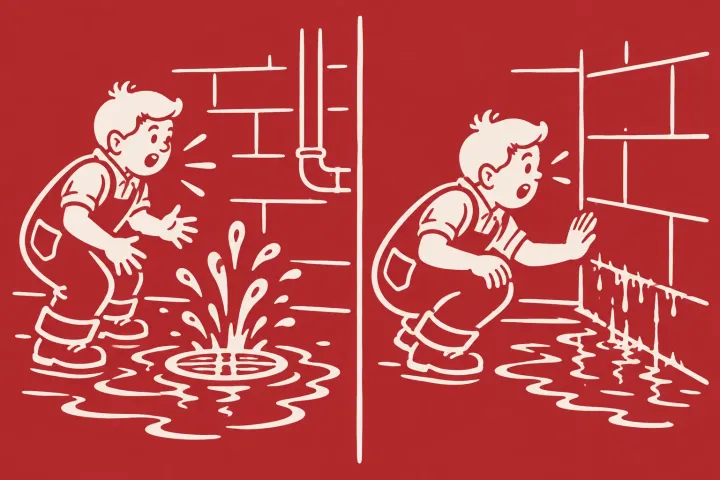
Basement leak repair in Metro Detroit starts with finding where the water gets in: a wall crack, the floor-wall joint, failed drain tile, water pooling from downspouts or grading, a sewer backup through a floor drain, or condensation. Clark Basement Waterproofing, serving St. Clair Shores, the Grosse Pointes, Warren and Macomb County, gives free on-site estimates and fixes foundation leaks from the outside, dug by hand. Floor-drain backups and condensation are not waterproofing jobs.
A wet basement can have half a dozen causes, and they don’t share a fix. Water pushing through a wall crack needs different work than a floor drain backing up, and a dehumidifier fixes neither. Before anyone quotes you a repair, find out where the water comes from.
Clark Basement Waterproofing does exterior work only: we dig by hand to the footing and stop water on the outside of the foundation wall. Water that comes up a floor drain, out of a pipe or out of humid air isn’t exterior waterproofing work, and the table below shows who handles it. For every symptom in more detail, read Why is my basement leaking?
Where does water get into a basement?
Most basement water comes in through the foundation walls, at the joint where the wall meets the floor, or up through a floor drain. Where it shows up and when it happens usually point to the cause.
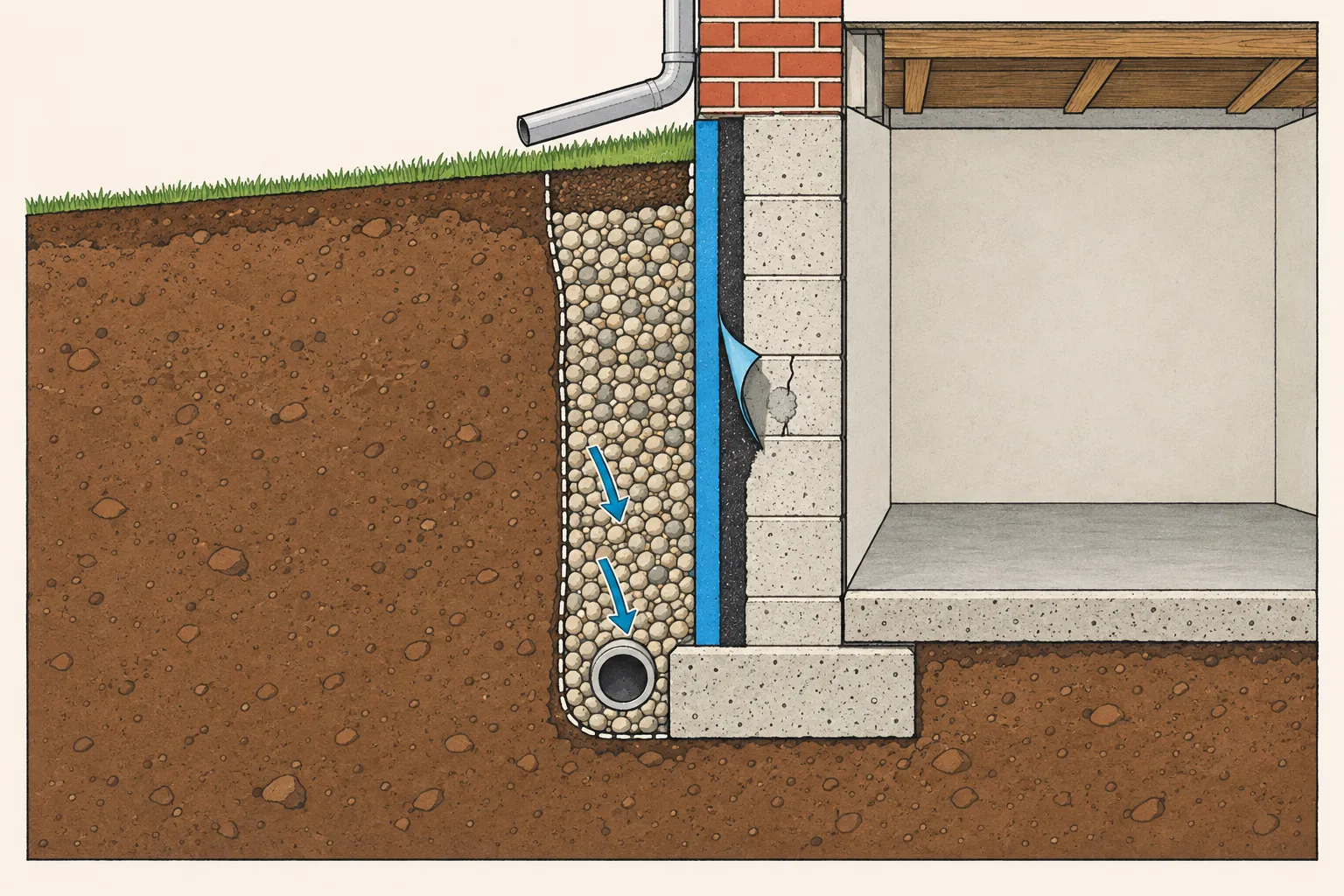
Wall leaks start with wet soil. Saturated ground against the foundation builds up water pressure that, in Building Science Corporation’s words, will “push water through any available joints, imperfections, or cracks in the foundation.” Drain tile along the footing is there to carry that water away, and Detroit’s water department lists poorly maintained drain tile among the reasons basements flood.
| What you see | Likely cause | Who fixes it |
|---|---|---|
| Water at the joint where the wall meets the floor, during or after rain | Groundwater under pressure; drain tile not carrying it away | Exterior waterproofer: new drain tile and wall sealing |
| Water running from a crack in the wall | Groundwater coming through the crack | Exterior waterproofer: crack repair from outside. A structural engineer first if the crack is horizontal or widening, or the wall bows |
| A wet spot below a downspout or where the ground slopes toward the house | Roof or surface water soaking the soil against that wall | Often fixed at the surface: downspouts and grading |
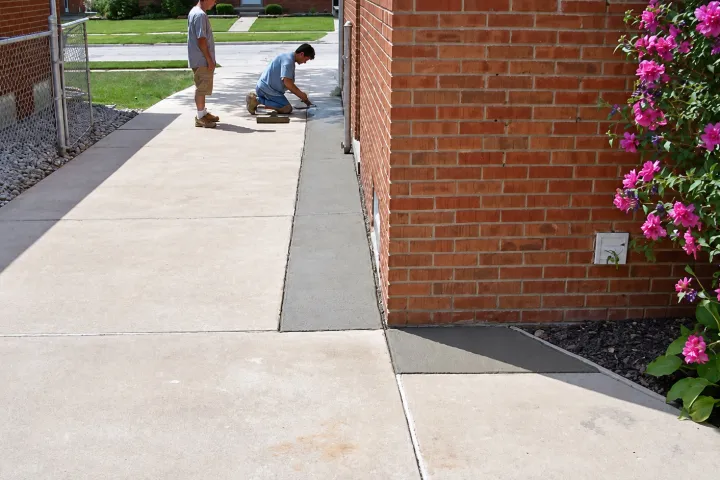
| Water under a porch, stoop, patio or driveway | Water collecting against a wall hidden by concrete | A contractor who removes and replaces the concrete (waterproofing under concrete) |
| Water coming up through a floor drain, often in a big storm | Sewer backup | A plumber and your city’s public works department (backup vs. seepage) |
| Damp or sweating walls in humid summer weather, with no link to rain | Condensation from humid indoor air | Humidity control, usually a dehumidifier. Not a waterproofing job. |
| Water near the water heater, washer or pipes, in any weather | Plumbing leak | A plumber |
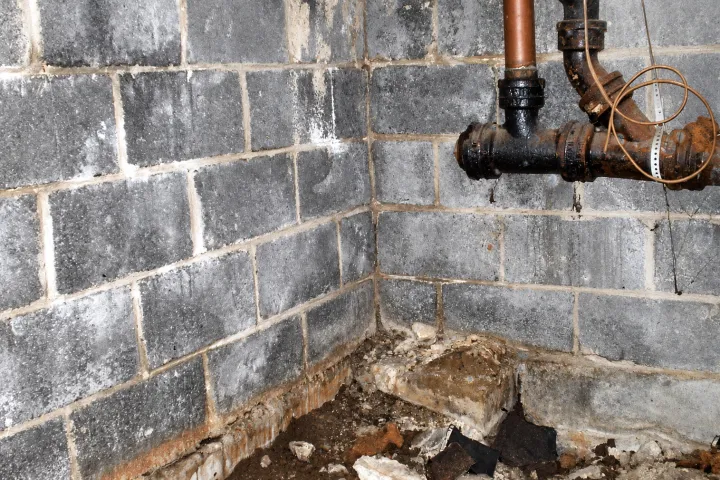
| White chalky crust, stains or tide lines on the wall | Water has moved through the masonry and dried, leaving salts behind | Whoever fixes the source, usually one of the wall causes above |

Is it seepage or a sewer backup?
If water came up through a floor drain, especially during a big storm, it was most likely a sewer backup. If it came through a wall, a crack or the floor-wall joint, it is seepage. The two need different fixes, and exterior waterproofing only fixes seepage.
Sewer backups happen when the sewer can’t carry what a storm sends it. The storms of June 25–27, 2021 dropped a widespread 3 to 5 inches of rain across Metro Detroit and 6 to 8 inches in spots, according to the National Weather Service. The Great Lakes Water Authority’s preliminary investigation found that basement flooding can result from local sewer restrictions, the capacity of the larger trunk sewers, or both. Digging around your foundation changes neither.
Protection against backups is plumbing work. Detroit’s water department recommends a backwater valve and/or a sump pump where necessary, and a plumber is the person to ask. If a public sewer backed up into your home, Michigan law requires written notice to the government agency responsible, usually your city, within 45 days after the damage was discovered (MCL 691.1419). Our guides to sewer backup vs. seepage and what insurance covers go further.
What exterior waterproofing won’t fix. Sewer backups through a floor drain, plumbing leaks and condensation from humid air. It also isn’t structural repair: a wall that bows inward or has a horizontal crack needs a structural engineer’s opinion first.
Is it condensation or a leak?
If your walls or floor get damp in warm, humid weather whether or not it has rained, you are probably seeing condensation: moisture in the air collecting on cool concrete. If the dampness follows rain or snowmelt, it is more likely water coming through the wall.
The National Park Service describes a quick test in its guide to controlling moisture in older buildings. Tape a piece of foil to the wall and check it after a day or two. Moisture behind the foil is coming from the masonry. Moisture on the room side of the foil came from the air.
Condensation is a humidity problem. The EPA recommends keeping indoor humidity below 60 percent, ideally 30 to 50 percent, and a dehumidifier is the usual fix. Moisture behind the foil is different. Water from wet soil can wick into concrete and block without a visible drip, which Building Science Corporation calls capillary flow. It comes from the soil side, which is why building scientists call for dampproofing on the outside of basement walls.
When is a downspout or regrade enough?
When water comes in at one spot, below a downspout or where the ground slopes toward the house, fixing the surface water may be all you need. Building Science Corporation’s report for the U.S. Department of Energy says “many problem cases can be solved with grading and surface drainage.”
The Michigan Residential Code calls for the ground to fall at least 6 inches within the first 10 feet from the foundation (2015 MRC R401.3). Cities add their own downspout rules. St. Clair Shores requires downspouts to discharge at least 5 feet from the building walls, onto ground that slopes away (Code §42-23(k)). Grosse Pointe Woods requires all downspouts to be disconnected from the sewer (ordinance 86-241). Our exterior water management page covers this work.
Surface fixes may not be enough when water keeps coming through cracks or the floor-wall joint after the downspouts and grading are fixed, or when moisture shows up behind the foil in dry weather. That points to water in the soil around the foundation.
What should you note before the estimate?
A few notes and photos make the visit faster and the answer clearer. The estimate is free, written and done at your home.
- When it leaks. During the rain, hours later, only at spring thaw, or all the time.
- Where it shows up. A crack, the floor-wall joint, one corner, under a window or at the floor drain.
- What it looks like. Clear water, muddy water, or water with a sewage smell. Sewage or water rising from the floor drain points to a backup.
- How high it got. A photo while it is happening, or the stain or tide line it left.
- What is outside that wall. Downspouts, a porch or driveway, a garden bed, or ground that slopes in.
- What has changed. A new patio, a loose downspout extension, new landscaping or peeling sealer paint.
What happens after the diagnosis?
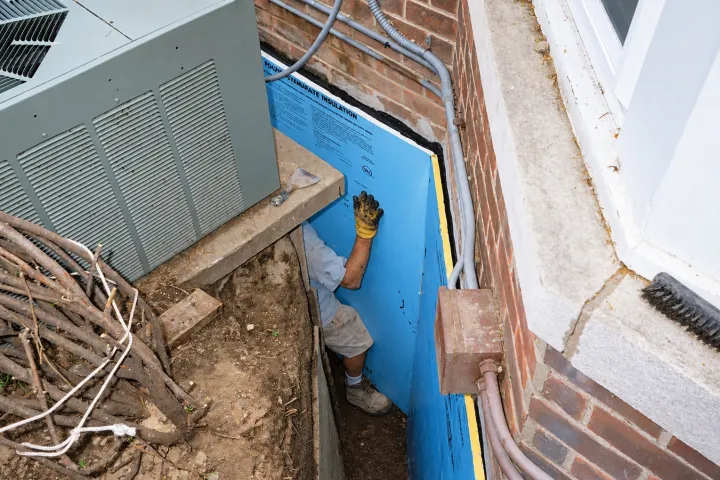
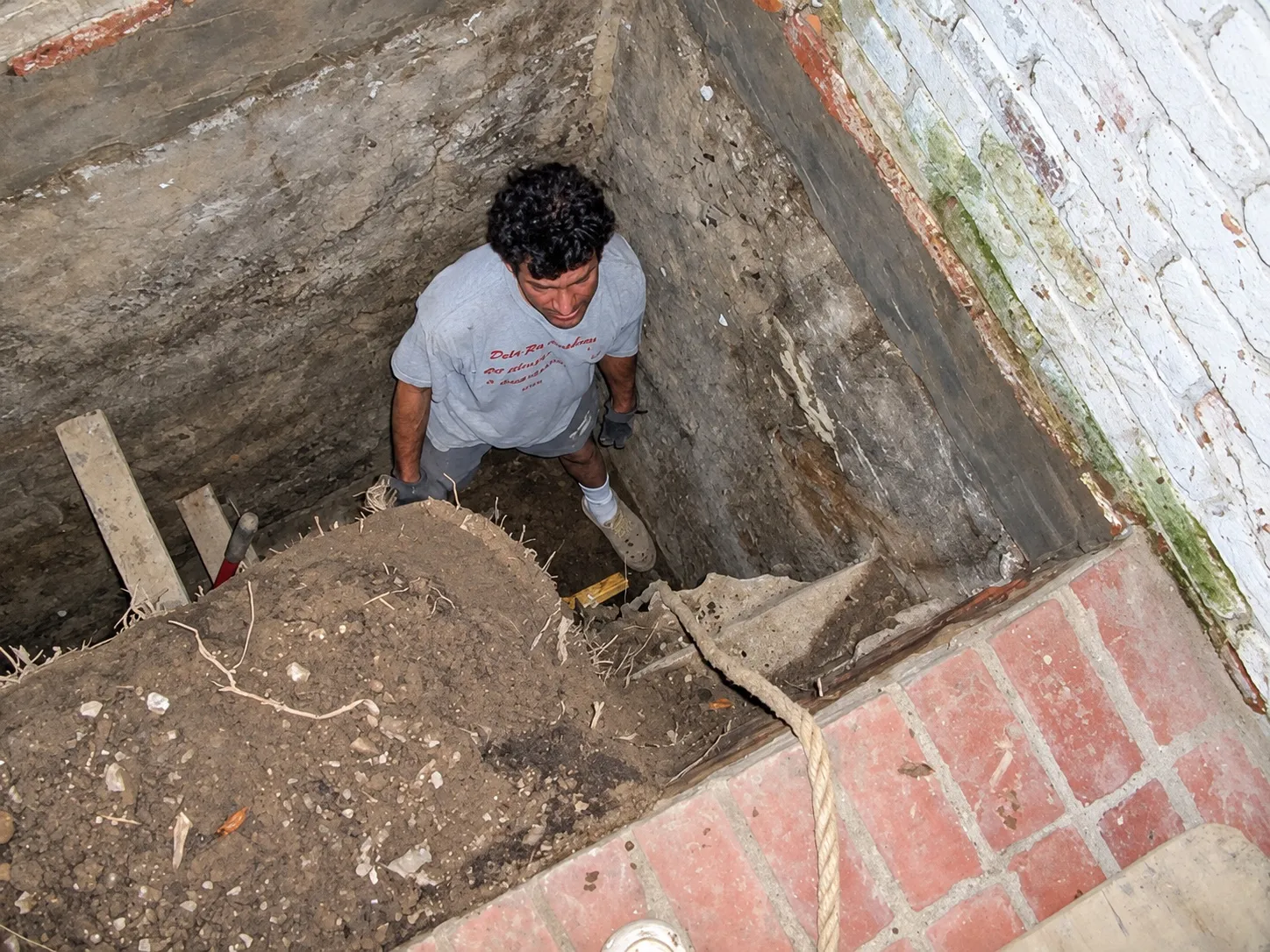
If the water is getting through the foundation from outside, Clark fixes it from outside, by hand, in the same order every time: hand dig to the footing, seal cracks with hydraulic cement, apply a tar coating and a waterproof membrane, lay new drain tile and pea stone, then backfill and restore the yard. Most jobs take 3 to 7 days and come with a written 10–15 year warranty; the length depends on the job. See our process and the warranty.
Depending on what the estimate finds, see exterior basement waterproofing, foundation crack repair, drain tile replacement or waterproofing under porches and concrete. Permit rules differ by city, and we pull the permits the job needs ourselves.
Why from the outside? Building Science Corporation puts it plainly: “Exterior perimeter drainage is always preferable to interior perimeter drainage.” The same report says exterior drainage isn’t always practical in a renovation, and that an interior drain to a sump pump can be used then. Clark does not install interior drainage systems. Our comparison of interior vs. exterior waterproofing covers when each one makes sense.
Updated