
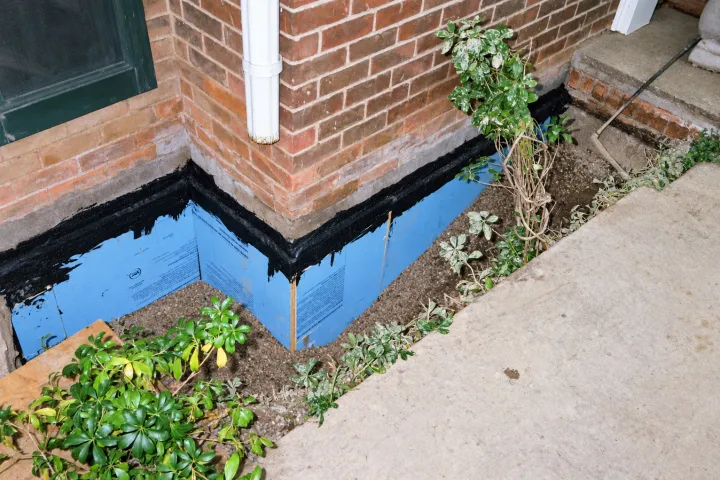
Clark Basement Waterproofing, which serves St. Clair Shores, the Grosse Pointes, Warren and Macomb County, gives a written 10–15 year warranty on its exterior waterproofing. The length depends on the job. This page explains what affects how long exterior waterproofing lasts, what shortens its life, and what to ask about any contractor’s warranty before you sign.
What warranty does Clark give?
A written warranty of 10 to 15 years on our exterior waterproofing. The length depends on the job.
Because the length depends on the job, ask Mark about the warranty at your free estimate.
How the work itself is done, from hand digging to the footing through backfill, is on our process page and our exterior basement waterproofing page.
How long does exterior waterproofing last?
There’s no single reliable number. We haven’t found a primary source that gives one, and how long a waterproofed wall stays dry depends as much on what happens at the surface as on the work at the footing. The one number Clark puts in writing is the warranty: 10 to 15 years, depending on the job.
What building science research does say is that surface water matters. In a report prepared for the U.S. Department of Energy, Building Science Corporation wrote that “many problem cases can be solved with grading and surface drainage.” Its later advice makes the same point from the other side: keep water away from the foundation wall and you don’t have to rely on the waterproofing alone.
What shortens its life?
- Gutters and downspouts that dump water next to the wall. Every rain soaks the soil right where the wall was sealed. Your city may also have rules about where downspouts can drain; see exterior water management.
- Ground that slopes toward the house. Michigan’s residential code (R401.3) calls for the ground to fall at least 6 inches within the first 10 feet from the foundation. A yard that sends water back at the wall keeps the backfill wet.
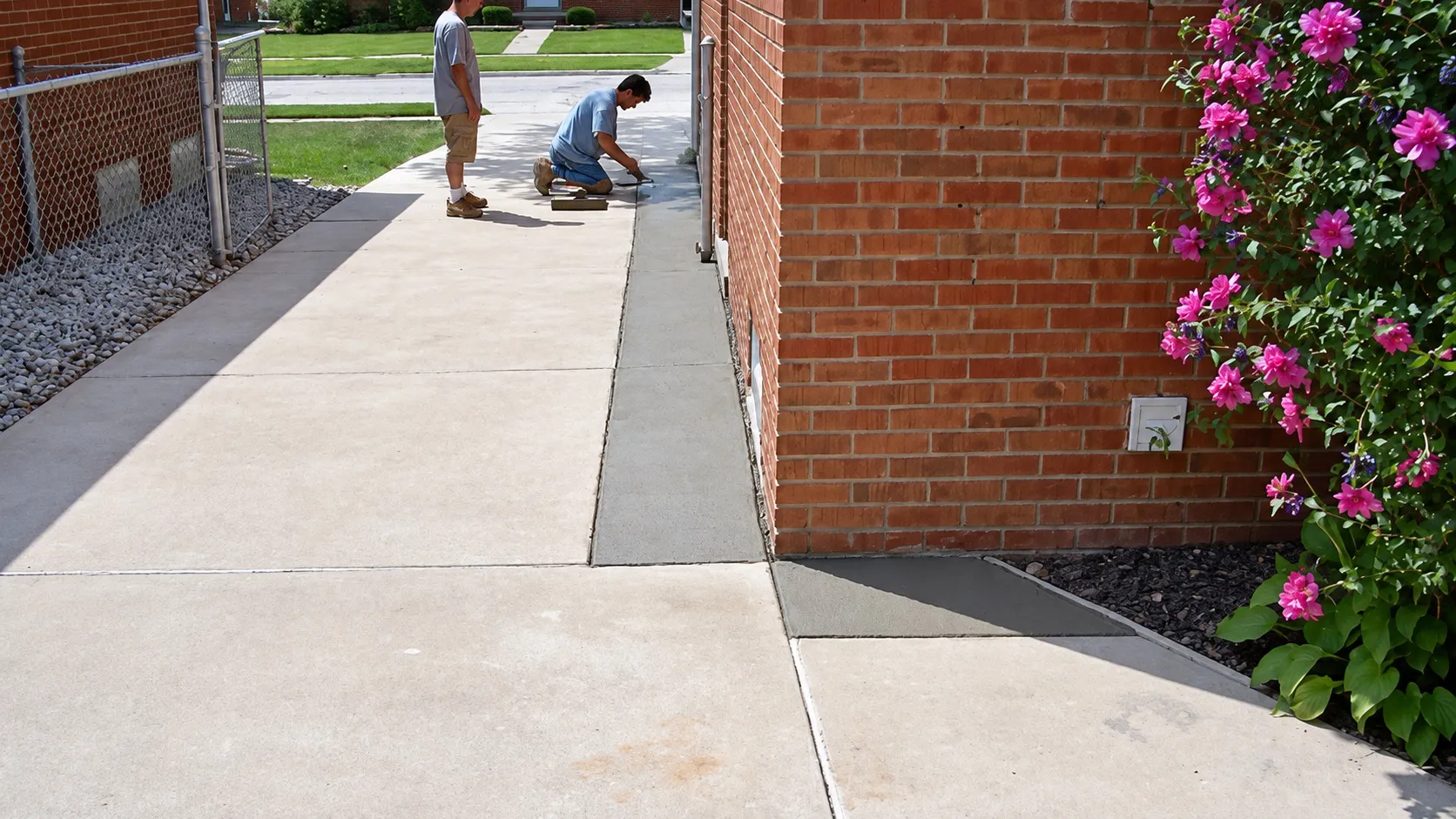
- Walks, patios and drives that tilt toward the wall. The same code section calls for hard surfaces within 10 feet of the house to slope at least 2% away from it. Concrete that has sunk back toward the house sends water straight to the foundation.
- New cracks. Building Science Corporation notes that houses move and crack as they age, and it isn’t always possible to predict where every crack will appear. That’s one more reason to keep surface water away from the wall.
What helps it last?
- Keep gutters clear, and keep downspouts carrying roof water away from the house.
- Keep the soil next to the house sloping away, and fill low spots where water puddles against the wall.
- Watch for walks, patios and driveways that have settled toward the house.
- After a heavy rain or the spring thaw, take a look at the basement walls. If you see water, note where it is and get in touch.
When is water in the basement not a waterproofing problem?
When it comes from somewhere else. Water that comes up through a floor drain, especially in a big storm, is usually a sewer backup, and exterior waterproofing doesn’t fix that. It doesn’t fix plumbing leaks or condensation on cool walls in humid weather, either. If you’re not sure where the water came from, sewer backup vs. seepage and why is my basement leaking? walk through how to tell.
“Lifetime” or written warranty: what should you ask any contractor?
Ask what the warranty covers, not just how long it lasts. A long term doesn’t tell you much if it covers only some of the water, some of the walls or only the materials. Get every answer in writing before you sign.
That’s the Federal Trade Commission’s advice, too. Its 2014 guide to hiring a contractor says your contract should include the warranties on materials and workmanship, name who is honoring them, and spell out the length and any limits. Its warranty advice adds that if something isn’t listed as covered, you should assume it isn’t. And under the FTC’s guides for advertising warranties, a “lifetime” warranty should make clear whose or what life it means.
| Ask | Why it matters |
|---|---|
| Is it in writing, and who stands behind it? | The FTC says a contract should name who honors each warranty: the contractor, a distributor or a manufacturer. |
| What does “lifetime” mean here? | It could mean the life of the house or only as long as you own it. The FTC’s advertising guides say a lifetime warranty should make clear which. |
| Which water does it cover? | Water through the wall, water where the wall meets the floor and water up through a floor drain have different causes. Ask which ones are covered. |
| Which walls does it cover? | If only part of the foundation is worked on, ask whether the warranty covers only that part. |
| Labor and materials, or materials only? | The FTC suggests asking whether you would have to pay for labor on a warranty repair. On a foundation, a repair can mean digging again. |
| Does it transfer if you sell? | Ask whether a new owner keeps the coverage, and whether there’s a fee or a form to file. |
| Is paid maintenance or an inspection required? | The FTC suggests asking whether a warranty covers only problems that happen after you maintain the product as directed. Ask what upkeep is required, how often and what it costs. |
| What voids it? | Ask whether later changes near the wall, like new concrete, a deck or regrading, affect coverage. |
| How do you make a claim? | Ask whom you contact, how you reach them and what happens next. |
Put the same questions to us at your free estimate. If you’re still weighing a different kind of fix, interior vs. exterior waterproofing compares where each one stops the water.
What should you keep after the job?
Keep the paperwork together with your house documents:
- The written warranty and the signed estimate or contract.
- Copies of the permits. We pull the permits the job needs ourselves.
- Photos of the open trench and the finished work, if you took any.
- Notes on any water you see afterward: the date, where it showed up and what the weather was.
If you sell, Michigan’s seller disclosure form asks whether there has been evidence of water in the basement. Having the paperwork on hand makes that question easier to answer.

