What happens before we dig?
Four things happen before a shovel goes in the ground: a free estimate, the permits, a call to MISS DIG 811 and a plan for the yard. Here’s what each one involves and what you can do to help.
A free, written estimate at your house
It starts with a phone call. We call back within a day to set up a free estimate on site. Mark Rhoades looks at where the water is showing up, explains what’s causing it and what he’d do about it, and you get the estimate in writing. It’s also the time to ask where your new drain tile will drain: Mark will show you where the water will go.
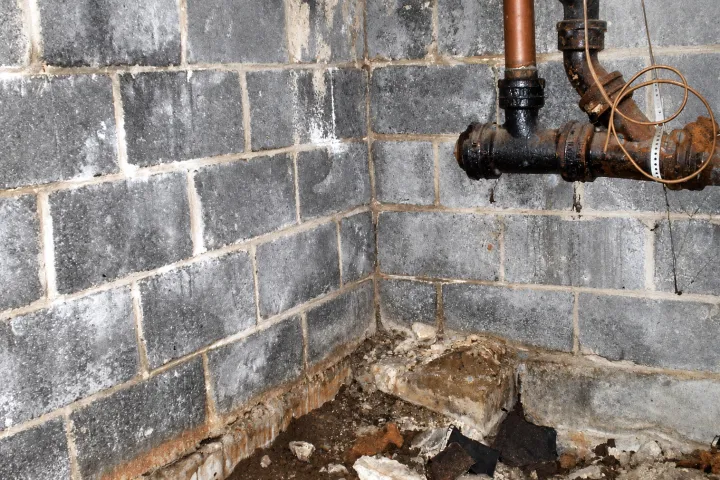
Not every wet basement needs digging. Water that came up through a floor drain during a storm is usually a sewer backup, which exterior waterproofing doesn’t fix (see sewer backup vs. seepage). And sometimes a downspout or the grade next to the house is sending water at the wall, which is a surface-water fix, not a dig.
Permits
We pull the permits the job needs ourselves. Michigan’s residential code requires a permit to repair or alter a building and doesn’t list foundation waterproofing as exempt work, but permit rules differ from city to city. Clark is licensed and insured.
MISS DIG 811
We call MISS DIG 811 before every job. Michigan law requires notice at least 3 business days, and no more than 14 calendar days, before digging starts, so the utilities can mark their buried lines. Within 48 inches of either side of a mark, the lines have to be exposed by soft excavation, such as hand digging (MCL 460.723 and 460.725).
Two limits are worth knowing:
- The marks show roughly where a line runs, not how deep it is.
- Private lines aren’t marked at all. That includes sprinkler systems, invisible dog fences and lines to a detached garage, shed, pool or grill. If you have any of these near the walls being dug, tell us before the job starts.
Protecting the yard
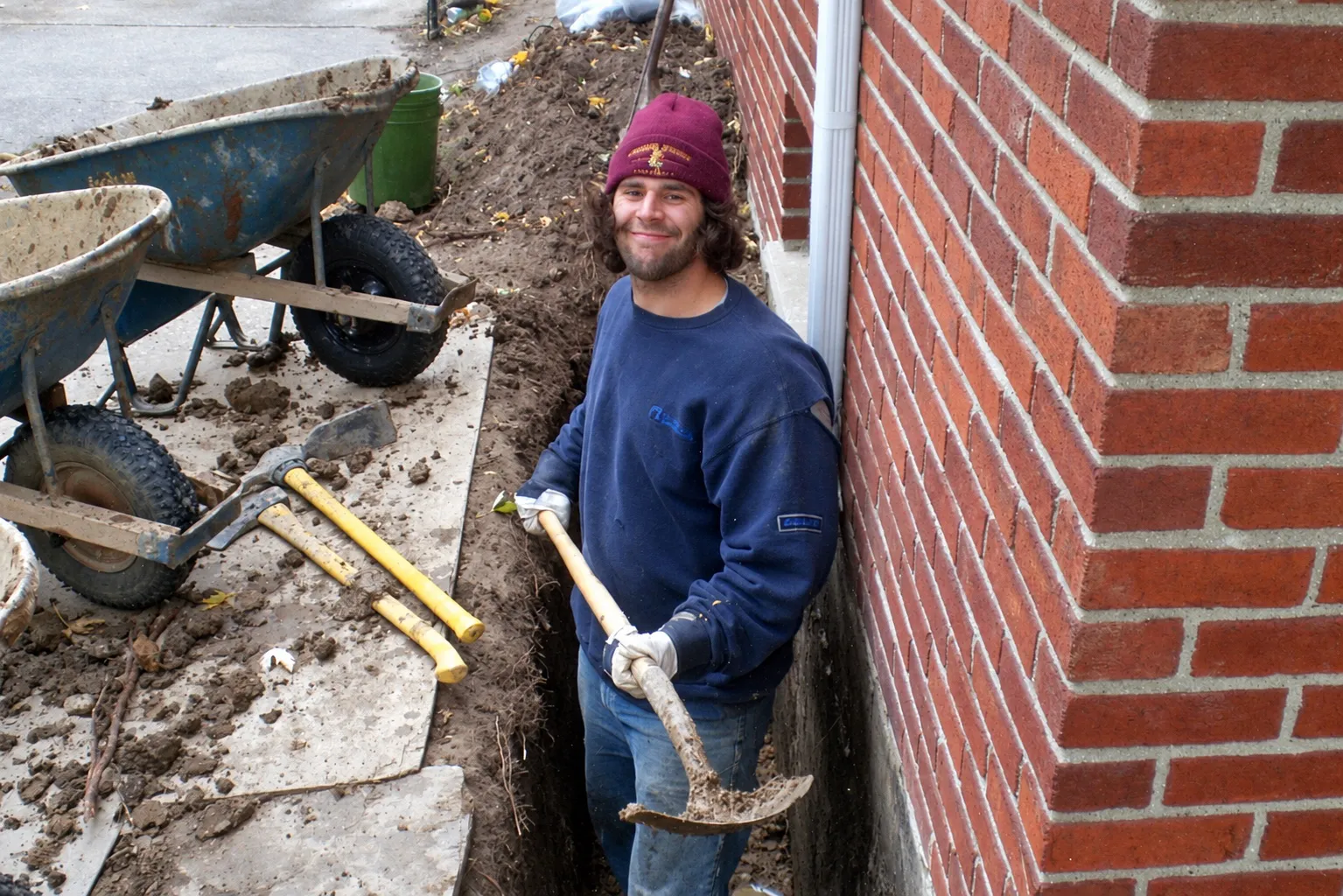
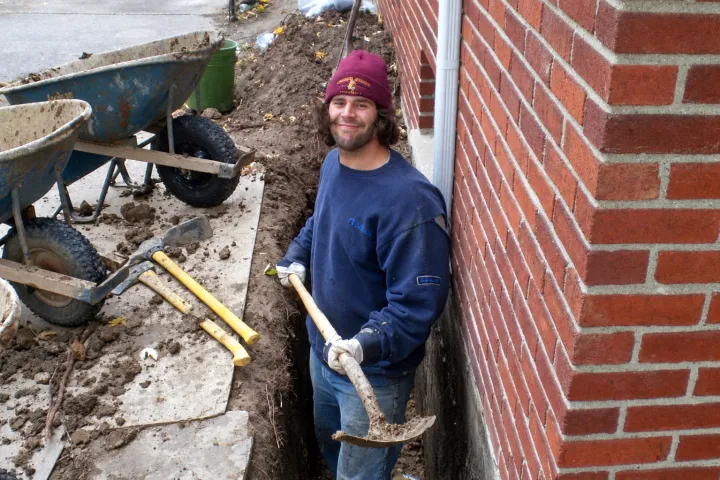
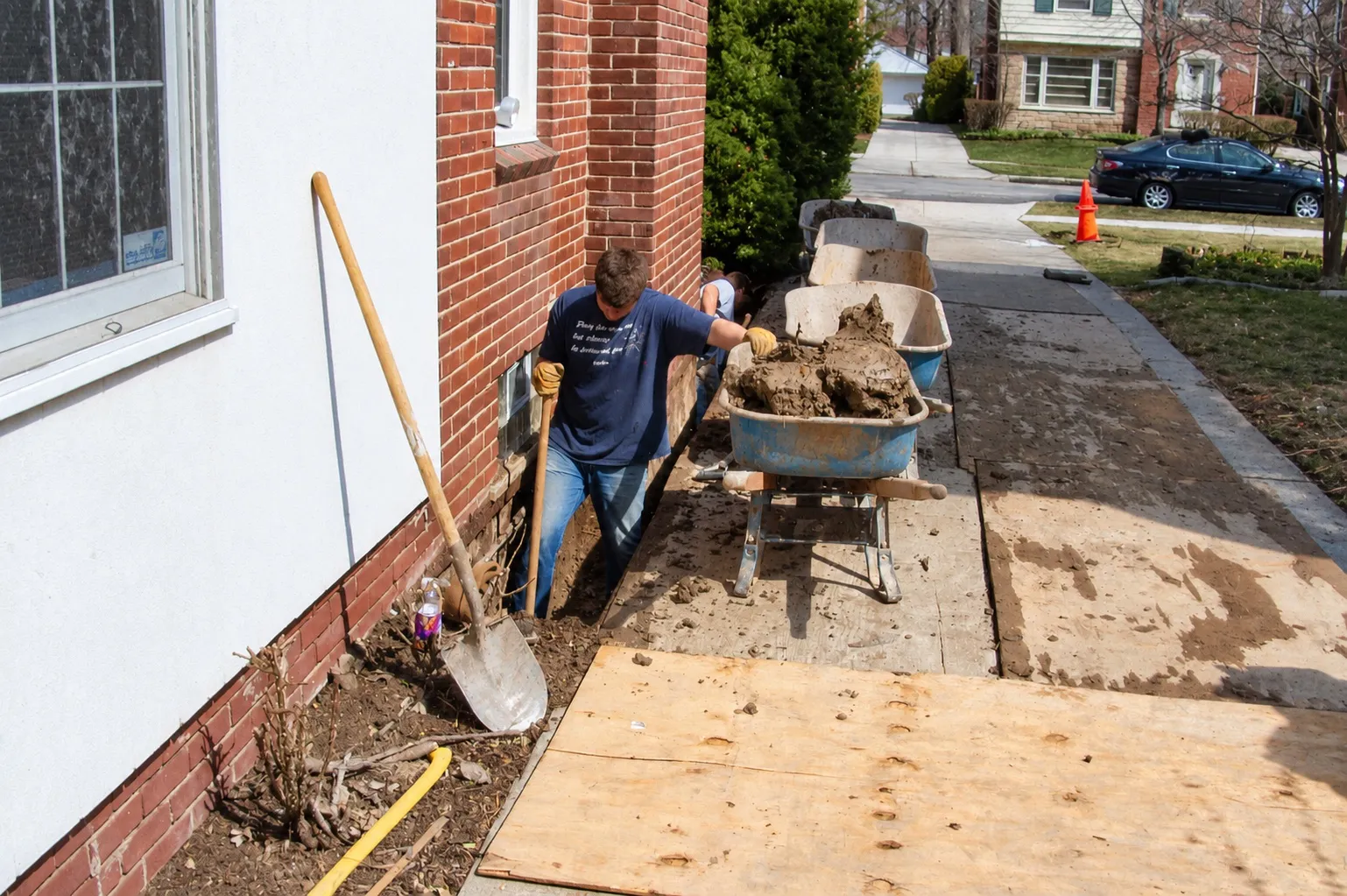
The digging stays in a trench along the wall, dug by hand, so there’s no machine crossing the lawn to reach it. On the job below, plywood covered the lawn and the walkway while the soil came out.
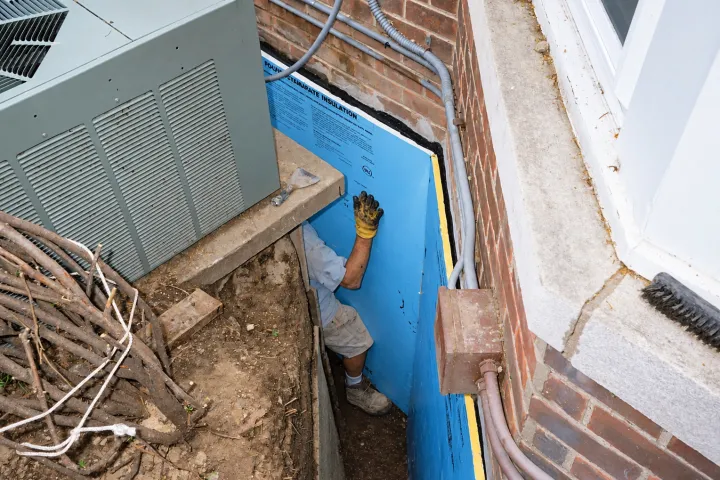
Bushes along the wall are usually worked around (more on that below). If something else sits against the wall, like steps, a deck or an air conditioner, go over it with Mark at the estimate so you know how it will be handled.
What are the seven steps of a Clark waterproofing job?
Every Clark exterior waterproofing job follows the same order, and most take 3 to 7 days. Owner Mark Rhoades runs each one, and he is on site at the key stages of every job. The digging is done by Clark’s own crew, not subcontractors.
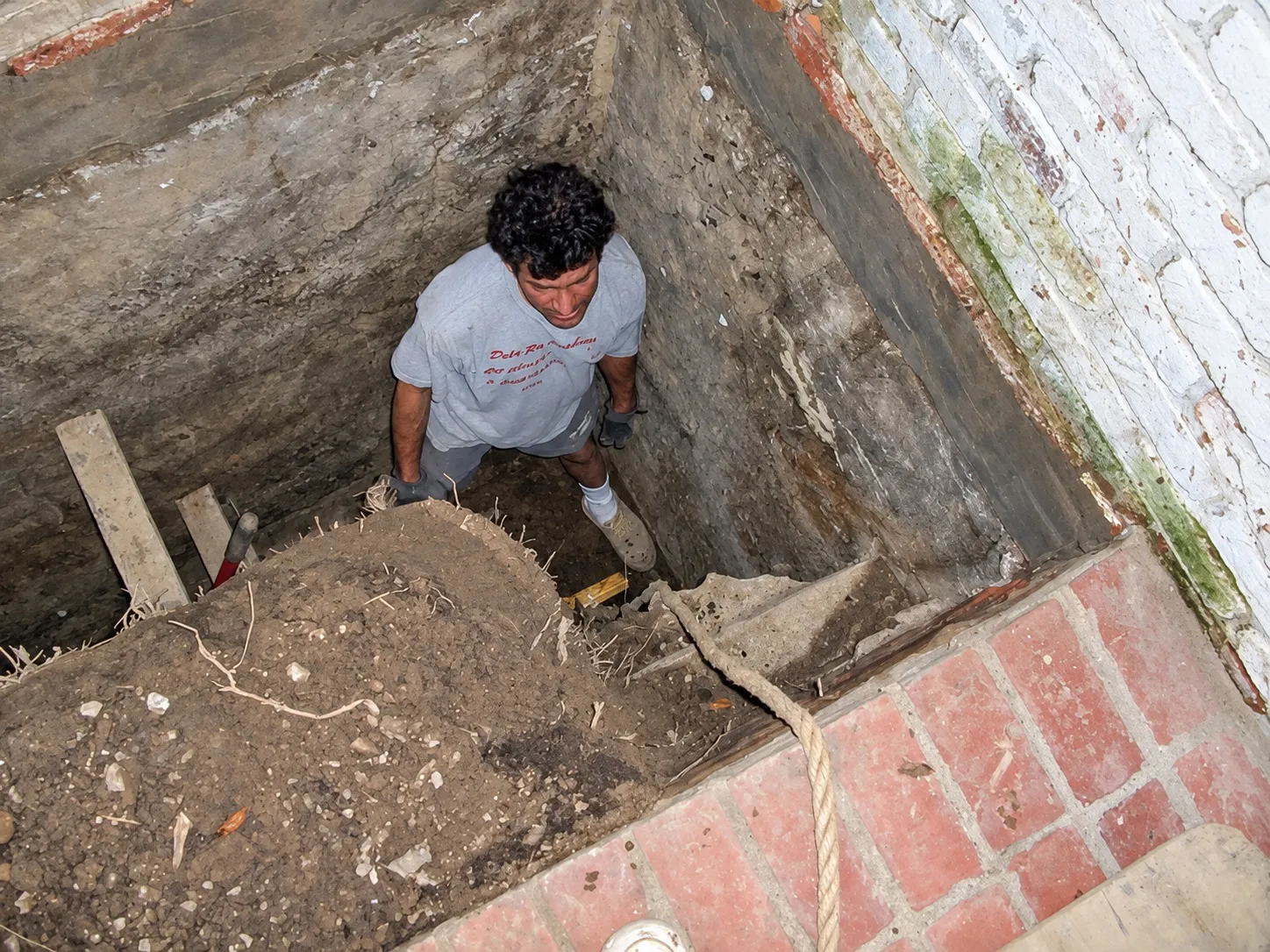
1. Hand dig down to the footing
The crew digs a trench along the wall by hand, all the way down to the footing, the concrete base the wall stands on. Why: the wall can only be sealed where it can be reached, so the whole face is exposed, top to bottom, down to the old drain tile at the footing.
2. Seal cracks with hydraulic cement
With the wall open, cracks are packed with hydraulic cement from the outside. Why: cracks are the paths water is already using, so they’re closed first, before any coating goes over them. More on foundation crack repair.

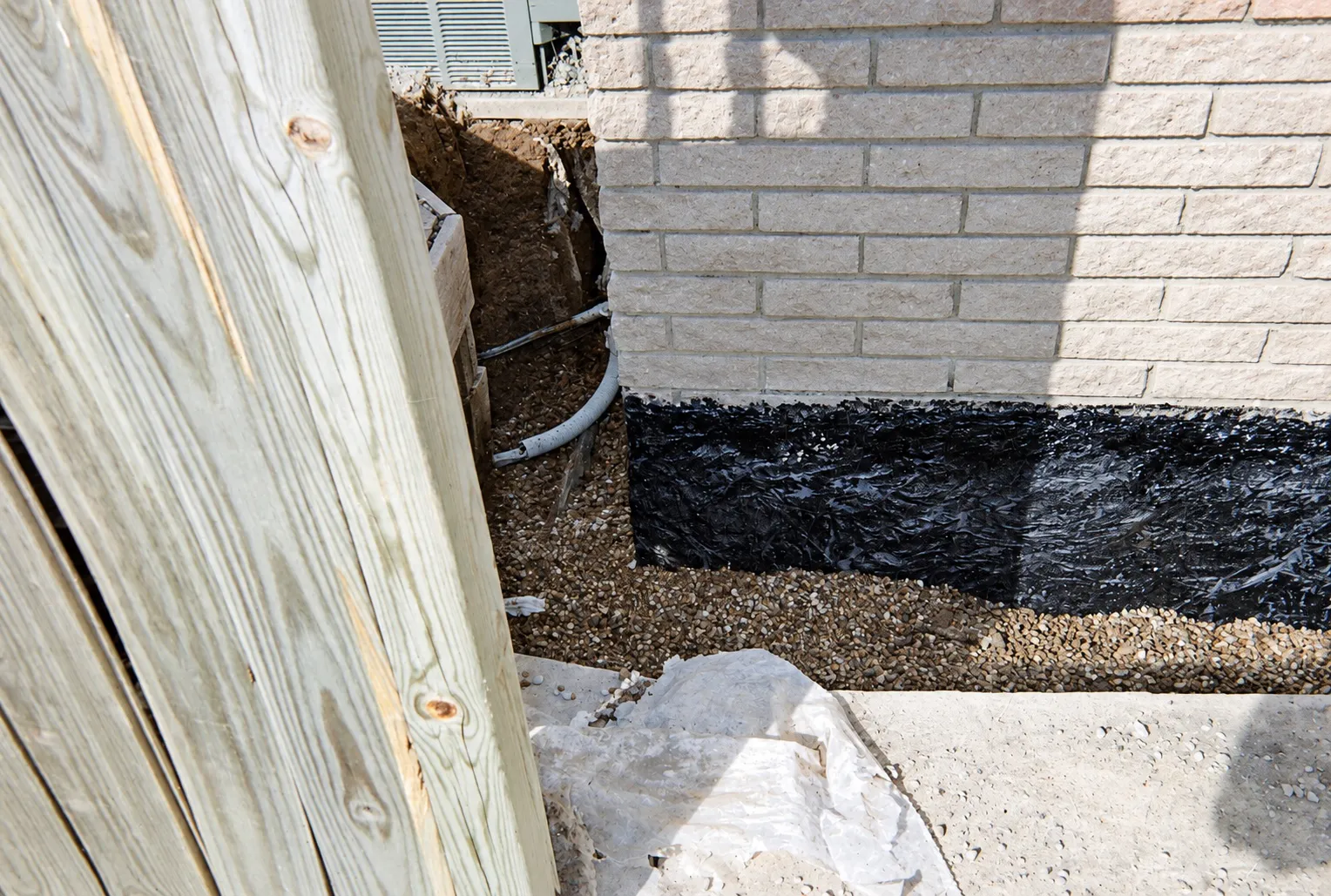
3. Coat the wall with tar
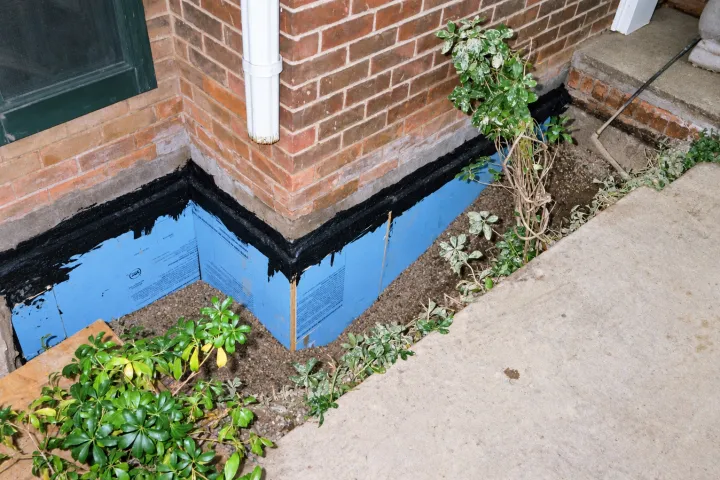
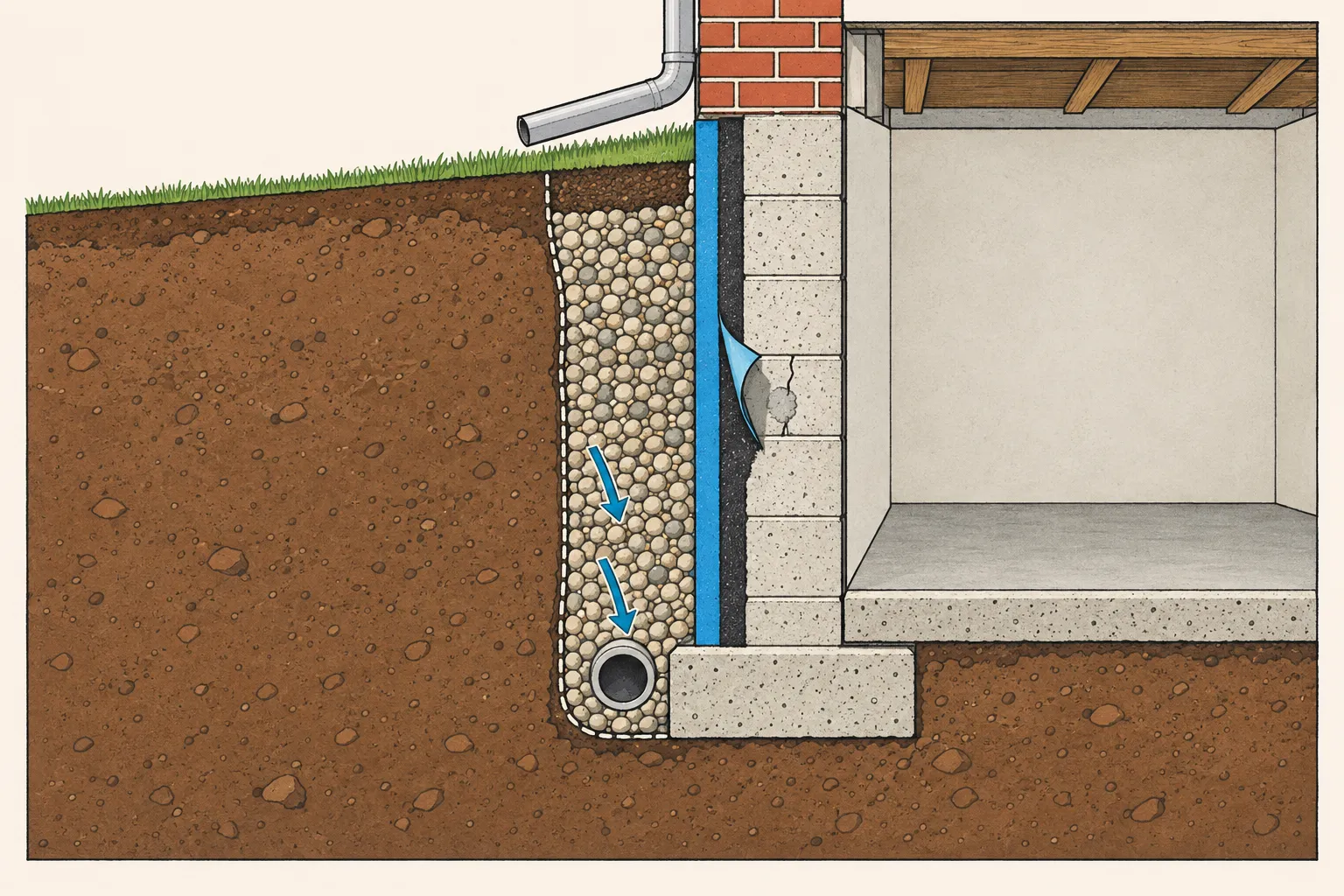
The exposed wall gets a coat of tar. Why: tar is a dampproofing layer, and it keeps moisture in the soil from soaking into the concrete or block.
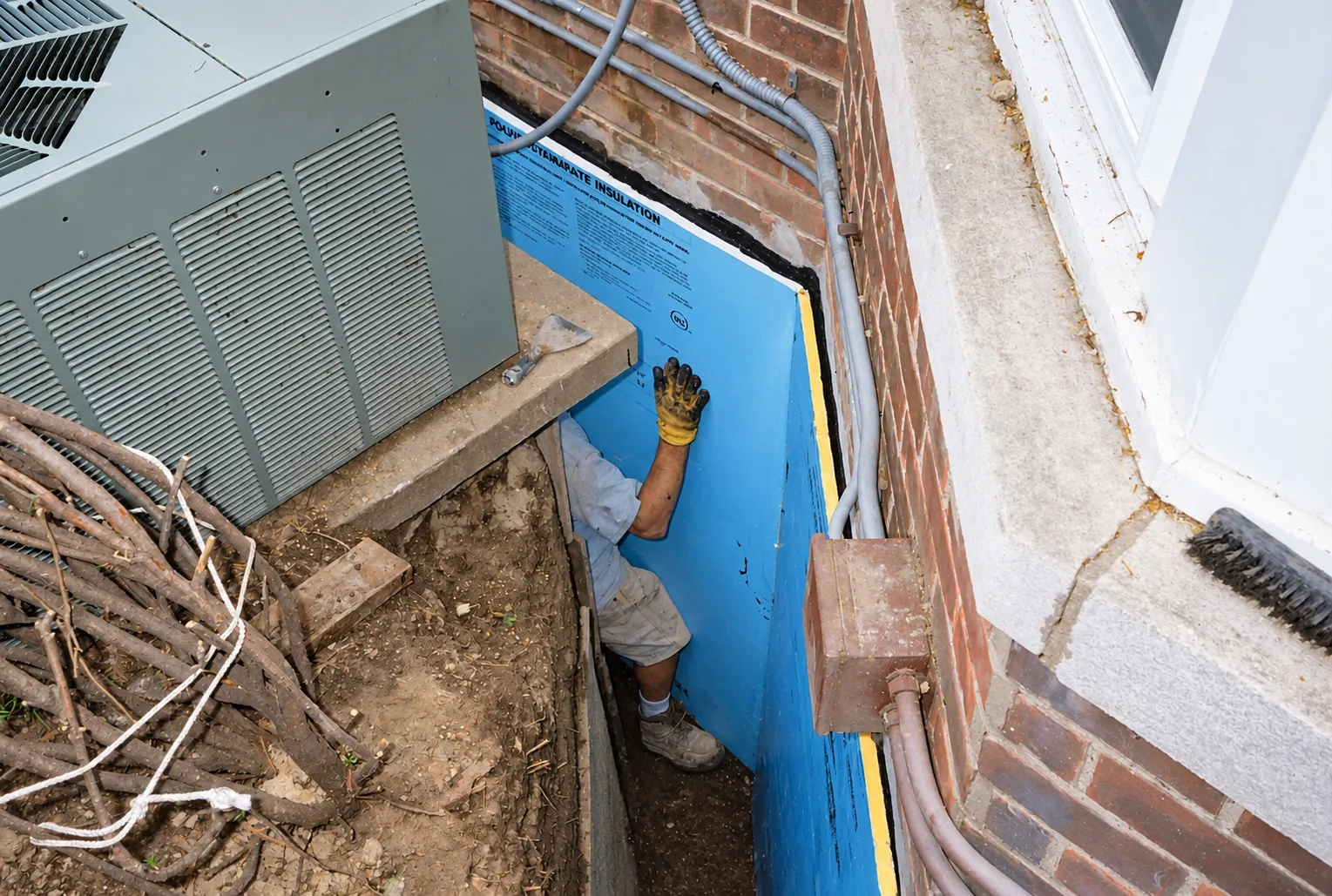
4. Cover it with a waterproof membrane
A waterproof membrane goes on over the tar. Why: it adds a waterproof layer on top of the dampproofing, so there are two barriers between the wall and the wet soil instead of one.
5. Lay new drain tile at the footing
The old drain tile comes out and new drain tile is laid along the footing. Why: drain tile gives groundwater a way out, so it can’t build up against the wall and push in. Water in saturated soil presses about 62.4 more pounds on every square foot of wall for each foot of depth, roughly 437 pounds per square foot at the bottom of a 7-foot wall in fully saturated soil.
Where the new tile drains depends on your house and your city’s rules, and Mark will show you where the water will go during the estimate. See drain tile replacement for more.

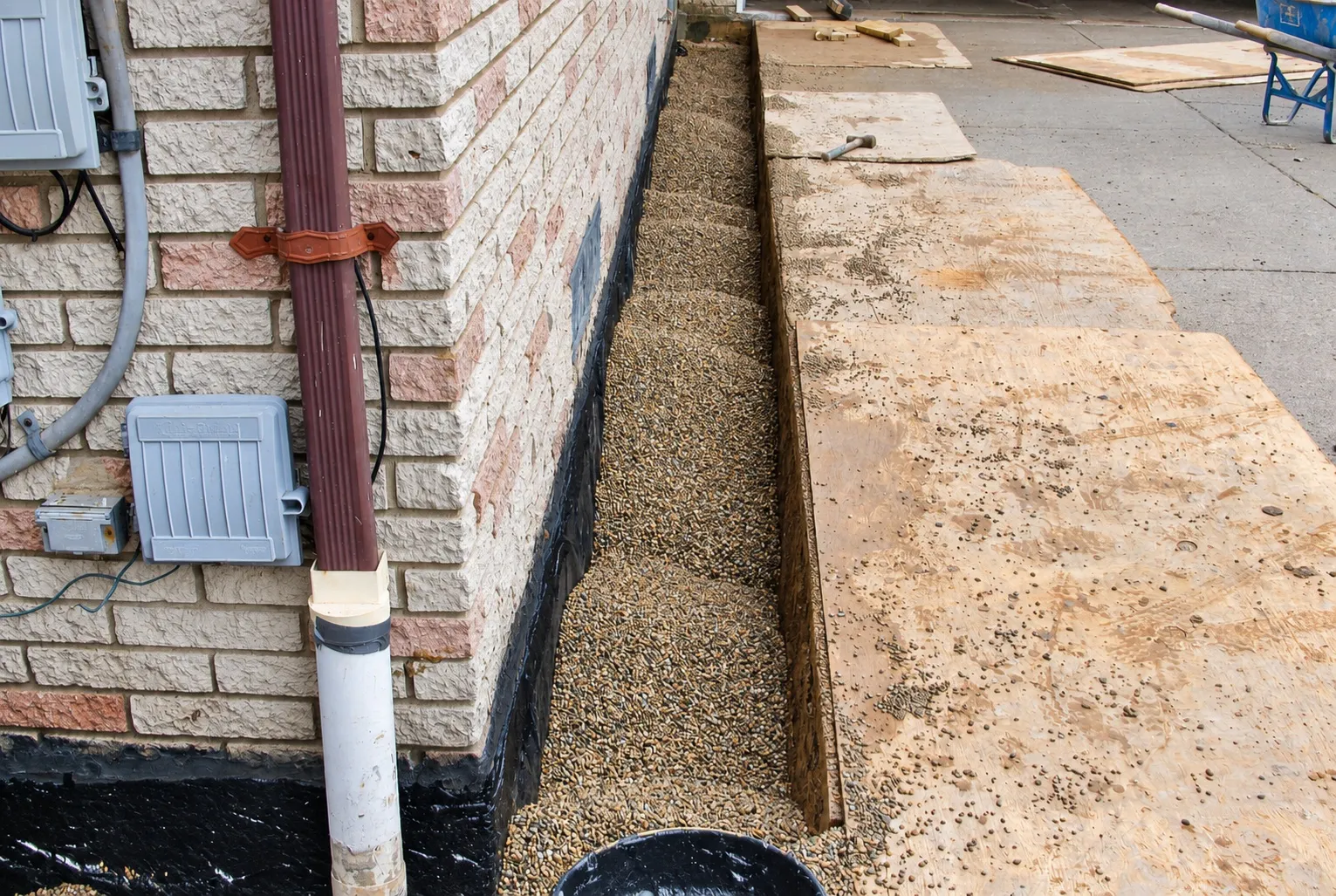
6. Surround it with pea stone
Pea stone goes in around the new tile and along the wall. Why: loose stone lets water drop down to the tile instead of sitting against the wall. Building Science Corporation lists free-draining backfill and a working footing drain among the ways to keep water from building up against a foundation.
7. Backfill and restore the yard
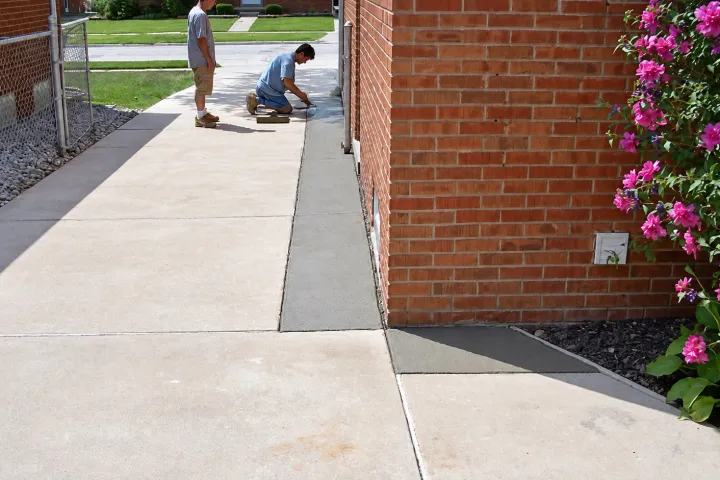
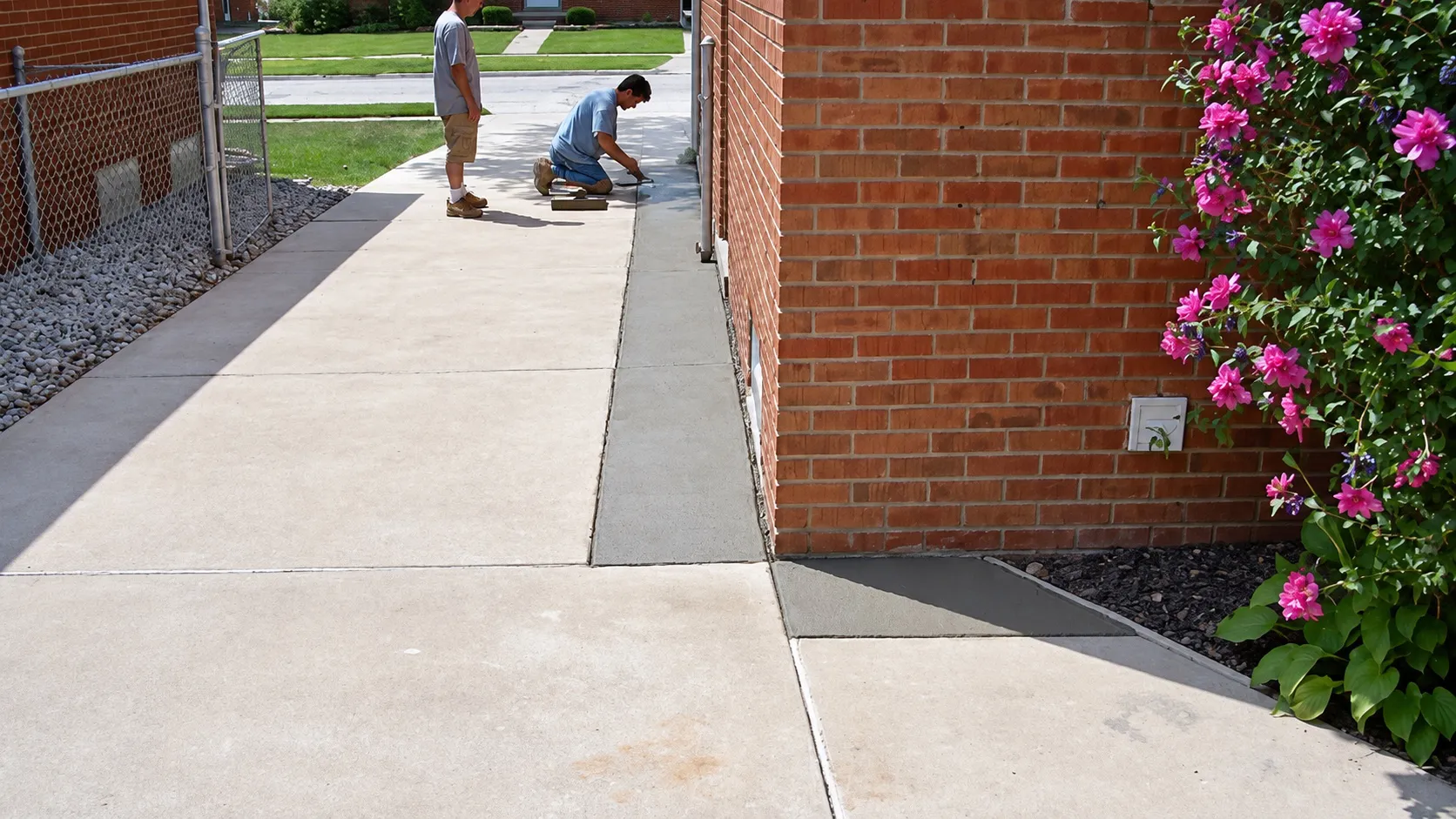
The trench is filled, topsoil goes back down, and any walk, driveway or patio that was cut to reach the wall is replaced. Clark’s own crew pours the new concrete. Why: the job isn’t done until your yard is usable again.
How do you work around porches, driveways, bushes and narrow side yards?
By hand, and by cutting out only what’s in the way. A trench dug by hand needs room for a person, not a machine, and concrete over the wall comes out and goes back.
Porches, walks and driveways
When concrete covers the wall, the concrete in the way is cut out, the wall underneath is dug and waterproofed by hand, and new concrete is poured when the work is done.

Porches, stoops, patios and decks each have their own details. Waterproofing under porches, decks and concrete covers them.
Bushes and landscaping
Bushes along the wall usually stay, and the crew works around them. On one job, the bushes along the front were tied up out of the way while the crew dug. Because the digging is done by hand, nothing has to drive over the lawn or the beds to get to the wall.
Narrow side yards
Some side yards are too narrow for a backhoe to get in, let alone dig. Hand digging needs room for the crew to work in the trench, and that’s all.
What happens after the job is finished?
You get a written 10–15 year warranty; the length depends on the job. Our warranty page has the details. After that, a few things help the waterproofing do its job:
- Keep surface water moving away from the house. Point downspouts away from the walls and keep the ground sloping away. Michigan’s residential code calls for the grade to fall at least 6 inches within the first 10 feet of the house. Building Science Corporation notes that many basement water problems can be solved with grading and surface drainage, and that keeping water away from the wall means you don’t rely on the waterproofing alone.
- Look at the walls after the first few heavy rains. If you see water, note where it is and call us.
- Know what it doesn’t fix. Water that comes up through a floor drain during a storm is usually a sewer backup, and a licensed plumber is the right call for a backwater valve. Plumbing leaks and condensation on cool basement walls aren’t fixed by exterior waterproofing either.
Why does Clark dig by hand?
Because hand digging reaches walls a machine can’t, and it leaves less behind. The work stays in a trench along the house, with no machine path across the yard. Near buried utility lines, it’s also the kind of digging Michigan law calls for: soft excavation, such as hand digging, to expose marked lines within 48 inches of the marks.
It takes more labor than a backhoe, and Clark digs every job by hand anyway. Hand-dug vs. machine excavation compares the two honestly, including when a machine makes sense. For the whole service, see exterior basement waterproofing, or request a free estimate.