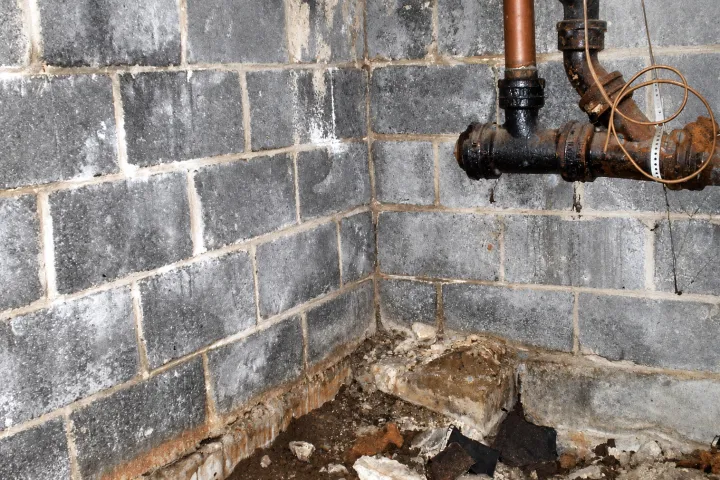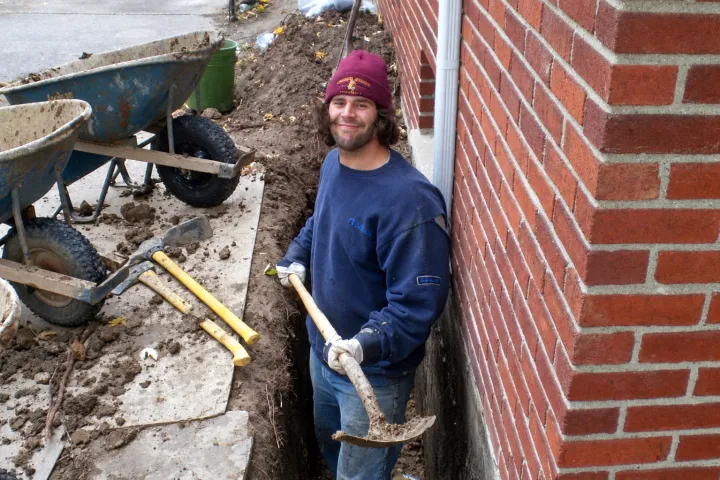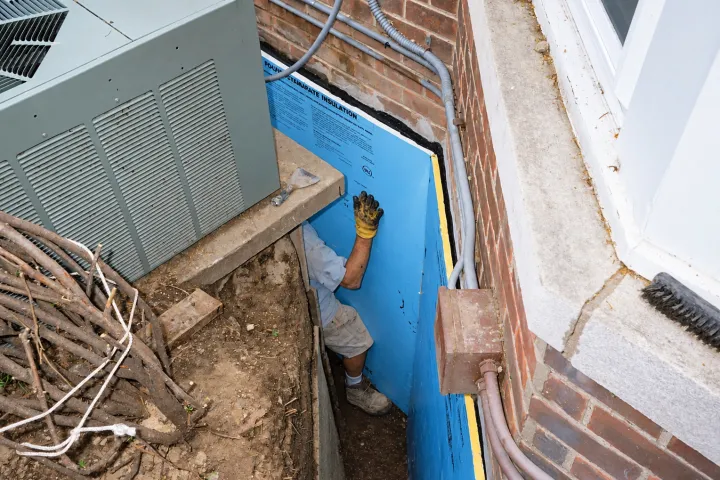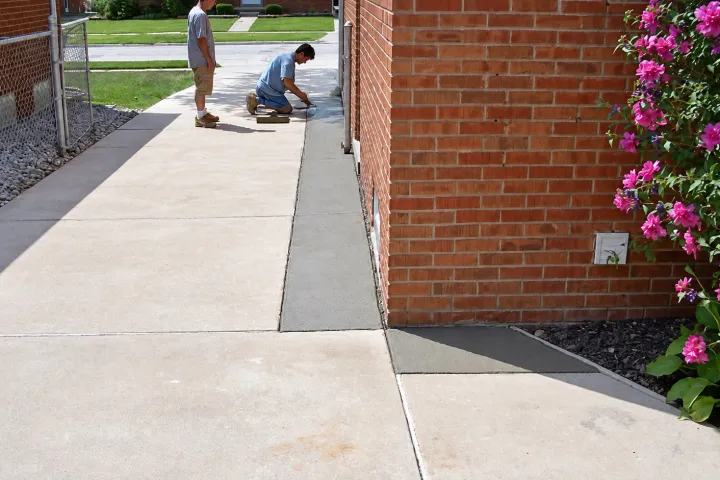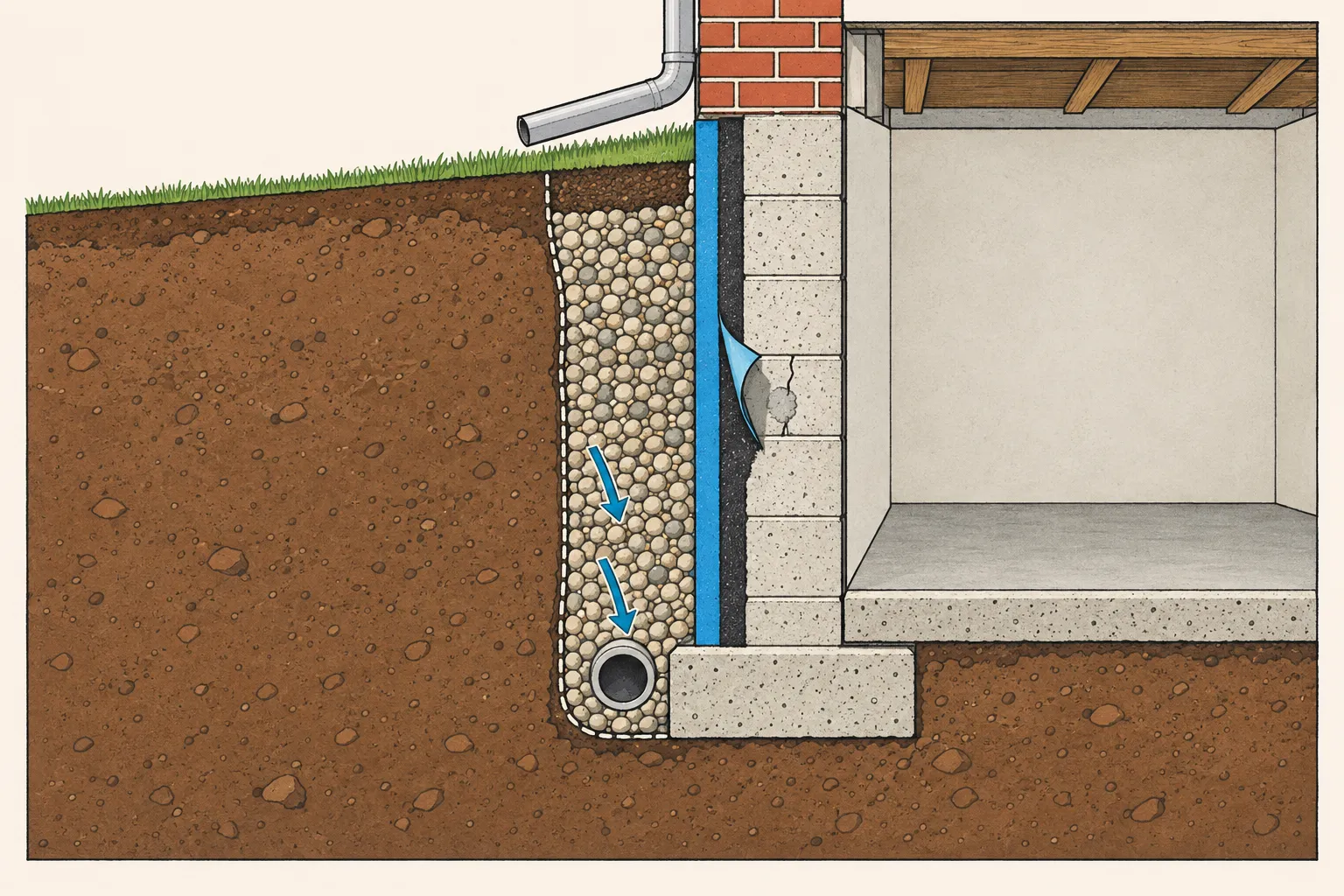
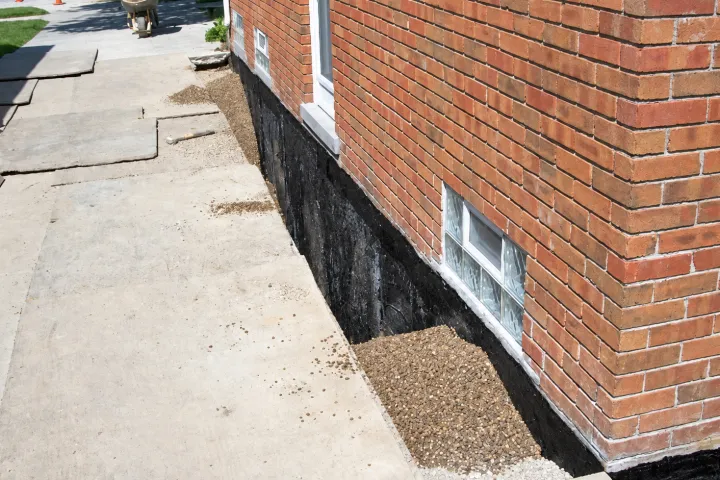
Most Grosse Pointe Park homes, 61.8% of them, were built in 1939 or earlier, on lake-plain soils the USDA rates very limited for basements across most of the city. Clark Basement Waterproofing, a family-owned contractor founded in 1956, waterproofs these older foundations from the outside, by hand: dig to the footing, seal, tar, membrane, new drain tile in pea stone, then restore the yard. Sewage backing up through a floor drain is a job for a plumber.
Why do Grosse Pointe Park basements leak?
Age and wet ground, mostly. In the 2020–2024 American Community Survey, 61.8% of the Park’s 4,835 housing units were built in 1939 or earlier and 86.7% before 1960; the Census puts the median year built in its oldest bracket. Across Wayne County, only 21.2% of homes are that old.
The city’s 2022 town-hall presentation says 95% of its water mains went in during the 1920s and its first sewer, a combined pipe for sewage and storm water, was built between the 1920s and the 1940s. A basement wall from those years has held back damp soil for more than 80 years, and buildings move and crack as they age.
What is the ground like under Park houses?
Flat lake-plain ground that holds water. In the USDA’s Web Soil Survey for Wayne County, more than 80% of the Park’s mapped land is in soil units rated “Very limited” for dwellings with basements, and across more than 80% of it the seasonal high water table comes within about 27 inches (68 cm) of the surface.
Ziegenfuss soil is poorly drained clay till over denser till; USDA says its perched water table can sit from 6 inches above to 6 inches below the surface between October and May. Tedrow and Wauseon are sandier lake deposits where water moves fast until it meets a tighter layer. Either way, backfill against a Park foundation can stay soaked through the wet months and push water through any crack it finds (see hydrostatic pressure).
Does it matter if you live north of Jefferson or on Windmill Pointe?
For surface water, a little. The city’s storm water plan calls Windmill Pointe, roughly the land south of Jefferson Avenue, “once-swampy.” On FEMA’s flood map for the Park, effective Oct. 21, 2021, the high-risk coastal zones cover only a narrow strip along the lakeshore; the rest is Zone X, part of it only because of the accredited Fox Creek levee. NOAA’s Windmill Point gauge logged a monthly mean lake level of 572.34 feet in January 2013 and 577.34 feet in July 2019. No local study ties those swings to basement seepage, but if your lot backs onto the water, mention it at the estimate. For sewer backups, a former city manager said the side of Jefferson made a big difference in 2016 (see below).
Sewer backup or seepage: what flooded Park basements in 2021?
Mostly sewage, not groundwater. The National Weather Service’s storm report for June 25–26, 2021 lists 8.19 inches at Grosse Pointe Park, the highest total in its table. The Grosse Pointe News reported in March 2022 that the storm backed combined runoff and sewer water into 3,000 Park residential and commercial basements. A Great Lakes Water Authority assessment, reported by the same paper, found that pump problems at two Detroit stations, Freud and Connors Creek, may have made it worse.
It had happened before. Former city manager Dale Krajniak told the paper that when the Park had to shut down its pump station in 2016, only about a dozen houses north of Jefferson flooded, while “the south side flooded terribly.”
Water that rises through a floor drain is a sewer problem, and digging outside will not stop it. Water that seeps through a wall, a crack or the joint at the floor is groundwater, and that is what Clark fixes from the outside.
| What you see | Most likely cause | Who fixes it |
|---|---|---|
| Dirty water rising from the floor drain in a big storm | Sanitary sewer backup | A licensed plumber: backflow device, floor-drain plug |
| A wet stripe along the base of the wall a day or two after rain | Groundwater at the footing; old or clogged tile | Exterior waterproofing and new drain tile |
| Water running from a wall crack | Soaked soil pushing on the wall | Exterior crack repair |
| A damp corner under a downspout | Roof water soaking the backfill | Downspouts and grading |
For backups, the city’s water and sewer page recommends a sanitary backflow device on your sewer lateral and a floor-drain plug, and says a footing drain connected to the sanitary lateral must be disconnected before the device goes in. It also warns that many Park homes have old clay laterals, which the owner is responsible for all the way to the city main.
What has the city done about backups?
It began separating sewers in the mid-1990s and said in July 2025 it is close to 95% separated. Storm water leaves through one outfall, the Patterson Park pump station, into Lake St. Clair. The city’s 2022 report said sanitary flow had one way out, the Detroit River Interceptor, and that sewage can back into homes when it can’t take the flow. A last-resort Extreme Emergency Relief Valve at Patterson Park is fully operational and has never been called into service, according to a July 2026 statement.
What rules apply before you dig in Grosse Pointe Park?
The city code is firm about where water from your house may go, and permits are settled before anyone picks up a shovel.
Footing drains, sump pumps and downspouts
City Code §14-22, adopted in 2023, calls any footing drain that lets groundwater into the sanitary sewer an illicit connection, “regardless of whether” the city once allowed it. Under §14-21, downspouts and sump pumps can’t connect to the sanitary sewer either, and the city won’t issue a building permit or Certificate of Occupancy while a downspout is connected, unless it has granted an exemption. One listed ground for an exemption: disconnecting would send water against a basement wall. Section 14-52 lists footing drains and basement sump pumps among the discharges the storm system may accept, if they meet water-quality standards.
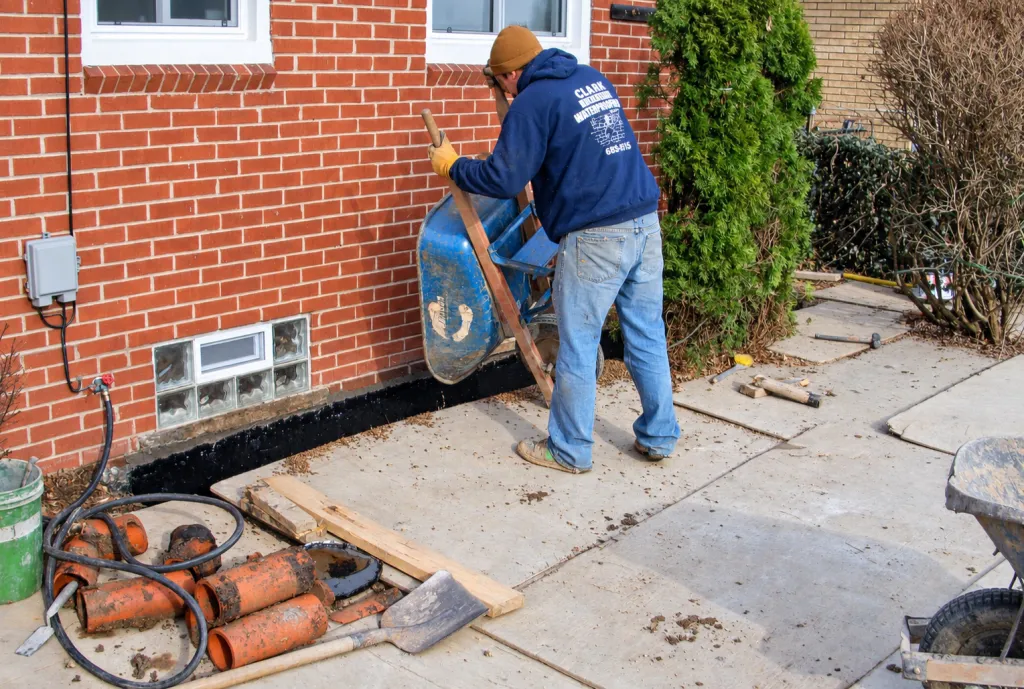
The city’s 2022 infrastructure reports add that older homes often have basement drains tied to the outside drainage, and that leaves and debris in old French drains and outside drainage can push water up through floor drains. So where new tile on your house drains depends on how it is plumbed today and on these rules. Mark will show you where the water will go during the estimate. Our drain tile guide explains how footing drains work.
Permits and the Building Department
The Building Department requires permits for all new projects and most remodeling, but the city’s site doesn’t say whether exterior waterproofing or drain tile needs one. We pull the permits the job needs ourselves. The FY2026/27 fee schedule sets a $150 base fee for any trade permit, plus line items such as $5 per sub-soil drain and $10 per backwater valve. Construction-site fencing rules sit in §10-5; whether they reach a short foundation dig is the Building Department’s call.
How does a hand-dug job fit a tight Park lot?
Better than a backhoe does. The city’s storm water plan describes tightly packed brick houses on the far west side and large lots that were often split up, leaving post-war ranches among older homes. In the 2020–2024 American Community Survey, 22.8% of Park housing units are in buildings with two to four units, and many sewer manholes sit in rear-yard easements and alleys. Clark digs every job by hand, with no backhoes, so a narrow side yard is workable, and the yard is restored after backfill.
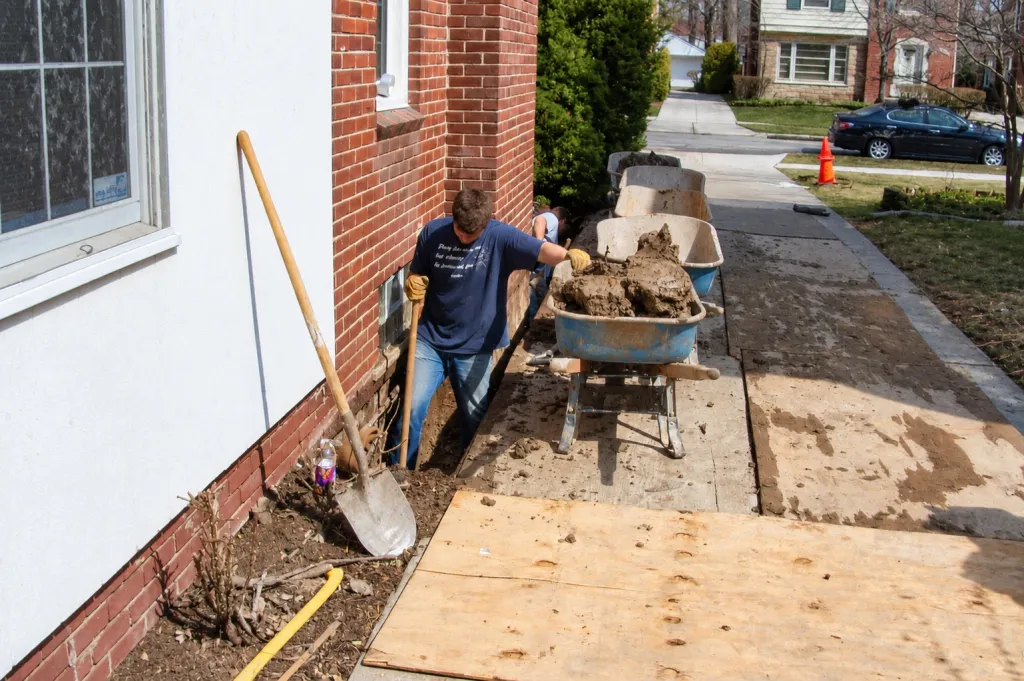
Plan around City Code §28-226: building repair work, including the digging, is allowed only from 7 a.m. to 6 p.m. on weekdays unless the City Manager issues a permit. A typical Clark job takes 3 to 7 days. See hand-dug vs. machine excavation and our process.
Which Clark services fit a Grosse Pointe Park home?
| If you have | Clark service | What to know in the Park |
|---|---|---|
| Seepage at the base of an old wall | Exterior basement waterproofing | The fix goes on the soil side, where lake-plain ground stays wet. |
| A crack that weeps after rain | Foundation crack repair | Sealed from outside, where the water pushes in. |
| Water and no clear cause | Basement leak diagnosis | After 2016 and 2021, rule out a sewer backup first. |
| Old footing tile, clogged or tied to the sewer | Drain tile replacement | §14-22 bars the sanitary sewer; Mark shows you where new tile will drain. |
| Downspouts piped into the ground | Grading and downspouts | §14-21 requires disconnection from the sanitary sewer, with an exemption if it would soak the wall. |
| A leak under a porch, stoop or driveway | Waterproofing under concrete | Concrete is cut and replaced; public right-of-way work has its own city permit. |
What exterior waterproofing won’t fix
- Sewage rising from a floor drain: ask a licensed plumber about a backflow device.
- A cracked clay sewer lateral: the city requires a permit for any lateral work.
- Summer condensation on cold walls: that is indoor humidity, not a leak.
- Bowing or moving walls: have a structural engineer look first.
Comparing the Pointes? Our Grosse Pointes overview sets their sewers and downspout rules side by side. When you’re ready, request a free estimate.
Grosse Pointe Park by the numbers
- 61.8% of Grosse Pointe Park’s 4,835 housing units were built in 1939 or earlier, against 21.2% in Wayne County overall (American Community Survey 2020–2024). Source data.census.gov (opens in a new tab)
- 86.7% of the city’s homes predate 1960, and the Census median year built falls in its oldest bracket, 1939 or earlier (ACS 2020–2024). Source data.census.gov (opens in a new tab)
- The city says 95% of its water mains were installed in the 1920s and its original combined sewer was built from the 1920s to the 1940s. Source grossepointepark.org (opens in a new tab)
- In USDA soil survey data, more than 80% of the Park’s mapped land is rated “Very limited” for dwellings with basements. Source websoilsurvey.nrcs.usda.gov (opens in a new tab)
- Across more than 80% of the city, USDA data put the seasonal high water table within about 27 inches (68 cm) of the surface. Source websoilsurvey.nrcs.usda.gov (opens in a new tab)
- NWS Detroit’s storm report for June 25–26, 2021 lists 8.19 inches of rain at Grosse Pointe Park, the highest total in its table. Source weather.gov (opens in a new tab)
- The Grosse Pointe News reported in March 2022 that the June 2021 storm backed combined runoff and sewer water into 3,000 Park residential and commercial basements. Source grossepointenews.com (opens in a new tab)
- The city reported in July 2025 that its sewers are close to 95% separated. Source grossepointepark.org (opens in a new tab)
- The Park’s separate storm sewer has one outfall, the Patterson Park pump station, which discharges to Lake St. Clair. Source grossepointepark.org (opens in a new tab)
- The city’s 2022 report said all sanitary flow leaves through one outlet, the Detroit River Interceptor, and that sewage can back into homes when it can’t take the flow. Source grossepointepark.org (opens in a new tab)
- City Code §14-22 (2023) makes any footing drain connected to the sanitary sewer an illicit connection, even if the city previously allowed it. Source library.municode.com (opens in a new tab)
- Under City Code §14-21, downspouts and sump pumps may not connect to the sanitary sewer; no building permit or Certificate of Occupancy issues while a downspout does, absent an exemption. Source library.municode.com (opens in a new tab)
- City Code §28-226 limits building repair work, including excavation, to 7 a.m. to 6 p.m. on weekdays unless the City Manager issues a permit. Source library.municode.com (opens in a new tab)
- FY2026/27 fees: $150 base for any trade permit, $5 per sub-soil drain, $5 per sump, $10 per backwater valve, $200 for a single-family Certificate of Occupancy. Source grossepointepark.org (opens in a new tab)
- FEMA flood maps for the Park took effect Oct. 21, 2021; high-risk coastal zones cover a narrow lakeshore strip, and part of the rest is rated lower-risk because of the Fox Creek levee. Source msc.fema.gov (opens in a new tab)
- NOAA’s Windmill Point gauge recorded a monthly mean lake level of 572.34 feet in January 2013 and 577.34 feet in July 2019. Source tidesandcurrents.noaa.gov (opens in a new tab)
Neighborhoods we serve in Grosse Pointe Park
- Windmill Pointe
Updated