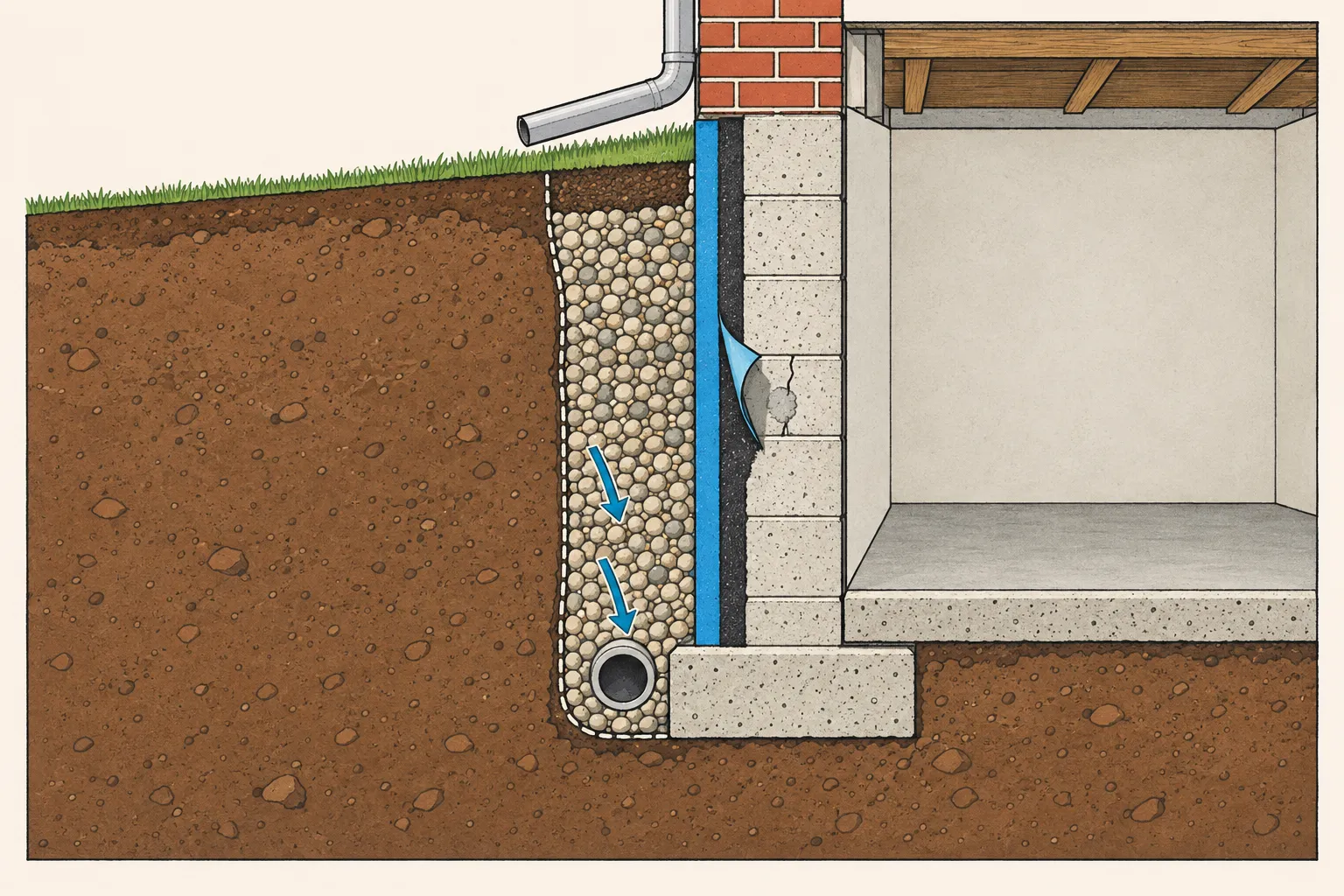
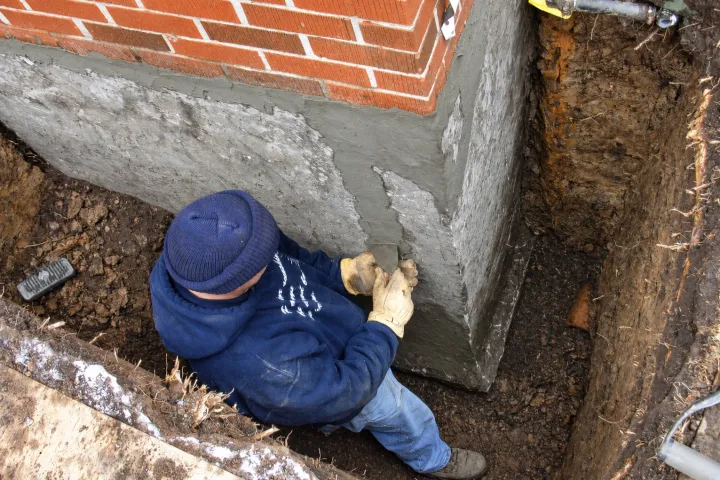
Clark Basement Waterproofing, which serves St. Clair Shores, the Grosse Pointes and Macomb County, repairs leaking foundation cracks from the outside, where the water gets in. The crew digs down to the crack by hand, packs it with hydraulic cement, then covers the wall with tar and a waterproof membrane. Cracks that are widening, horizontal or bowing the wall need a structural engineer's opinion first, and owner Mark Rhoades will tell you so.
A crack in a basement wall raises two questions. Is water getting through it? And is the wall still moving? The first is our work. The second is a structural engineer’s. Here is how to tell them apart, and how we seal a leaking crack from outside.
Which foundation cracks leak?
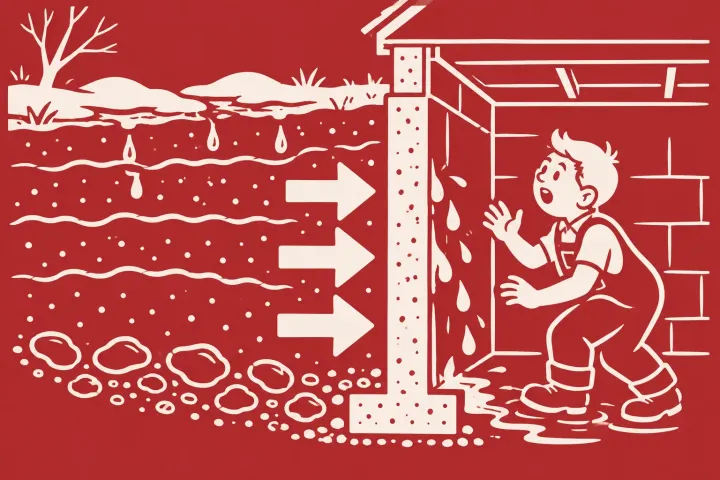
Any crack that runs through the wall can leak when the soil outside is wet. Water held in saturated soil presses on the wall, and a Building Science Corporation report for the U.S. Department of Energy says that pressure “will push water through any available joints, imperfections, or cracks in the foundation.” That is why a crack can stay dry for months, then weep after a long rain (more on hydrostatic pressure).
Any of these can leak. What the shape tells you is why the crack formed, and whether the wall may be moving. This table follows the U.S. Department of Housing and Urban Development’s Residential Rehabilitation Inspection Guide.
| What you see | Common cause | What to do first |
|---|---|---|
| Thin vertical crack in a poured concrete wall, often at a corner or window | The concrete shrank as it cured | Seal it. Watch whether it grows. |
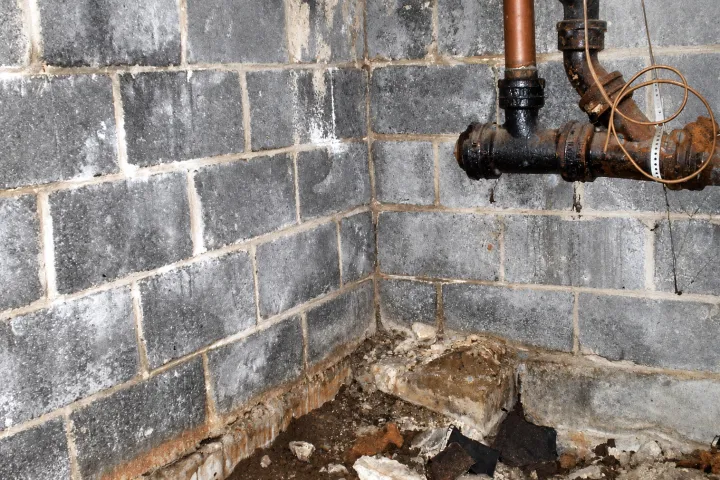
| Stair-step crack along the mortar joints of a block wall | Block shrinking as it dried (usually old and stable), or settling | Seal it if stable. Have it checked if growing. |
| Horizontal crack, or a wall that bulges or leans inward | Soil pressure or vibration: poor backfilling, heavy equipment or vehicles near the wall, or wet soil swelling or freezing against it | Structural engineer first |
| Edges that no longer line up, or a crack that runs into the floor or walls above | Uneven settling of the foundation | Structural engineer first |
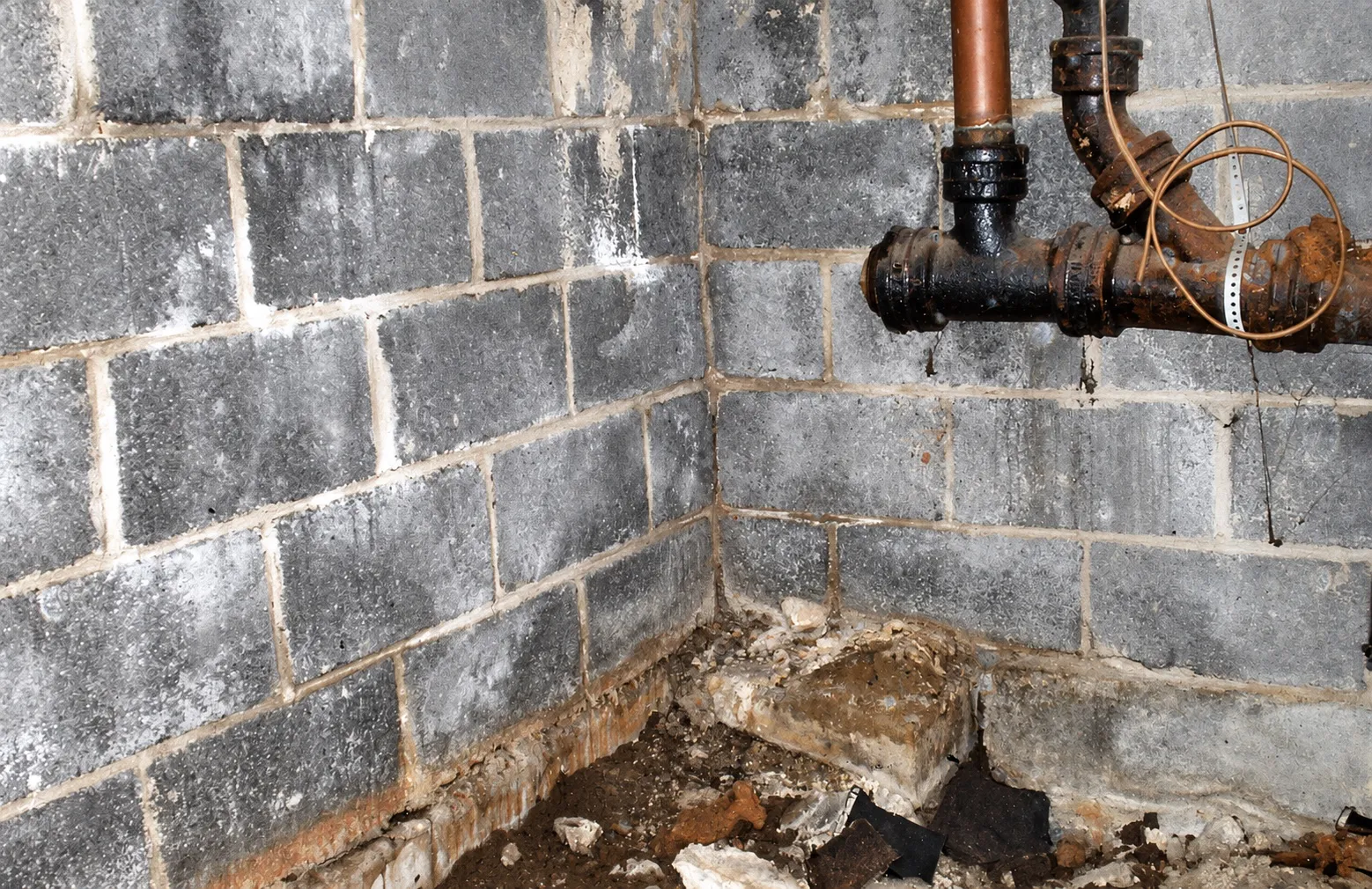
Block walls have one more weak spot: the mortar joints. The same pressure that pushes water through a crack can push it through a joint, so a block wall can leak where you see no crack at all. Our guide to cracks in poured and block walls covers each pattern.
Is it better to fix a foundation crack from the inside or the outside?
Both can stop a leak. Injection fills the crack from the basement side. Sealing from outside stops the water where it enters and covers the exposed wall around it. Clark works from the outside, so here is a fair side-by-side.
The U.S. Bureau of Reclamation’s Guide to Concrete Repair explains the two common injection materials. Epoxy rebonds cracks that are “dormant and relatively dry.” Polyurethane seals cracks that leak and cures to a flexible foam, but it “cannot normally be used for structural rebonding.”
| Compare | Injection from inside | Sealing from outside (Clark) |
|---|---|---|
| Where the work happens | In the basement, at the crack | Outside, in a trench dug by hand down to the footing |
| What seals the crack | Epoxy (dry, dormant cracks) or polyurethane foam (leaking cracks) | Hydraulic cement, then tar and a waterproof membrane over the wall |
| What else gets covered | Just the crack that was injected | The exposed wall around it |
| Digging | None | Yes, then the yard and any cut concrete are restored |
| Time and disruption | Less: no trench, no yard work | More: most Clark jobs take 3 to 7 days |
Why we seal from outside: that is where the water is. The BSC report puts it plainly: “It is always better to intercept groundwater before it gets to a foundation wall.” One of its authors, Joseph Lstiburek, also notes that “it is not always possible to predict where all the cracks will appear.” With the wall open, we seal the crack and coat the whole exposed section, so a crack that opens there later starts out behind tar and membrane. More in our interior vs. exterior comparison.
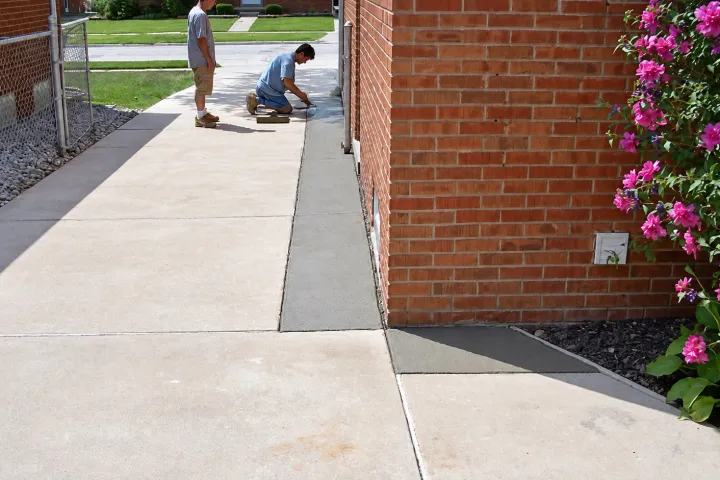
When inside makes more sense: if the crack sits under an addition or anywhere nobody can dig, sealing from inside may be the practical choice. A porch, stoop or driveway does not have to be that obstacle. We cut the concrete, waterproof the wall under it and replace the concrete (see waterproofing under porches and concrete).
When is a foundation crack a structural problem?
When the wall is moving. A horizontal crack, a wall that bulges or leans in, a crack that keeps widening, or edges that no longer line up all point to movement. HUD’s inspection guide calls horizontal cracking in block and brick foundation walls “potentially serious,” because it means the wall carrying the house above is bent or broken. That needs a structural engineer’s evaluation before anyone seals it.
The repair has to match the cause. The Bureau of Reclamation’s guide warns that with the wrong method “cracks will usually reoccur.” A crack that is still moving needs its cause dealt with first, whichever side it is sealed from.
What Clark does and doesn’t do. Clark waterproofs foundation walls. We don’t straighten or reinforce them. If Mark sees signs that a wall is moving, he’ll tell you to get a structural engineer’s opinion before any waterproofing.
How does Clark repair a crack from the outside?
Sealing the crack is one step in Clark’s hand-dug exterior method. The steps run in this order:
- Free on-site estimate. Mark Rhoades looks at the crack and tells you whether it is a leak to seal or a wall for an engineer to check first.
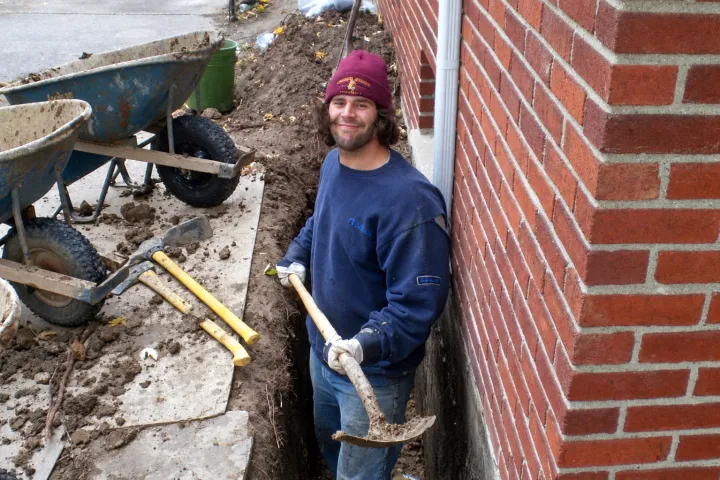
- Dig by hand to the footing. No backhoes, so we can work in narrow side yards and close to bushes (why we dig by hand).
- Seal the crack with hydraulic cement.
- Coat the wall with tar.
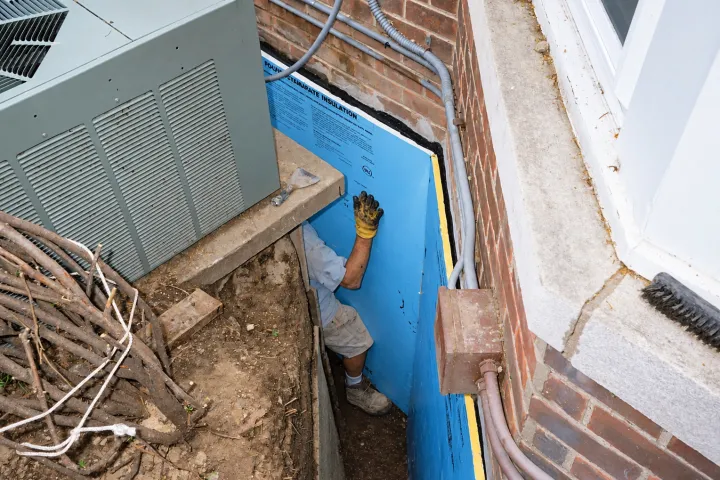
- Cover it with a waterproof membrane.
- Lay new drain tile and pea stone at the footing.
- Backfill and restore the yard, including any concrete we had to cut.
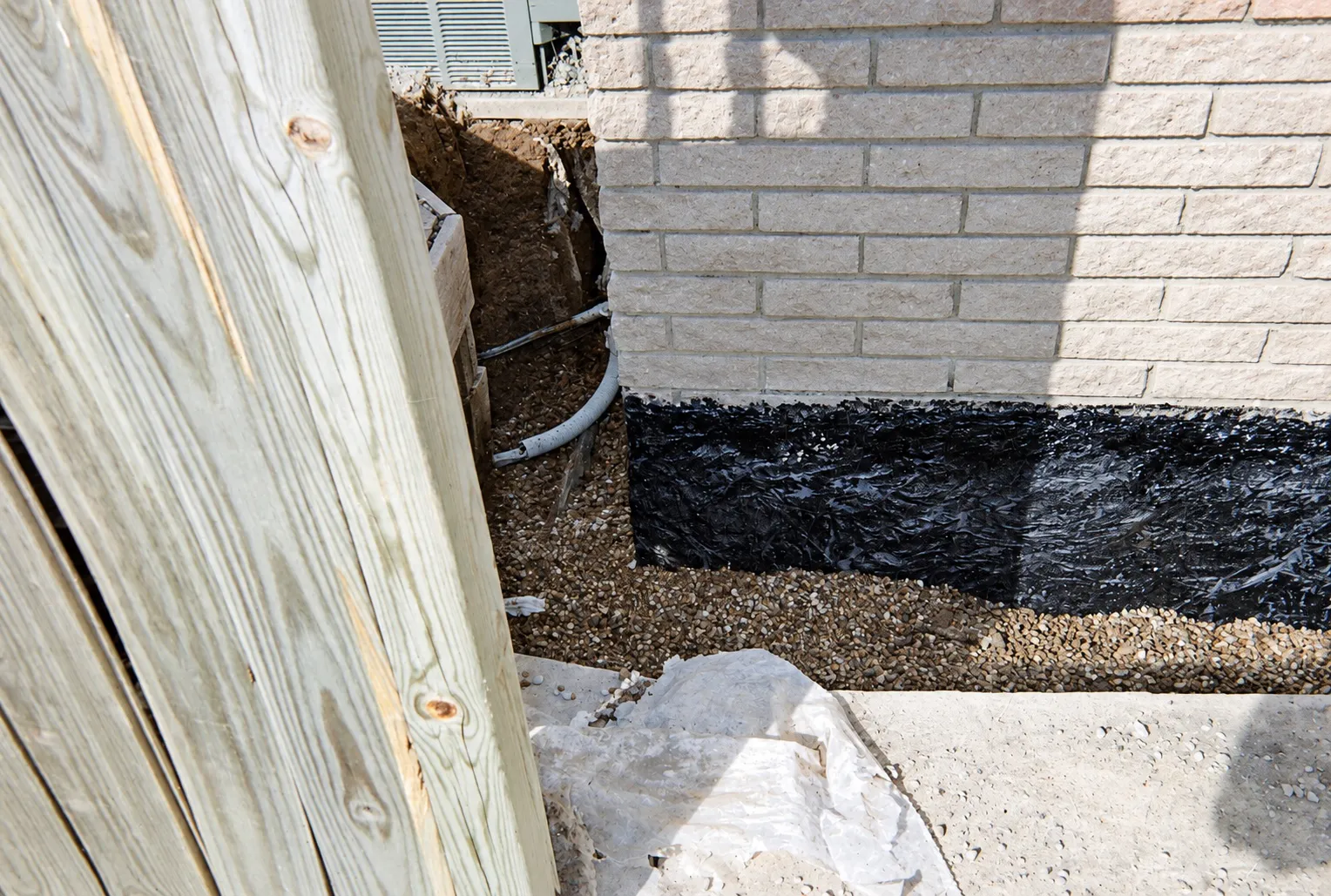
How much wall we open depends on the crack and the wall around it. Mark will explain what he recommends, and why, before any work starts. Most Clark jobs take 3 to 7 days and come with a written 10–15 year warranty; the length depends on the job. See our process and warranty pages.
Why do foundation cracks get worse over Michigan winters?
Because water in a crack can freeze, and water expands when it freezes. The U.S. Geological Survey says ice is about 9 percent less dense than liquid water. Michigan’s residential code puts the frost line at 42 inches, so the top of a basement wall sits in ground the code expects to freeze.
HUD’s guide lists “freezing and heaving of water saturated soils” among the causes of horizontal cracking in block and brick foundation walls. We know of no reliable figure for how fast freeze-thaw widens a crack, so we won’t quote one. But a crack that stays wet all winter has water in it to freeze. Sealing it from outside keeps the water out of the crack. We don’t dig when the ground is frozen.
What won’t sealing a crack fix?
Sealing a crack from outside stops groundwater coming through that part of the wall. It won’t fix:
- A sewer backup. Water up through a floor drain in a heavy storm is a sewer problem; a licensed plumber handles backwater valves. See sewer backup vs. seepage.
- Condensation or plumbing leaks. Humid air sweating on a cool wall can look like a leak.
- A wall that is moving. That is an engineer’s call.
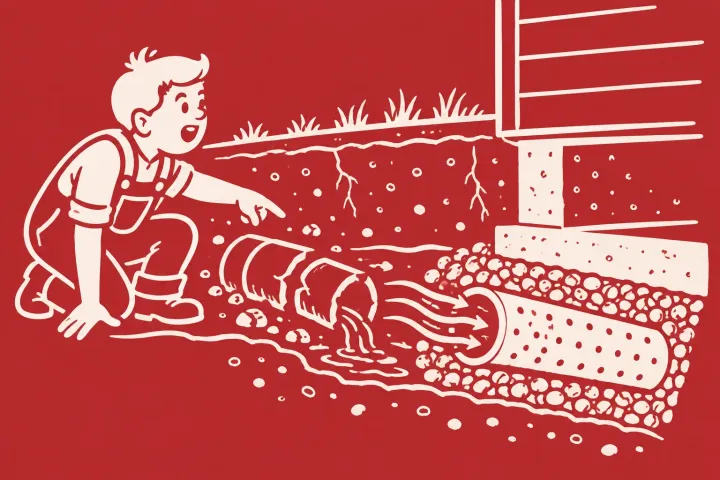
- Water from somewhere else. If a downspout dumps water at the wall, fix that too. BSC notes that “many problem cases can be solved with grading and surface drainage.” See exterior water management.
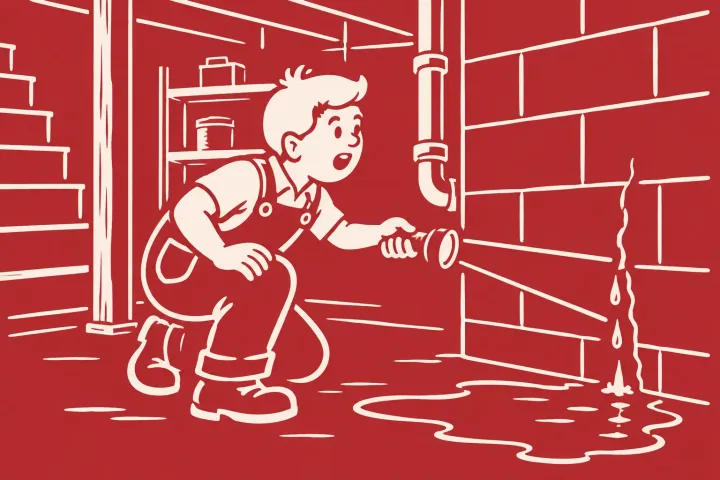
Not sure where your water is coming from? Start with basement leak diagnosis, or read why basements leak.
What affects the cost of foundation crack repair?
Every wall is different, so the price comes from a free on-site estimate. What changes it:
- How much wall is opened, and how deep the footing sits.
- What is on top of it. A porch, stoop, driveway, patio, deck or planting bed that has to come out and go back.
- Access. Narrow side yards, fences and mature bushes don’t stop hand digging, but they add time.
- Permits. Permit rules differ by city. We pull the permits the job needs ourselves.
Clark offers a 10% senior discount. To get a number for your wall, request a free estimate.
Updated