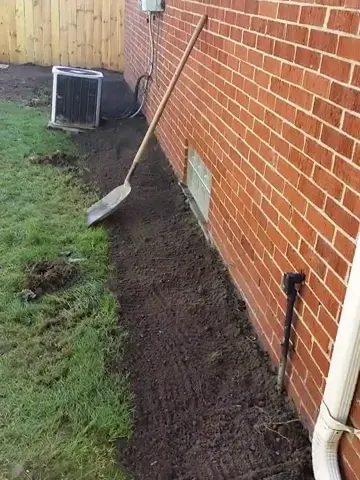
Some wet basements in St. Clair Shores, the Grosse Pointes and nearby cities are fixed at the surface, by keeping roof water and runoff away from the foundation. Clark Basement Waterproofing checks where your downspouts discharge and how the ground slopes next to the house, and corrects both when that is enough. When water is already getting through the wall, grading alone will not stop it, and Mark Rhoades will tell you which case you have.
Not every wet basement needs digging. Building Science Corporation, in a report for the U.S. Department of Energy, points out that roofs “concentrate rainfall at points around the perimeter of the building.” Your downspouts drop that water in a few spots. Where those spots are, and which way the ground slopes from them, decides whether the water heads away from the house or soaks into the soil against your basement wall.
It adds up fast. Using the U.S. Geological Survey’s figure of about 27,154 gallons per inch of rain on an acre, one inch on 1,000 square feet of roof is roughly 620 gallons. On July 28, 2025, the National Weather Service’s storm report listed 4.00 inches in two hours at St. Clair Shores: about 2,500 gallons off that roof, leaving through a handful of downspouts.
Is your wet basement a surface-water problem?
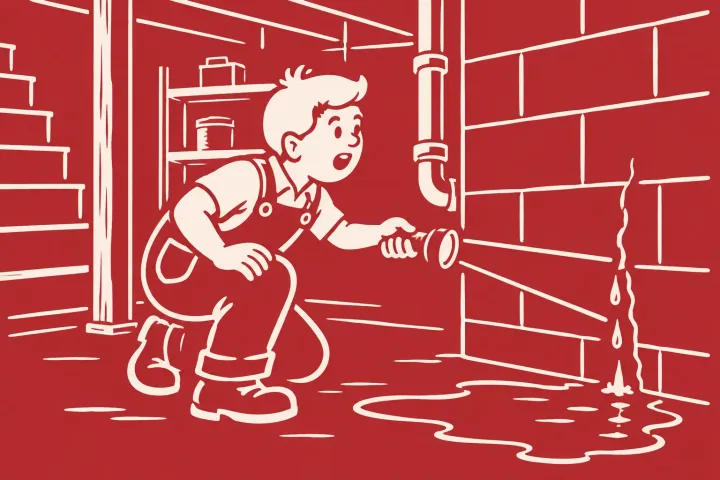
It may be if water shows up during or soon after rain, near a downspout or a low spot outside, and stops when the rain does. Building Science Corporation notes that where a leak appears can point to its cause, such as soaked ground or a loose downspout just outside. Look for these signs:
- The wet spot inside sits below a downspout, an inside corner of the roof or a gutter that overflows.
- A downspout ends at the wall with no extension or splash block.
- Ground, a walk or a patio next to the house is sunken or tips toward the wall, and puddles sit there.
- Planting beds hug the foundation and stay soggy. St. Clair Shores’ public works guide warns that beds near the house can cause drainage problems.
- Snow piles up against the house and the leak starts during the thaw.
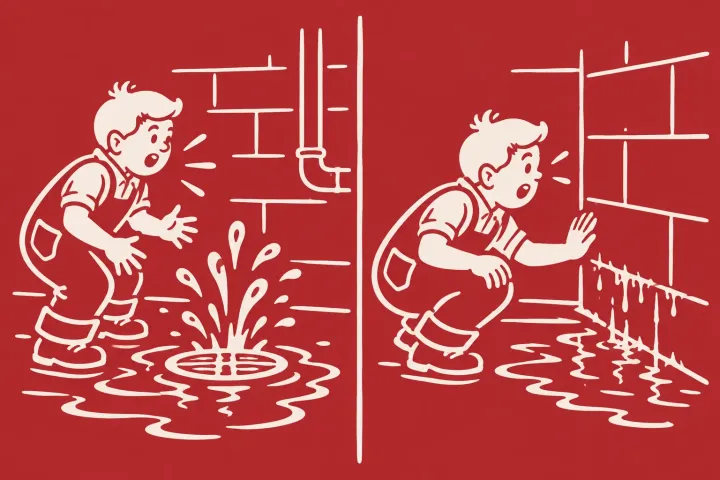
Two things look like a leak but are not surface water. Water rising through a floor drain is usually a sewer backup (see sewer backup or seepage), and damp walls in humid weather with no rain can be condensation. Our guide to why basements leak shows how to tell them apart, and basement leak diagnosis is where we start when the source is not obvious.
How can you check your downspouts and grading yourself?
Walk around the house in a steady rain and check four things.
- Each downspout. Where does the water hit the ground, and does it run back toward the house? Measure from the wall.
- The gutters. Water spilling over the edge lands right at the foundation. St. Clair Shores recommends cleaning gutters and downspouts at least every spring and fall.
- The first 10 feet of ground. Water should run away from the house, not pool against it or along a dip beside the wall.
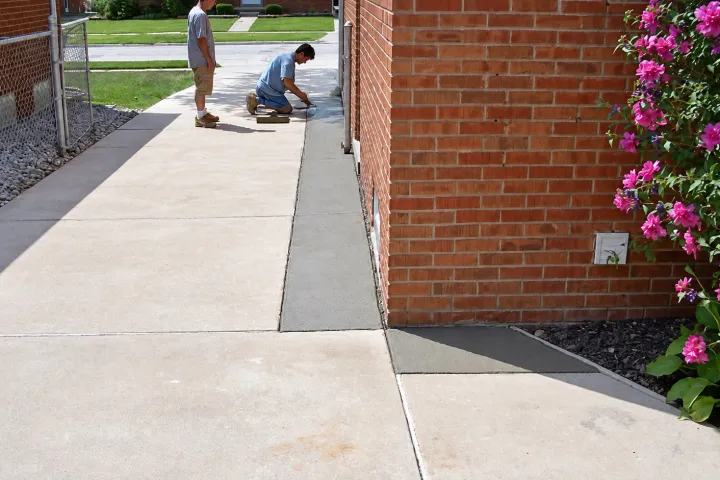
- Concrete next to the house. Walks, patios and stoops should shed water away from the wall.
What do the downspout rules say in your city?
Most of the cities we serve bar downspouts from the sanitary sewer, and some set a minimum distance for where the water lands: 5 feet from the walls in St. Clair Shores and Clinton Township. Grosse Pointe Park’s flyer and Warren’s advice also say 5 feet.
| City | What the rule says |
|---|---|
| St. Clair Shores | No downspouts or footing drains into a sewer lead tied to the public sewer. Discharge at least 5 feet from the walls onto ground that slopes away (§42-23, §8-58). |
| Grosse Pointe Park | No downspouts connected to the sanitary sewer; no building permit or Certificate of Occupancy while one is, unless exempted (§14-21). The city’s 2021 flyer shows discharge 5 feet out. |
| Grosse Pointe Woods | All downspouts disconnected from the sewer (Ordinance 86-241, §44-230), aimed toward the street or away from neighbors (§44-231). |
| Grosse Pointe Farms | No Certificate of Occupancy while a downspout is connected to the combined or sanitary sewer, unless exempted in writing; the deadline to disconnect was Sept. 30, 1999 (Code 11-10). |
| Grosse Pointe Shores | No downspouts connected to the sanitary sewer; aim them toward the street or away from neighbors (Sec. 36-131 to 36-135). |
| Warren | Downspouts to the sanitary sewer are illegal (§41-65). The city advises 5 feet from the foundation; that is guidance, not an ordinance. |
| Clinton Township | Township site-grading standard: splash blocks or pipes are allowed only where water lands at least 5 feet from all building walls, on a pervious surface such as grass (§1248.03(h)). |
| Harrison Township | No downspouts or exterior foundation drains into a drain tied to the sanitary sewer (§90-348). |
Disconnecting helps the sewer, but it means your roof water now lands in your yard. Grosse Pointe Shores and Grosse Pointe Park both let the city exempt a downspout when disconnecting it “would cause water to flow next to a basement wall and tend to create a basement water problem.” In most yards the better answer is a discharge point far enough out, on ground that falls away from the house.
How should the ground slope next to your house?
Down and away from the wall. The 2015 Michigan Residential Code, still the edition in force as of September 2026, says the ground should fall at least 6 inches within the first 10 feet from the foundation (R401.3). Walks, patios and driveways within those 10 feet should slope at least 2 percent away, about a quarter inch per foot.
Most homes here were built decades before that code, and grades change. Building Science Corporation notes that poorly compacted fill settles over time, tipping the ground back toward the house, and old utility trenches can do the same. St. Clair Shores’ code also requires the earth around foundation walls to be graded to carry water away.
What does Clark do about downspouts and grading?
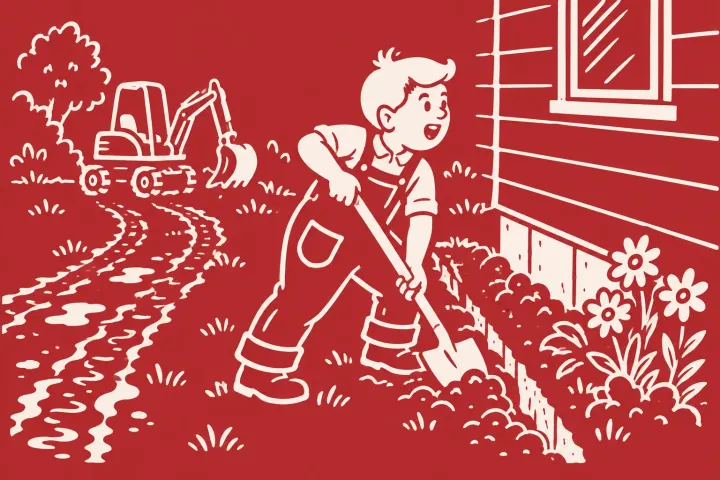
We check, and when it is the fix, we correct it. On a free on-site estimate, Mark looks at where each downspout discharges and how the ground slopes next to the house, along with the walls and any cracks. When roof water or grading is the cause, Clark corrects where the downspouts discharge and regrades the soil next to the foundation so it falls away from the wall.
We will tell you when that is all you need. Building Science Corporation’s report says “many problem cases can be solved with grading and surface drainage.” If surface water is your whole problem, you do not need a trench.
When won’t grading and downspouts fix a wet basement?
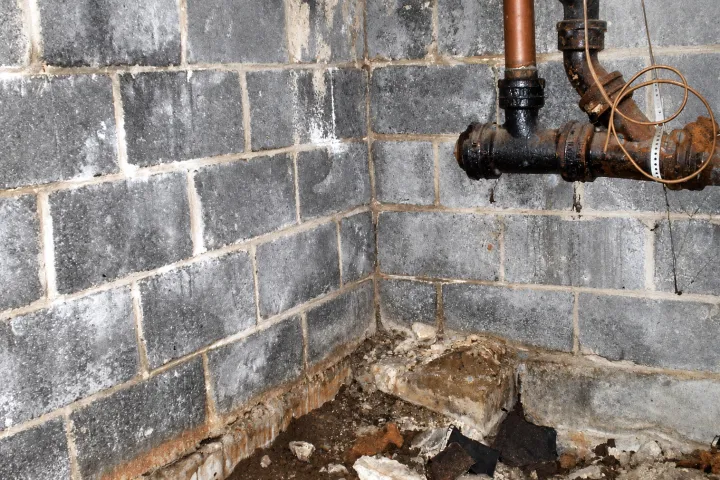
When water is already in the soil against the wall and pushing through it. Building Science Corporation warns that groundwater problems “can still occur even with a properly graded and drained site.” Water that builds up against a foundation creates hydrostatic pressure, which pushes it through joints and cracks. USDA soil survey data rate most mapped soils around St. Clair Shores and the Grosse Pointes as somewhat poorly to very poorly drained, sandier in spots near the lake. Signs the problem is below grade:
- Water keeps coming in after the downspouts and grade are fixed.
- It comes in days after the rain stops, or through much of the spring thaw.
- It seeps from a crack or the floor-wall joint on a wall with no downspout nearby and good grading.
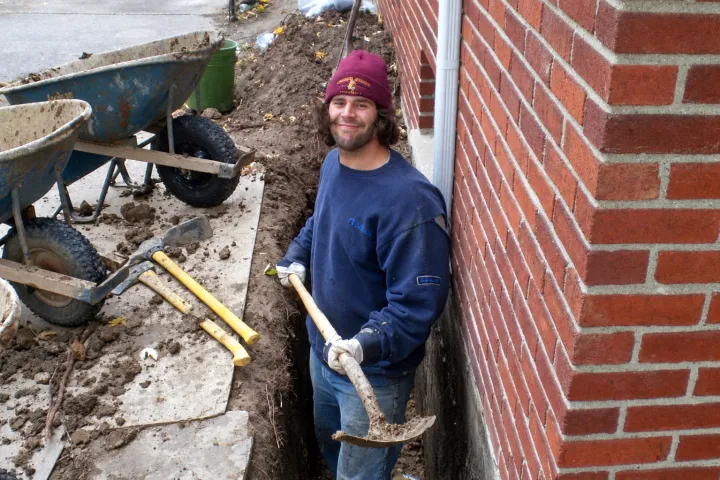
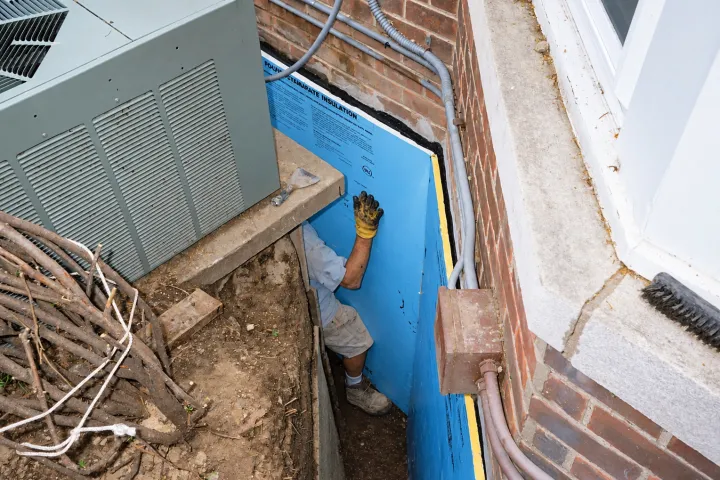
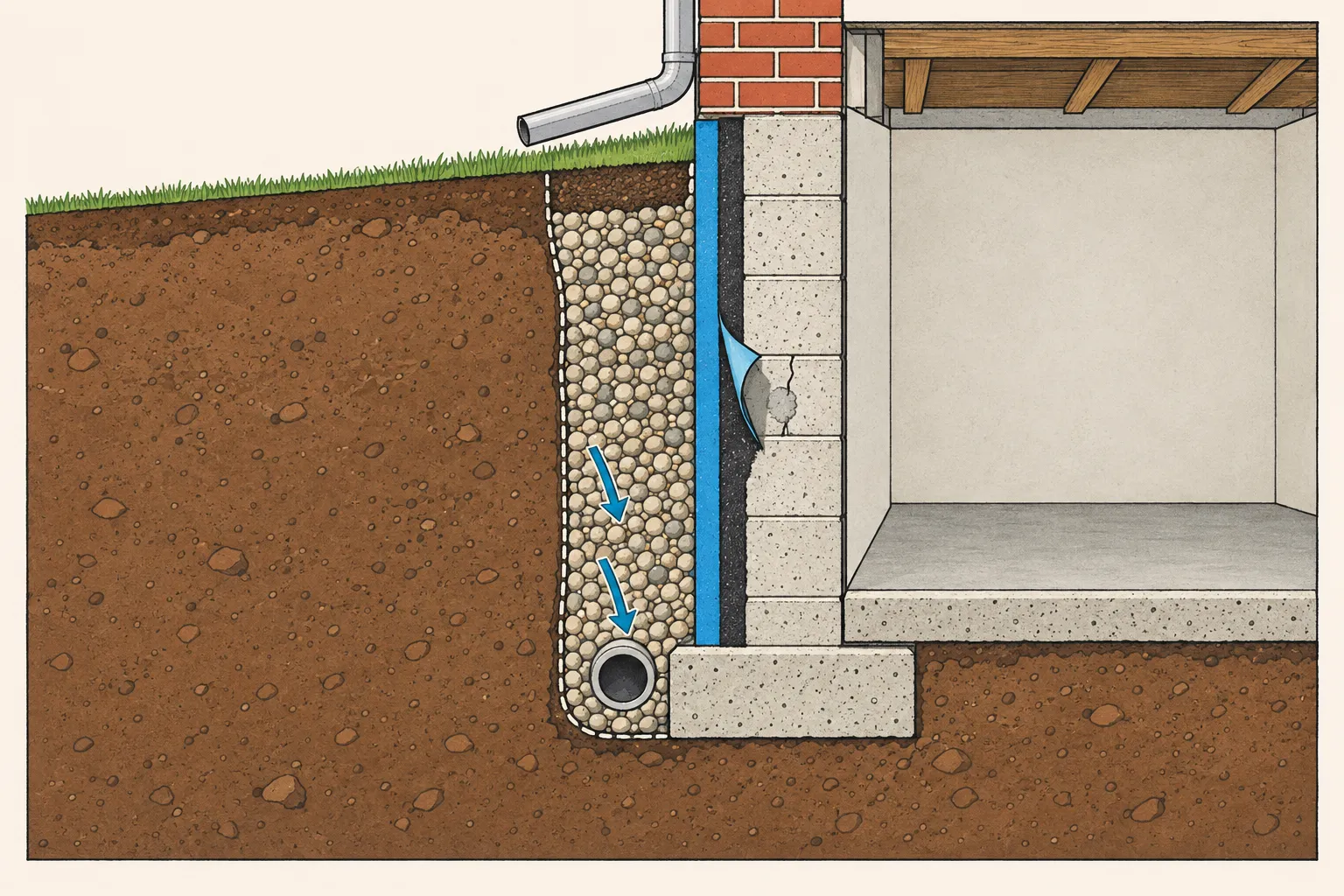
Then the fix is on the outside of the wall, below grade. Clark digs to the footing by hand, seals cracks with hydraulic cement, applies a tar coating and a waterproof membrane, lays new drain tile and pea stone, and backfills and restores the yard. Most jobs take 3–7 days, with a written 10–15 year warranty; the length depends on the job. See exterior basement waterproofing, foundation crack repair, drain tile replacement, work under porches and concrete and our process.
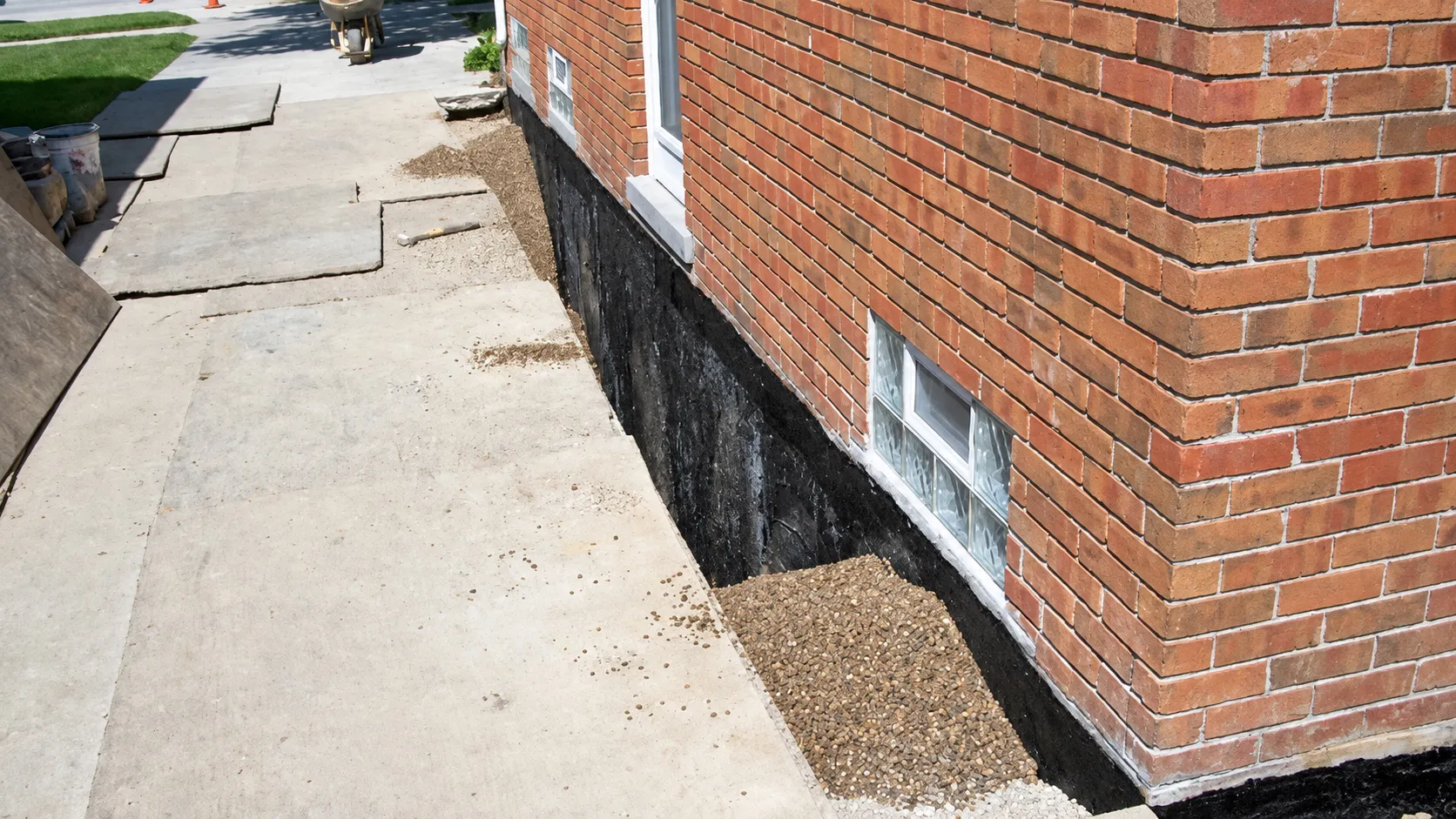
Digging outside is not the only answer. Building Science Corporation says interior drainage to a sump can be used where exterior drainage is not practical or possible. Clark does not install interior drainage systems; our interior vs. exterior comparison lays out the tradeoffs.
Who fixes what. A backup through a floor drain is a job for a licensed plumber, who can tell you whether a backwater valve makes sense. Cracks that are widening or horizontal, or a wall that bows, need a structural engineer first. Condensation needs humidity control, not grading.
Updated