Clark Basement Waterproofing replaces failed footing drain tile on homes in St. Clair Shores, the Grosse Pointes, Warren and nearby Macomb County by digging to the footing by hand. The crew seals cracks with hydraulic cement, coats the wall with tar and a waterproof membrane, lays new drain tile in pea stone, then backfills and restores the yard. Most jobs take 3 to 7 days. Where new tile may drain depends on your city's rules.
What does drain tile do?
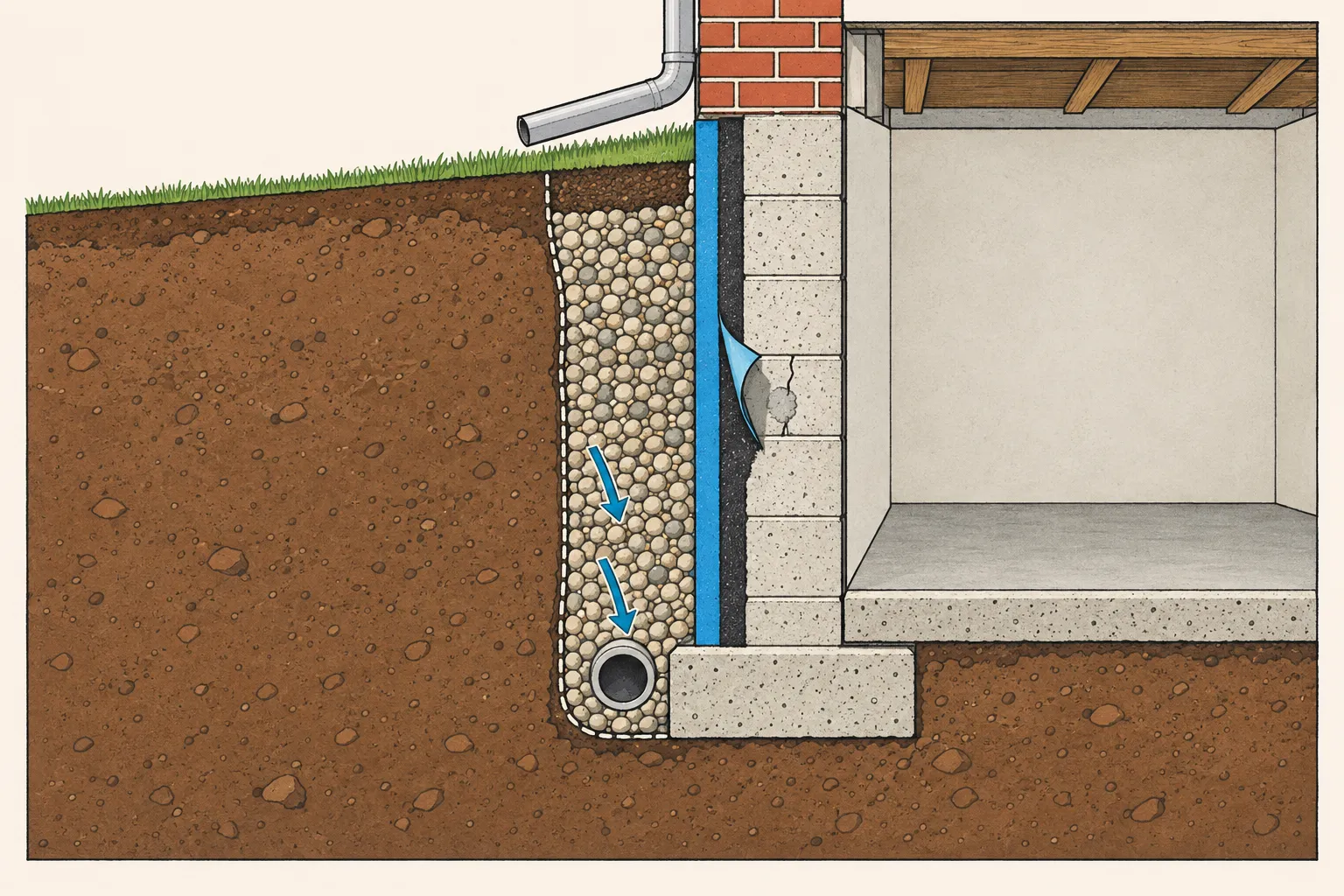
Drain tile is the pipe that runs along the outside of your footing, at the bottom of the basement wall. Water that soaks into the ground around the house reaches the tile before it can build up against the wall, and the tile carries it away. You may also hear it called a footing drain or weeping tile.
Michigan’s residential code requires drains around basement foundations unless the house sits on well-drained sand or gravel (2015 Michigan Residential Code, R405.1). Clay rates only medium to poor for drainage in the code’s soil table, and heavy clay is common here: Warren’s acting city engineer wrote in 2011 that most of Warren sits on heavy clay that lets little or no water soak in, and neighboring Roseville’s drainage sheet says the same of most of Roseville.
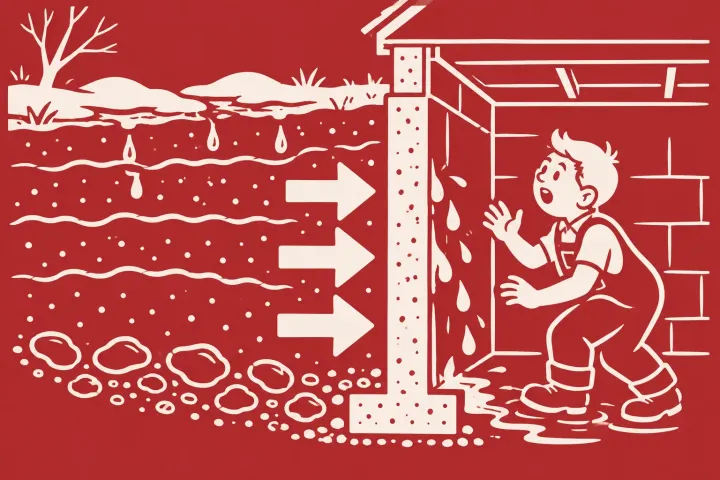
When the tile can’t move water away, the soaked soil pushes on the wall: about 62.4 pounds per square foot for every foot of saturated soil, roughly 437 at the bottom of a 7-foot wall. That pressure drives water through any joint or crack it finds (see hydrostatic pressure).
How do you know your drain tile has failed?
You can’t see drain tile without digging, so watch what the basement does after heavy rain or a thaw:
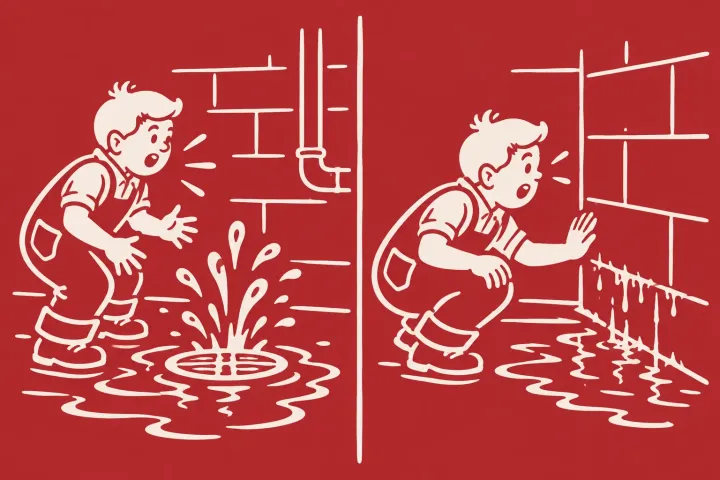
- Water coming in where the wall meets the floor, mostly after heavy rain or snowmelt.
- Damp lower walls or leaking low cracks, even though your downspouts discharge well away from the house.
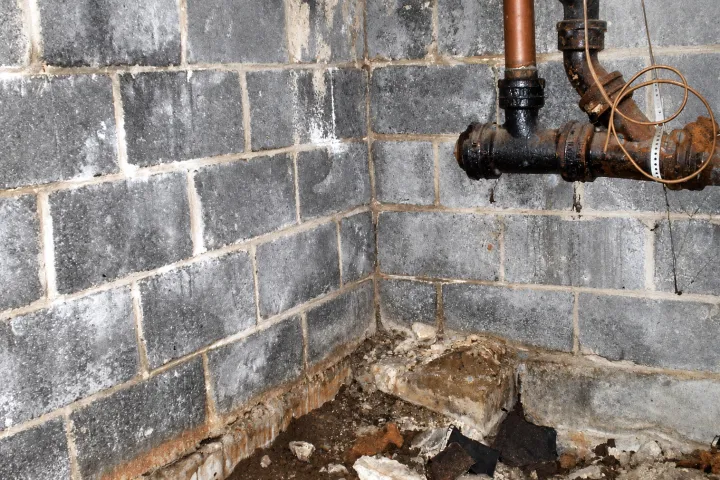
- A white, chalky crust on the wall (efflorescence): salt left behind by water moving through the masonry.
None of these proves the tile has failed. Cracks, grading and downspouts cause some of the same symptoms, and water coming up a floor drain is a sewer backup, not a drain tile sign. Have the whole house checked before you pay for new tile; see basement leak diagnosis.
How is old clay tile different from modern drain tile?
Traditional drain tile is short, rigid sections of clay or concrete laid end to end along the footing, with small gaps at the joints where water gets in. Michigan’s code still describes it: the tops of open joints are to be covered with strips of building paper. Modern footing drains are perforated pipe bedded in washed stone, with a filter membrane to keep fine soil out.
| Feature | Traditional open-joint tile | Modern perforated drain |
|---|---|---|
| What it is | Short rigid sections of clay or concrete, laid end to end | Perforated pipe |
| How water gets in | Through the gaps at the joints | Through holes along the pipe |
| What keeps soil out | Strips of building paper over the joints | A filter membrane around the pipe or over the stone |
| Where the water goes | In some cities, older tile runs to the sewer (see below) | By gravity or by pump to an approved drainage system, within your city’s rules |
Building Science Corporation calls the wrapped drain and stone a “drainage burrito”: the wrap keeps sediment from clogging the stone. More in our drain tile guide.
How does Clark replace drain tile?
Clark replaces drain tile from the outside, as part of the same hand-dug job that seals the wall. The work runs in this order:
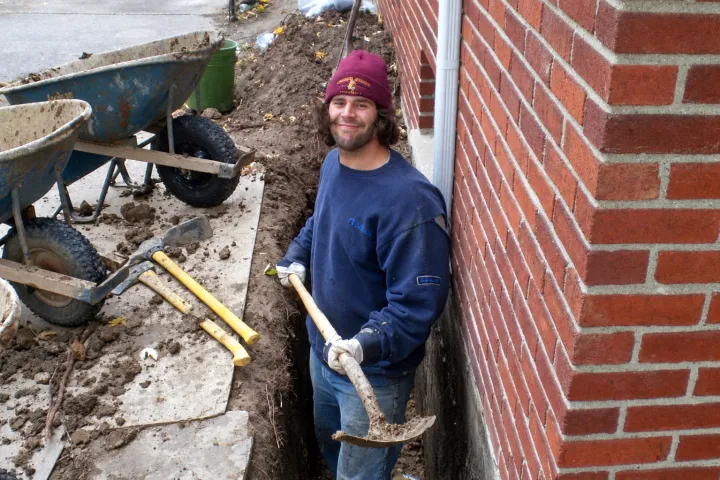
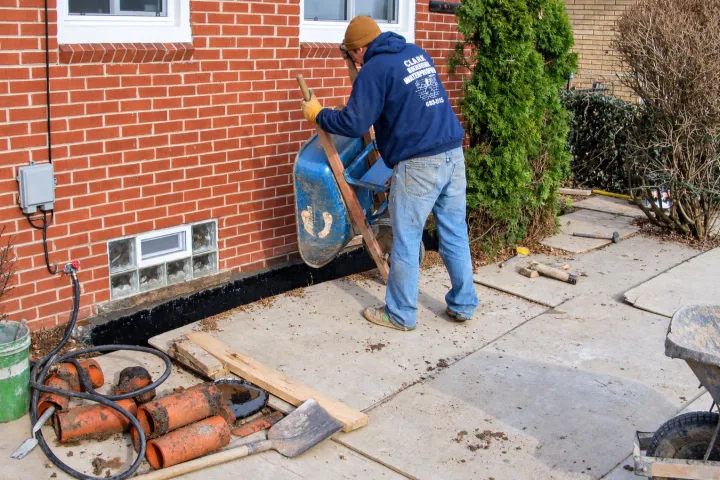
- Dig by hand down to the footing, with no backhoes.
- Seal cracks in the wall with hydraulic cement.
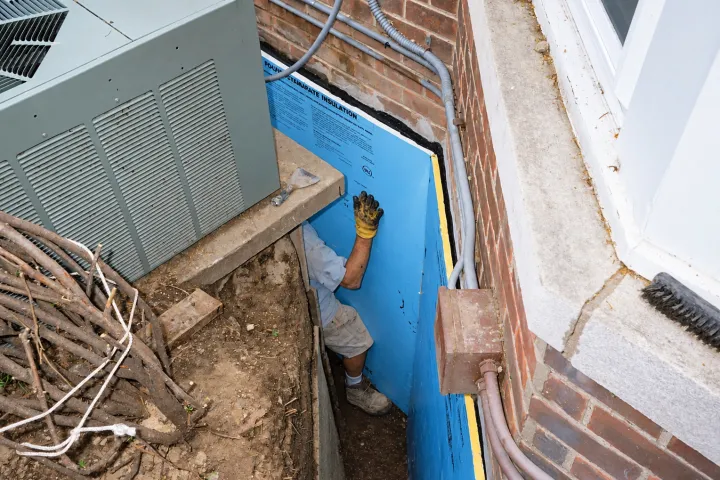
- Coat the wall with tar.
- Cover it with a waterproof membrane.
- Lay new drain tile along the footing, bedded in pea stone.
- Backfill and restore the yard.
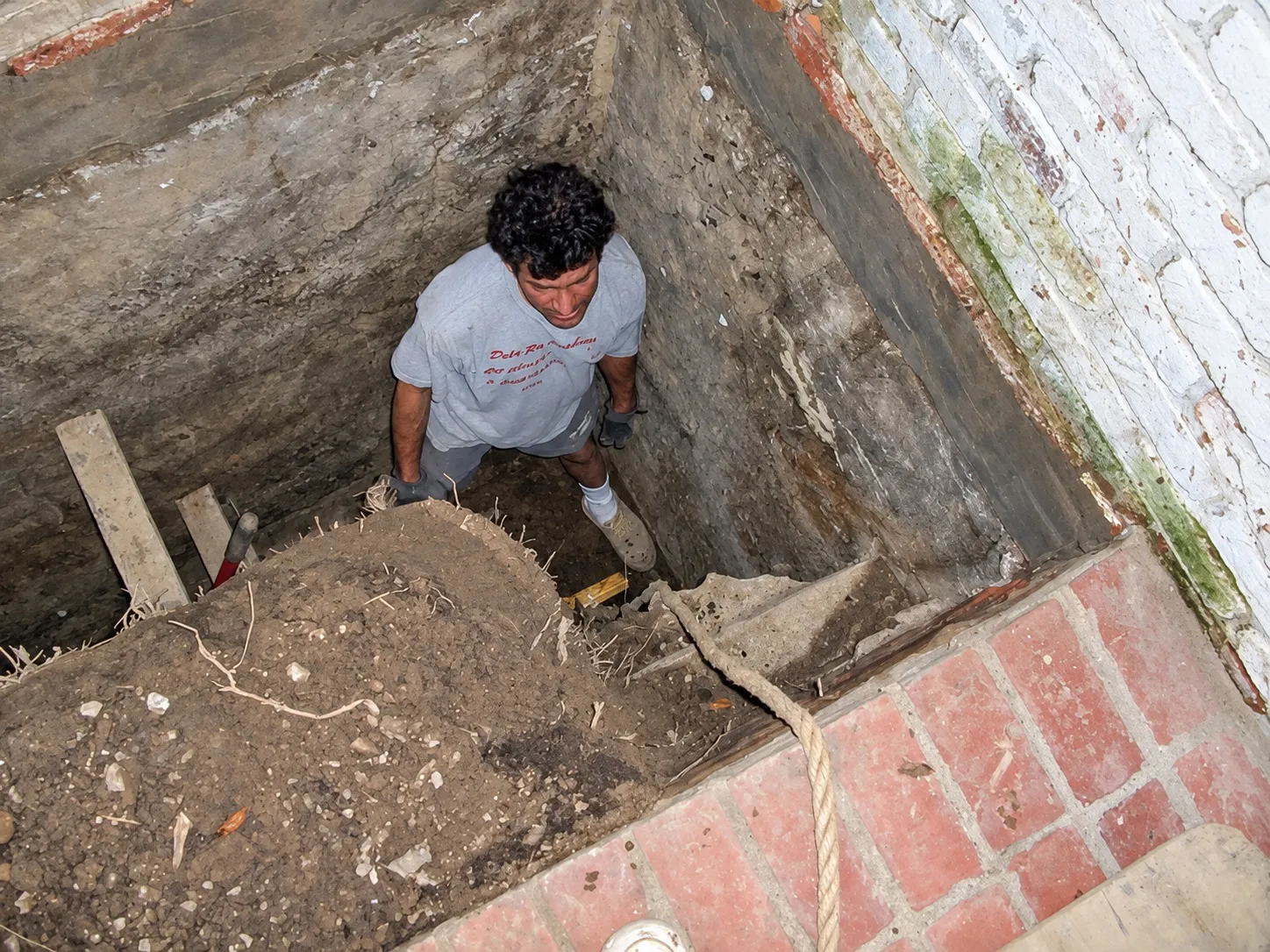
The new tile relieves water at the footing, and the sealed, membrane-covered wall handles whatever still reaches it. Most jobs take 3 to 7 days and come with a written 10–15 year warranty; the length depends on the job. Our process page walks through a full job.
Pea stone goes in around the new tile and back into the trench.
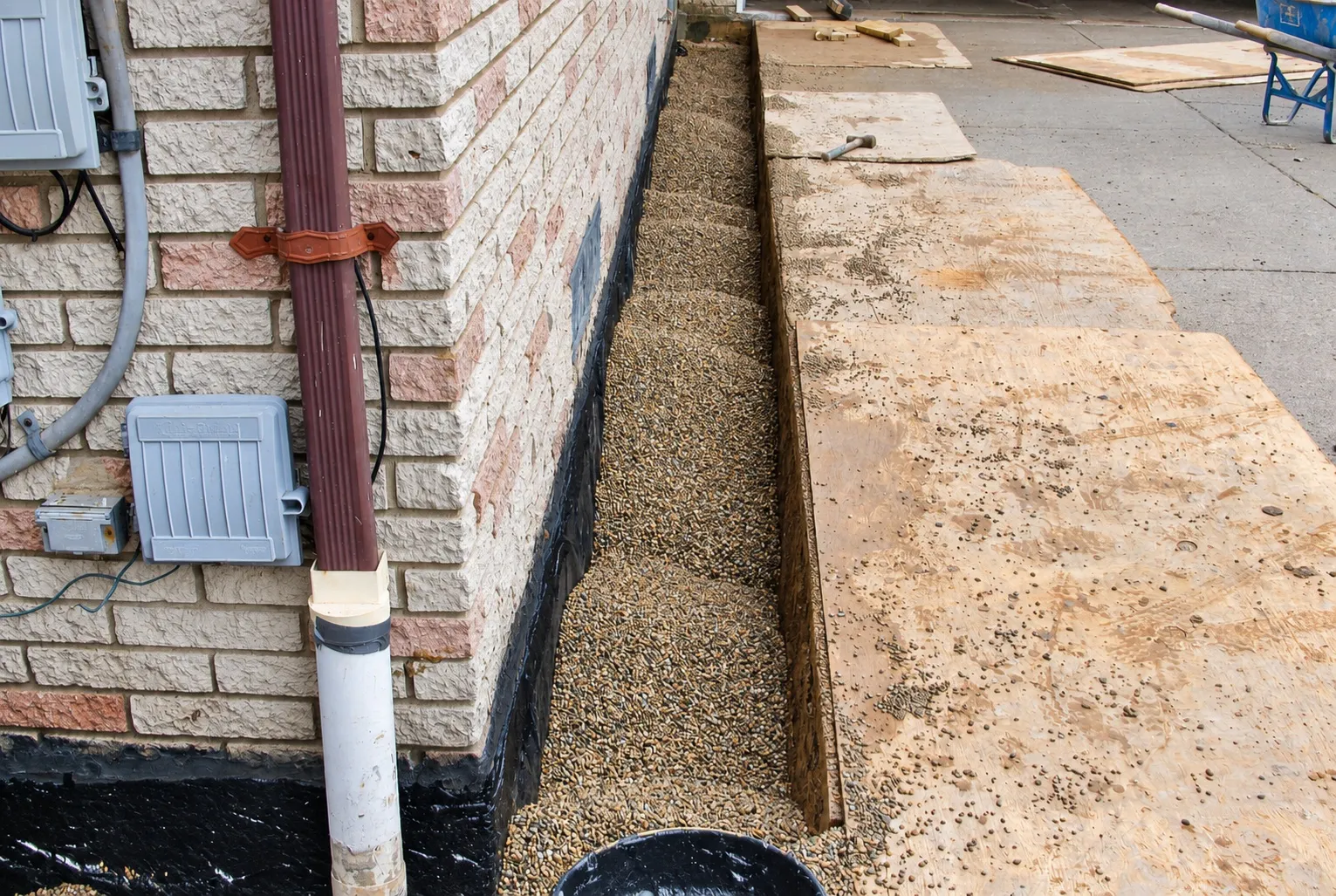
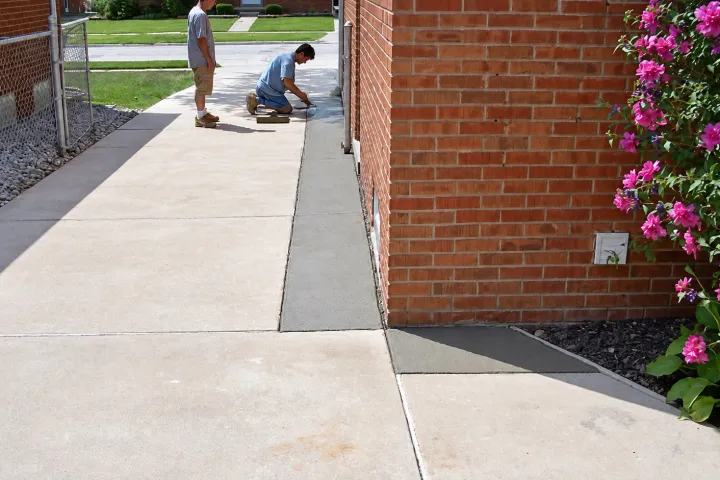
Hand digging works in narrow side yards and around landscaping. Where a porch, stoop or driveway sits over the wall, the concrete is cut out and replaced (see waterproofing under porches and concrete). Drain tile is one part of Clark’s exterior basement waterproofing.
Why replace it from the outside?
Building Science Corporation puts it plainly: “Exterior perimeter drainage is always preferable to interior perimeter drainage.” The same report says digging outside isn’t always practical, and an interior drain to a sump pump is then a legitimate alternative. Clark works only outside and does not install interior drainage systems. Our interior vs. exterior comparison lays out both.
What do city rules say about footing drains?
It depends on the city. Some cities’ own documents show older footing tile tied into the sewer, and several city codes bar connecting footing drains to the sanitary sewer. How your old tile was hooked up is not necessarily how new tile may be.
| City | What the city says about footing drains |
|---|---|
| St. Clair Shores | Code §42-23(g) bars connecting footing drains to a building sewer that connects, directly or indirectly, to a public sewer. |
| Grosse Pointe Park | Code §14-22 treats a footing drain on the sanitary sewer as an illicit connection, even if it was once allowed. Footing drains and sump pumps may discharge to the storm system (§14-52). |
| Grosse Pointe Farms | The city’s sewer separation design leaves Inland District footing drains on the existing combined sewer. City code 8-08 lists footing drains and sump pumps as allowed discharges to the storm system. |
| Warren | The city’s sewer drawing shows footing drains tied into the house sanitary lead. City code allows footing drains to discharge to storm sewers, and new houses must send sump water to the storm sewer. |
| Harrison Township | Code §90-348 bars connecting exterior foundation drains to a building sewer that leads to the public sanitary sewer. Seepage tile must run to a sump pump that discharges somewhere other than the sanitary sewer, such as a ditch, river, lake or canal, through a line run underground. Every sump pump needs a check valve, and sump covers are required. |
| Clinton Township | Ordinance §1248.03(g) says foundation drains must drain to a storm sewer or storm drain by underground pipe, with a sump pump if needed, and a sump line may never connect to the sanitary sewer. |
Where new tile can drain on your house is settled at the estimate, within these rules. In St. Clair Shores and Warren, for example, city code requires a permit to connect to a public sewer or drain.
Do you need a permit to replace drain tile?
In several cities, yes. Permit rules differ by city, and we pull the permits the job needs ourselves. Examples from current city forms:
- St. Clair Shores: “Basement drains; inside and/or outside” costs $20 each, plus a $50 non-refundable application fee (fee schedule revised Dec. 1, 2025).
- Warren: basement waterproofing is its own $80 line on the 2025 plumbing permit application, and $80 is the minimum permit fee.
- Grosse Pointe Park: lists sub-soil drains on its plumbing permit fee schedule.
- Grosse Pointe Shores: the city’s permit form is titled “Application for Building, Roof & Waterproofing Permits & Plan Review.”
- Clinton Township: basement waterproofing is on the township’s list of projects that need a building permit.
What won’t new drain tile fix?
New drain tile handles groundwater in the soil around your foundation. It won’t fix these:
- Sewer backups. Water or sewage coming up a floor drain is a sewer problem; ask a licensed plumber about a backwater valve. See sewer backup vs. seepage.
- Surface water. Sometimes a downspout extension or better grading is all you need. See exterior water management.
- Plumbing leaks and condensation. A leaking pipe or sweating walls can look like seepage.
- Structural movement. A bowing wall, or a crack that is horizontal or widening, needs a structural engineer first. For leaking cracks, see foundation crack repair.
Not sure whether it’s the tile? Request a free on-site estimate before you spend anything.
Updated