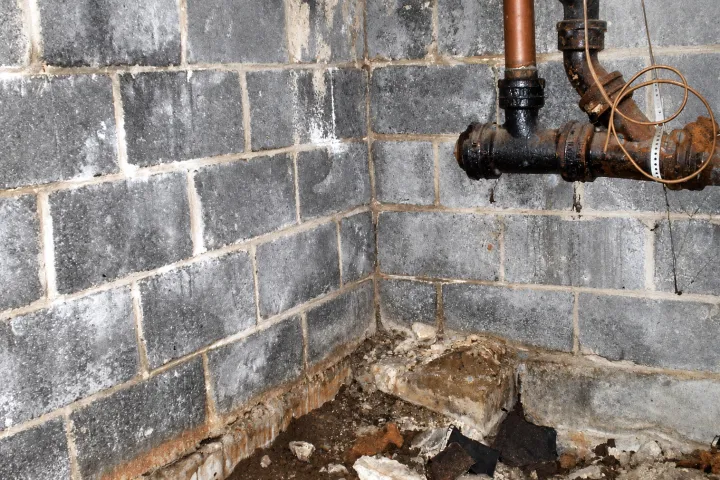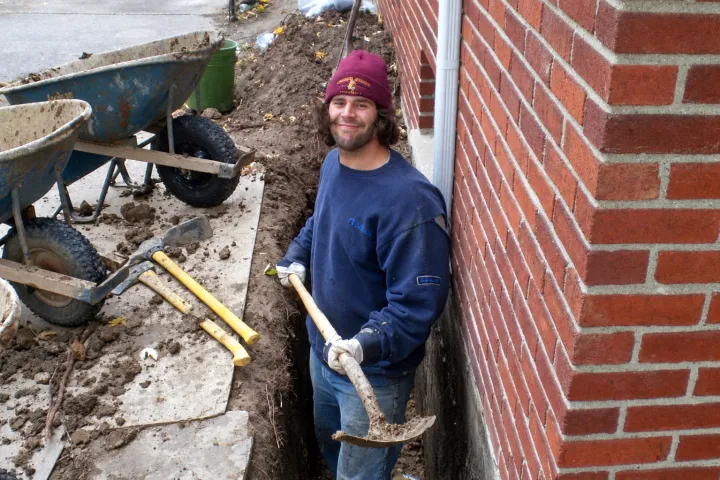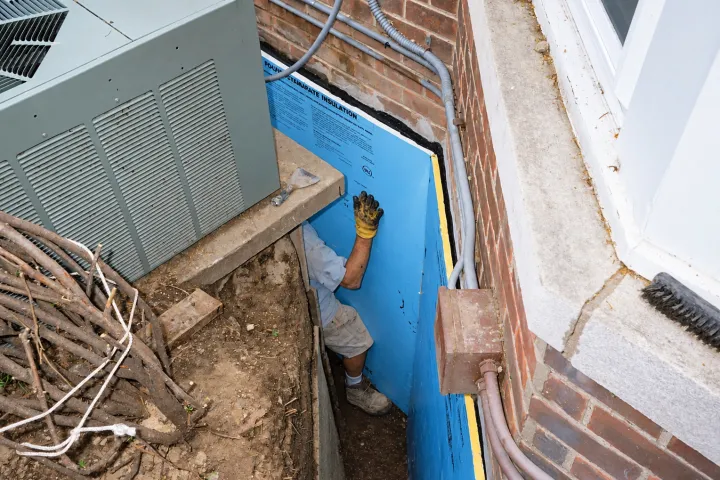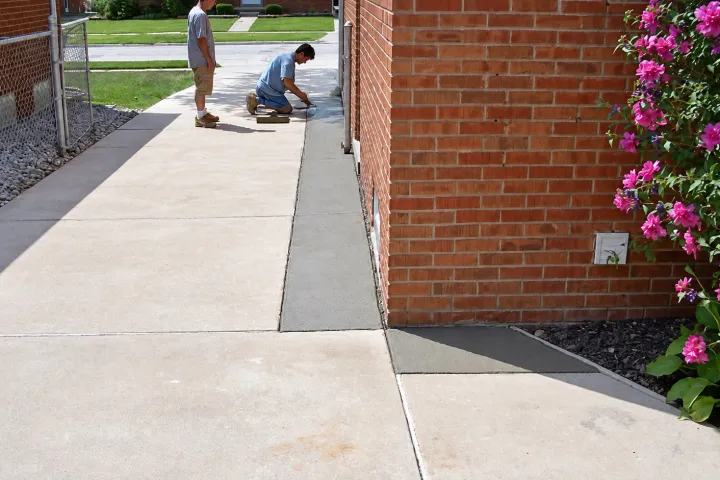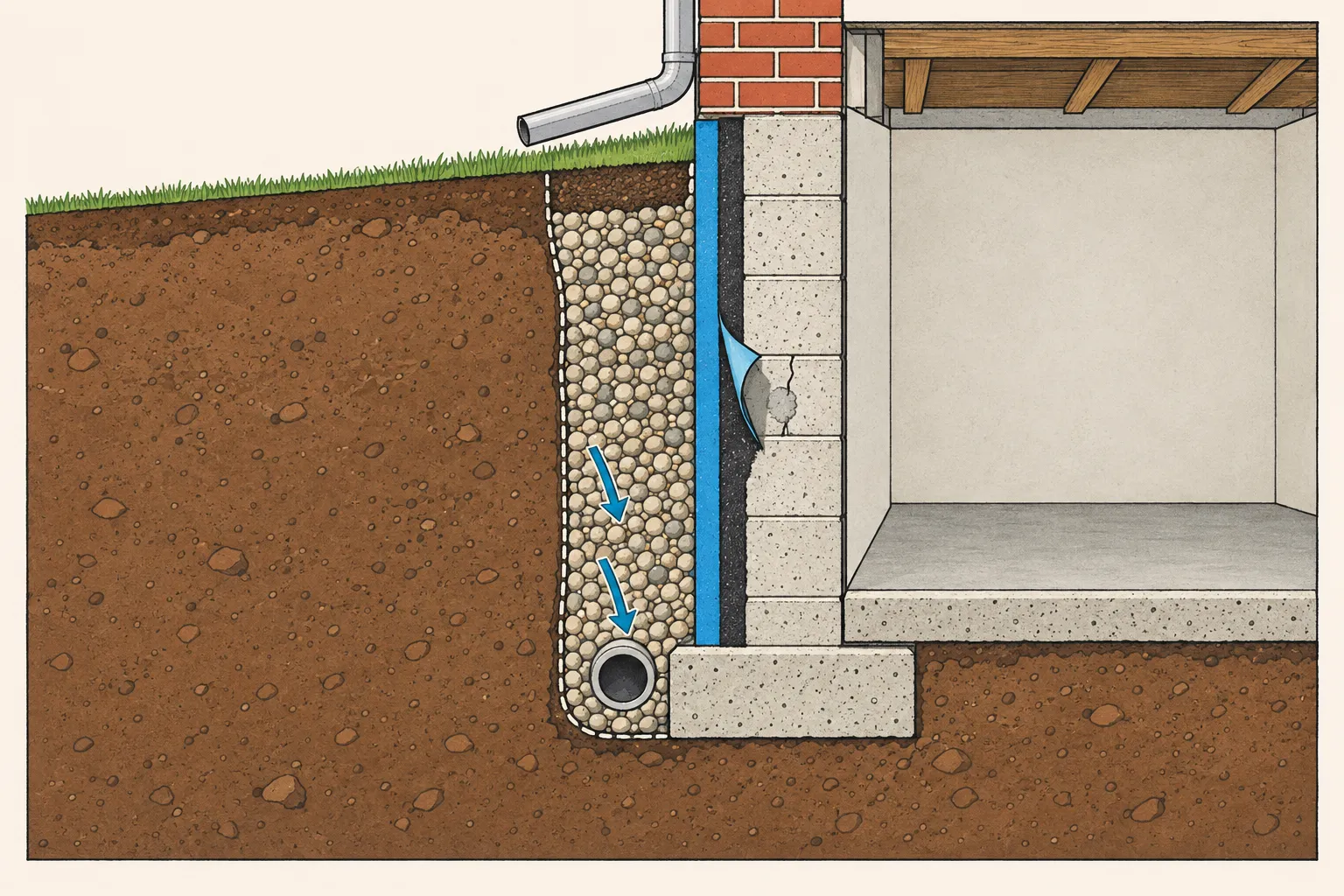
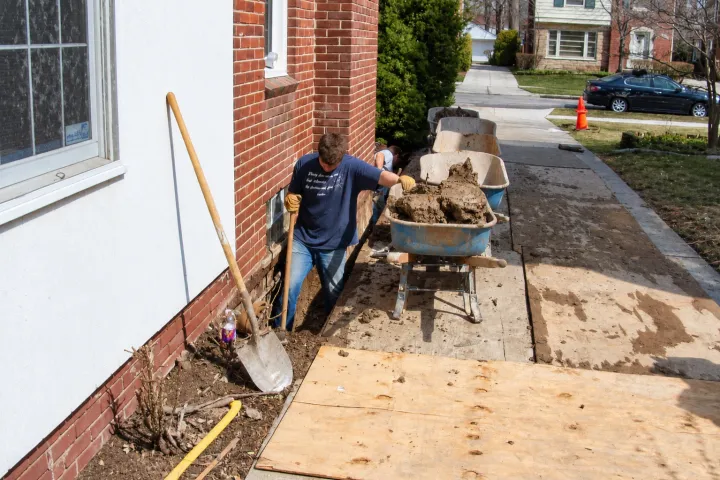
The five Grosse Pointes share old housing and mostly wet lake-plain soils, sandier near the lake, but each has its own sewer system, downspout rules and permit office, which changes what floods a basement and what fixes it. Clark Basement Waterproofing, a family-owned company founded in 1956, waterproofs foundations in the Park, Woods, Farms and Shores from the outside, by hand.
Grosse Pointe is five separate cities: the Park, the City of Grosse Pointe, the Farms, the Woods and the Shores. Each runs its own sewers, enforces its own downspout rules and staffs its own building department, and those differences decide what floods a basement on your street and which repair fits. For one city in depth, see our Grosse Pointe Park, Grosse Pointe Woods and Grosse Pointe Farms pages.
How do the five Grosse Pointes compare?
The houses and the ground are more alike than the rules. Four of the five have a median build year before 1960, and most of their land is wet lake-plain soil.
| City | Median year built | Built 1939 or earlier | Main soils and USDA basement rating |
|---|---|---|---|
| Grosse Pointe Park | 1939 or earlier | 62% | Lake-plain loams and clay till; most of the city rated “Very limited” |
| City of Grosse Pointe | 1939 or earlier | 60% | Ziegenfuss clay till and Kibbie lake loam; mostly poorly or somewhat poorly drained |
| Grosse Pointe Farms | 1946 | 36% | Ziegenfuss clay near Mack; Brems sand along Kercheval and Kerby |
| Grosse Pointe Woods | 1953 | 12% | Mostly Ziegenfuss clay till, rated “Very limited” |
| Grosse Pointe Shores | 1961 | 10% | Livonia on about half the land: sand to about 4.5 ft over dense clay; rated “Somewhat limited” (Ziegenfuss and Colwood patches “Very limited”) |
Across the five cities, about 93% of roughly 19,200 homes were built before 1980 (Census ACS 2020–2024). In most of the Woods and the Park, USDA rates the soil “Very limited” for basements because it stays saturated near the surface for part of the year. Toward the lake, in the Shores and on the Farms’ lakeside streets, the top few feet are sandier and drain faster.
Why do basements leak in the Grosse Pointes?
Mostly because old foundations sit in soil that holds water against them. Ziegenfuss, the clay-till soil under much of the Woods, the City and the inland Farms, carries a perched water table from about 6 inches above to 6 inches below the surface from October to May in its natural state (USDA series description). Fill lowers that wet zone, but the USDA soil survey still puts it about 20 inches down in spring.
That water pushes in through cracks, along the joint where the wall meets the floor and past old drain tile that no longer carries it away, which is why seepage tends to follow long wet spells and spring thaws. More in our hydrostatic pressure guide.
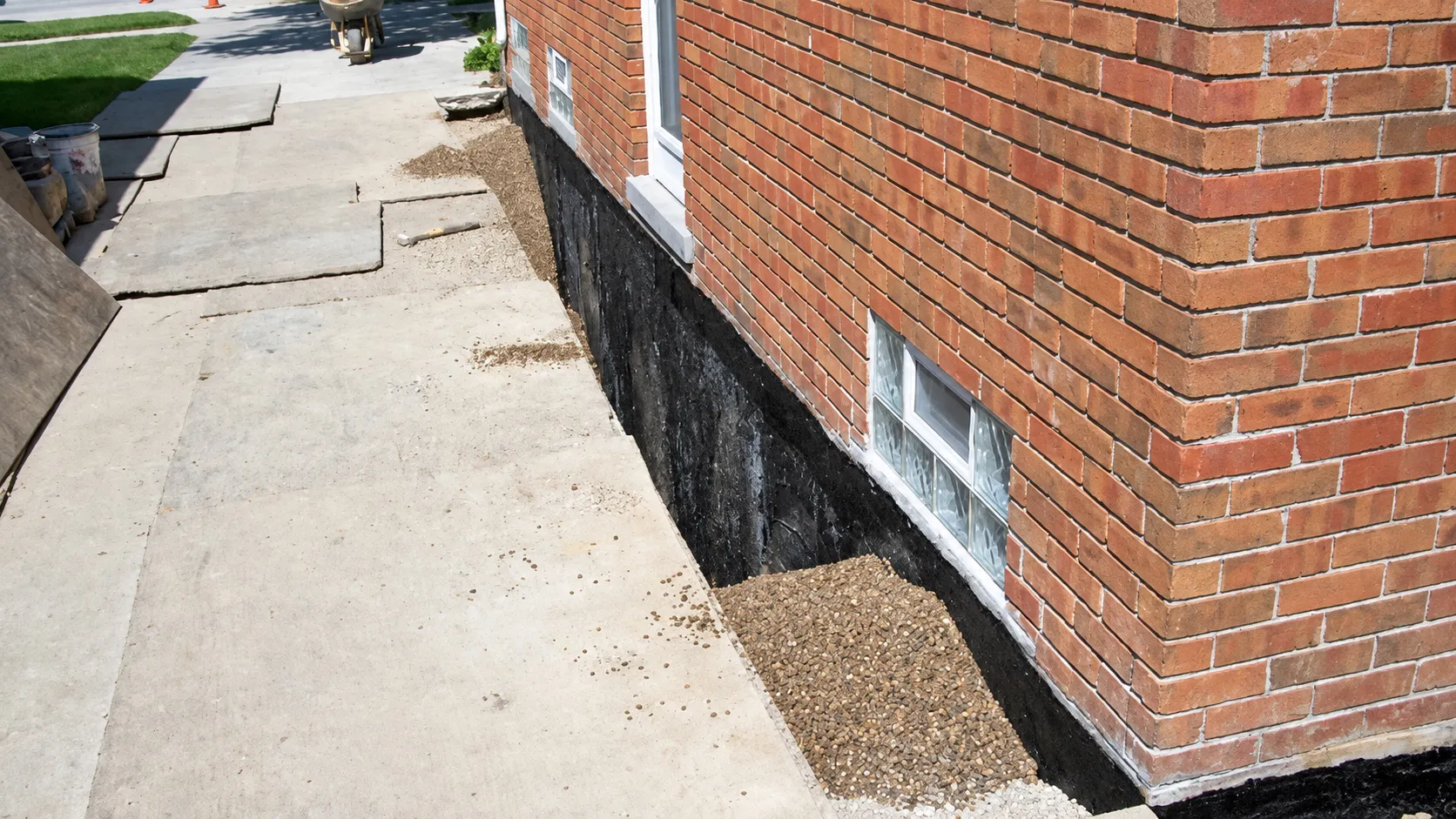
Downspout rules add to the load. All five Pointes bar downspouts from the sanitary or combined sewer, so on older houses roof water can end up beside the foundation if the discharge isn’t routed away. The City’s, Park’s and Shores’ ordinances even list, as grounds for an exemption, that disconnecting would send water next to a basement wall. If yours empties at the wall, start with exterior water management.
Were the Pointes’ big basement floods sewer backups or seepage?
The biggest floods the Pointes have documented were mostly sewer backups: water forced up through floor drains when pipes and pump stations couldn’t keep up.
- Farms, May 25, 2011: 288 flooding calls, all residential, after the storm topped what the combined sewers and the Kerby/Chalfonte pump station could handle (council minutes).
- Park, June 25–26, 2021: 8.19 inches of rain, the top total in the National Weather Service report; the Grosse Pointe News later tied sewer and runoff backups in 3,000 Park homes and businesses to that storm and, to a lesser degree, a second one on July 16.
- City: all sanitary lines end at the Neff Road pump station, and the City warns that when it is overloaded, backups can reach homes anywhere, even south of Waterloo (City FAQ).
- Woods, 2021: Public Works logged 264 flooded basements, up from 16 the year before, and blamed the June and July storms without saying how the water got in (DPW report).
Exterior waterproofing does not stop a sewer backup; that is a licensed plumber’s job, usually a backwater valve. In the Park, a footing drain tied into the sanitary lateral must be disconnected before a sanitary backflow device goes in. Exterior work fixes the other water: seepage through walls, cracks and the floor-wall joint once the ground is saturated. See how to tell a backup from seepage, or book a leak diagnosis.
| City | Sewer system | Downspout rule |
|---|---|---|
| Grosse Pointe Park | Close to 95% separated; storm water pumped to the lake; a last-resort relief valve the city says was never needed | §14-21: none on the sanitary sewer, sump pumps included |
| City of Grosse Pointe | Mostly separate pipes, but all sanitary flow and the storm water north of Waterloo go to the Neff Road pump station | §78-72, since October 2021 |
| Grosse Pointe Farms | Lakeside District separated in the early 2000s; Inland District combined, partial separation under way through 2027 | Code 11-10: none on the combined or sanitary sewer |
| Grosse Pointe Woods | Combined sewer, sent to Wayne County’s Milk River basin | Ordinance 86-241: all disconnected |
| Grosse Pointe Shores | Separate sanitary and storm sewers; sanitary flow to the Southeast Macomb Sanitary District | Chapter 36: none on the sanitary sewer |
What the Farms project will and won’t fix is answered below and on our Grosse Pointe Farms page.
If sewer water reached your basement, Michigan law gives you 45 days to notify the city in writing (MCL 691.1419).
What local rules shape an exterior dig in each Pointe?
Each city has its own building department, and only the Shores names waterproofing on its permit form. We pull the permits the job needs ourselves.
| City and building department | Waterproofing permit | Other rules near a dig |
|---|---|---|
| Grosse Pointe Park (313) 822-4365 | Not named; call if unsure | Construction and digging 7 a.m. to 6 p.m. on weekdays only, unless the City Manager grants a permit (§28-226) |
| City of Grosse Pointe (313) 885-5800 | Not published; call | No digging within 5 feet of a public tree without written permission (§82-58) |
| Grosse Pointe Farms (313) 885-4285 | Not named; call | A Wayne County soil erosion permit before any earthwork within 500 feet of the lake |
| Grosse Pointe Woods (313) 343-2426 | Not named; digging on private property needs a permit unless a building permit covers it (Sec. 20-29) | No digging within 6 feet of a city tree without permission (Sec. 46-62) |
| Grosse Pointe Shores (313) 881-6565 | Yes, a Building, Roof & Waterproofing permit | City handout: even hand digging can damage buried lines |
Footing drains have their own rules. The Park’s §14-22 makes a footing drain on the sanitary sewer illicit even if the city once allowed it, and both the Park (§14-52) and the City (§78-68) list footing drains among discharges allowed into the storm system. Where new drain tile can drain depends on your street and your city.
Selling soon? The City and the Woods inspect basement walls at sale, and the Park and the Farms check downspouts.
What should City of Grosse Pointe homeowners know?
The City’s housing is nearly as old as the Park’s: about 60% of its homes were built in 1939 or earlier (Census ACS 2020–2024), and its Master Plan says most single-family homes date to the 1920s and 1930s. The same plan puts the narrowest lots, on Notre Dame and on St. Clair and Neff near the Village, at 30 to 40 feet wide.
The City’s big public fix has stalled. FEMA confirmed funding in 2023 for a new storm sewer north of Waterloo, but a 2025 change in its cost-benefit rules dropped the project below the qualifying score (City update), and in April 2026 the City Manager told council to explore alternatives (draft minutes). Until something is built, protection happens house by house.
The City adopted its downspout disconnection ordinance in October 2021 (§78-72) and enforces it at sale and through a citywide exterior inspection program.
Where do our six services fit in the Pointes?
- Exterior basement waterproofing: for walls in the wet clay till under most of the Woods, dug by hand to the footing and sealed from outside.
- Foundation crack repair: sealed on the outside face, before a point-of-sale inspection like the Woods’ looks at your basement walls.
- Basement leak diagnosis and repair: backup or seepage first, since the Pointes’ biggest documented floods were mostly sewer backups through floor drains.
- Drain tile replacement: new tile in pea stone; where it drains depends on rules like the Park’s §14-22.
- Exterior water management: grading and downspout routing, now that every Pointe keeps downspouts off the sanitary or combined sewer.
- Waterproofing under porches, decks and concrete: when a walk, driveway or porch covers the leaking wall; the Woods lists installing all three as work that needs a permit.
Every foundation we waterproof is dug by hand, with no backhoes.
The Grosse Pointes by the numbers
- About 93% of the roughly 19,200 homes in the five Grosse Pointes were built before 1980, and about 79% before 1960 (ACS 2020–2024). Source data.census.gov (opens in a new tab)
- Share of homes built in 1939 or earlier (ACS 2020–2024): Park 62%, City of Grosse Pointe 60%, Farms 36%, Woods 12%, Shores 10%. Source data.census.gov (opens in a new tab)
- Median year built (ACS 2020–2024): 1939 or earlier in the Park and the City of Grosse Pointe, 1946 in the Farms, 1953 in the Woods, 1961 in the Shores. Source data.census.gov (opens in a new tab)
- The City of Grosse Pointe’s narrowest lots, on Notre Dame and on St. Clair and Neff near the Village, are typically 30 to 40 feet wide. Source grossepointecity.org (opens in a new tab)
- USDA rates most of the mapped soil in the Park and the Woods “Very limited” for basements, while Livonia, the main soil in the Shores, is rated “Somewhat limited.” Source websoilsurvey.nrcs.usda.gov (opens in a new tab)
- Livonia covers about half of Grosse Pointe Shores’ mapped soil: sand to about 4.5 feet over dense clay at about 5.2 feet, with a spring water table about 2.7 feet down. Source websoilsurvey.nrcs.usda.gov (opens in a new tab)
- Soils get sandier toward the lake: in Grosse Pointe Farms, Brems sand is most common along Kercheval and Kerby, while poorly drained Ziegenfuss clay is most common near Mack Avenue. Source websoilsurvey.nrcs.usda.gov (opens in a new tab)
- All City of Grosse Pointe sanitary sewers flow to the Neff Road pump station, as do storm sewers north of Waterloo; south of Waterloo, storm sewers drain to the lake. Source grossepointecity.org (opens in a new tab)
- Grosse Pointe Shores runs separate sanitary and storm sewers, and its sanitary flow goes to the Southeast Macomb Sanitary District. Source semsd.org (opens in a new tab)
- Of the five Pointes, only the Woods runs a combined sewer citywide; the Farms’ Inland District is also combined, while the Park, the City, the Shores and the Farms’ Lakeside District are separated or mostly separated. Source gpwmi.us (opens in a new tab)
- FEMA confirmed funding for the City of Grosse Pointe’s storm sewer separation in 2023; a 2025 change in FEMA’s cost-benefit rules dropped it below the qualifying score. Source grossepointecity.org (opens in a new tab)
- In April 2026 the City of Grosse Pointe’s manager told council to begin exploring alternatives to its stalled FEMA-funded stormwater separation project. Source grossepointecity.org (opens in a new tab)
- The City (§78-72), Park (§14-21) and Shores (Chapter 36) downspout ordinances each allow an exemption where disconnection would send water next to a basement wall. Source library.municode.com (opens in a new tab)
- Downspout deadlines came decades apart: Shores downspouts had to leave the sanitary sewer by June 1, 1998, Farms downspouts by Sept. 30, 1999, and the City adopted its disconnection ordinance on Oct. 18, 2021. Source library.municode.com (opens in a new tab)
- The City of Grosse Pointe enforces its downspout ordinance at sale and through an exterior inspection program that covers the whole City over four years. Source grossepointecity.org (opens in a new tab)
- Grosse Pointe Shores’ building permit application is titled “Application for Building, Roof & Waterproofing Permits & Plan Review.” Source gpshoresmi.gov (opens in a new tab)
- The City of Grosse Pointe’s sale inspection checklist has inspectors check basement walls for evidence of excessive current leaking or foundation failure. Source grossepointecity.org (opens in a new tab)
- At sale, the City of Grosse Pointe and the Woods inspect basement walls, while the Park and the Farms tie downspout checks to the Certificate of Occupancy. Source library.municode.com (opens in a new tab)
- The City (§82-58) and the Woods (Sec. 46-62) bar digging within 5 and 6 feet of a public tree, respectively, without permission. Source library.municode.com (opens in a new tab)
- On June 25–26, 2021, the National Weather Service recorded 8.19 inches of rain in Grosse Pointe Park and 6.50 inches in Grosse Pointe Farms. Source weather.gov (opens in a new tab)
- The Grosse Pointe News reported backups of combined runoff and sewer water into 3,000 Grosse Pointe Park homes and businesses after the June 25 and July 16, 2021 storms. Source grossepointenews.com (opens in a new tab)
- Grosse Pointe Farms received 288 flooding calls, all residential, after the May 25, 2011 storm overwhelmed its combined sewers and pump station. Source grossepointefarms.org (opens in a new tab)
Neighborhoods we serve in the Grosse Pointes
- Grosse Pointe Park
- Grosse Pointe Woods
- Grosse Pointe Farms
- Grosse Pointe Shores
Updated