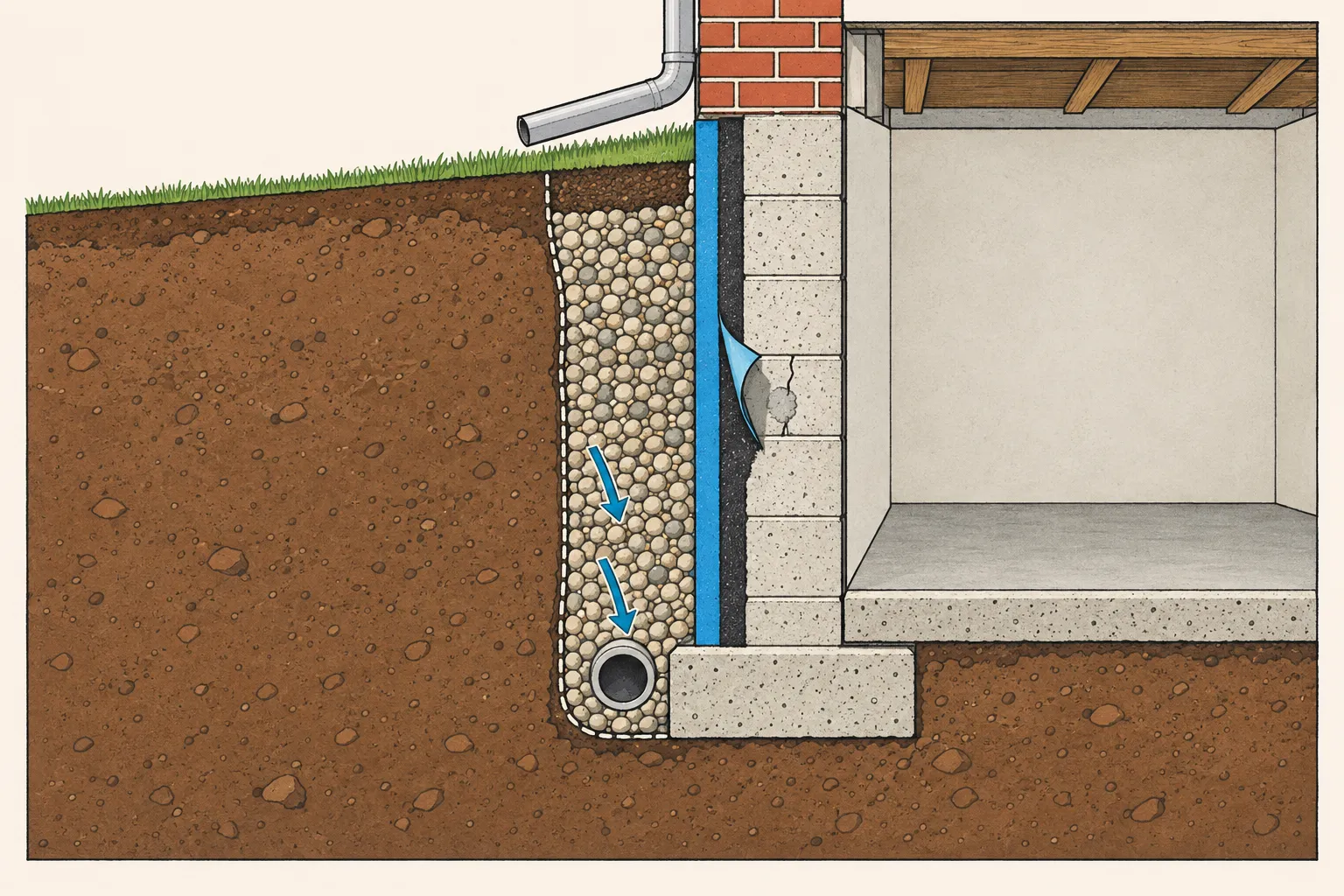
Clark Basement Waterproofing, which serves St. Clair Shores, the Grosse Pointes, Warren and Macomb County, does exterior basement waterproofing: it stops water on the outside of the foundation wall, before it gets in. Crews dig to the footing by hand, seal cracks with hydraulic cement, apply tar and a waterproof membrane, lay new drain tile in pea stone and restore the yard. Most jobs take 3 to 7 days and carry a written 10–15 year warranty.
What is exterior basement waterproofing?
Exterior basement waterproofing is work done on the outside of the foundation wall. The soil is dug away, the wall is sealed and coated, and new drain tile is laid at the footing so groundwater has a way out. It treats the wall where water gets in, instead of collecting water once it’s inside.
Clark Basement Waterproofing does exterior work only. We don’t install interior drainage systems. Every job is dug by hand, with no backhoes, and older foundations under 1920s to 1970s homes are our specialty.
What are the signs you need exterior waterproofing?
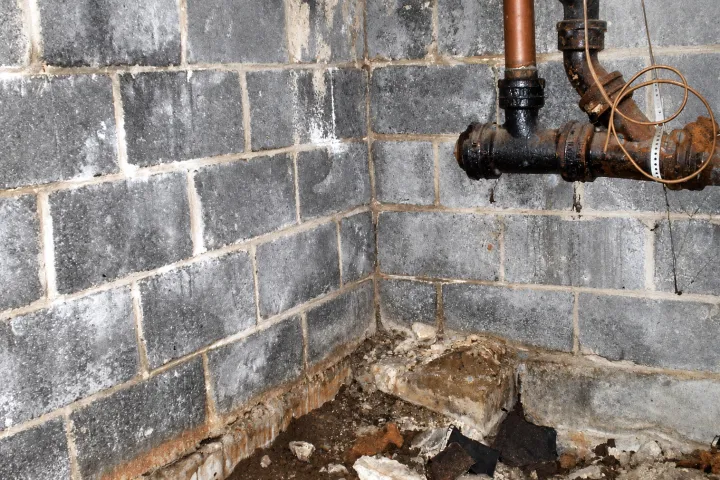
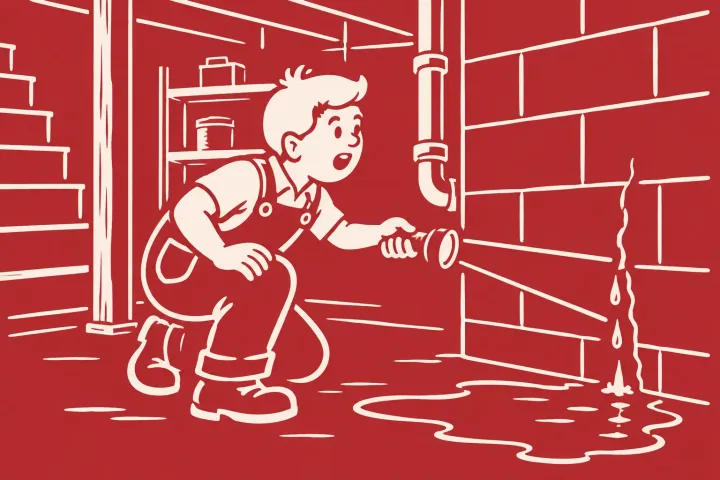
The clearest sign is water coming through the wall: at a crack, down its face or where it meets the floor, usually after heavy rain or during the spring thaw. Other signs to look for:
- Damp patches or water lines on the wall after storms.
- White, powdery deposits (efflorescence), which show water has moved through the concrete or block.
- Peeling paint or a musty smell in the basement.
- Cracks that darken or drip when it rains. See foundation crack repair.
If water came up through a floor drain instead, especially in a big storm, it was most likely a sewer backup, which exterior waterproofing doesn’t fix. See sewer backup vs. seepage and why basements leak.
How does Clark waterproof a basement from the outside?
An exterior waterproofing job follows the same steps every time, and most take 3 to 7 days. The full walkthrough, from estimate to cleanup, is on our process page.
1. Dig to the footing by hand
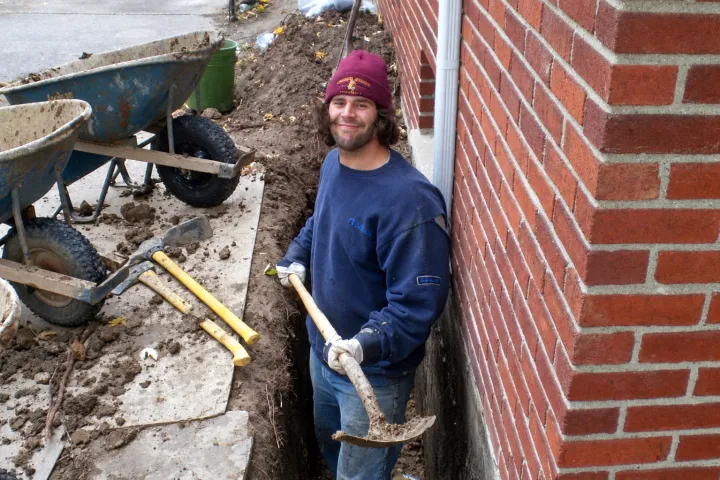
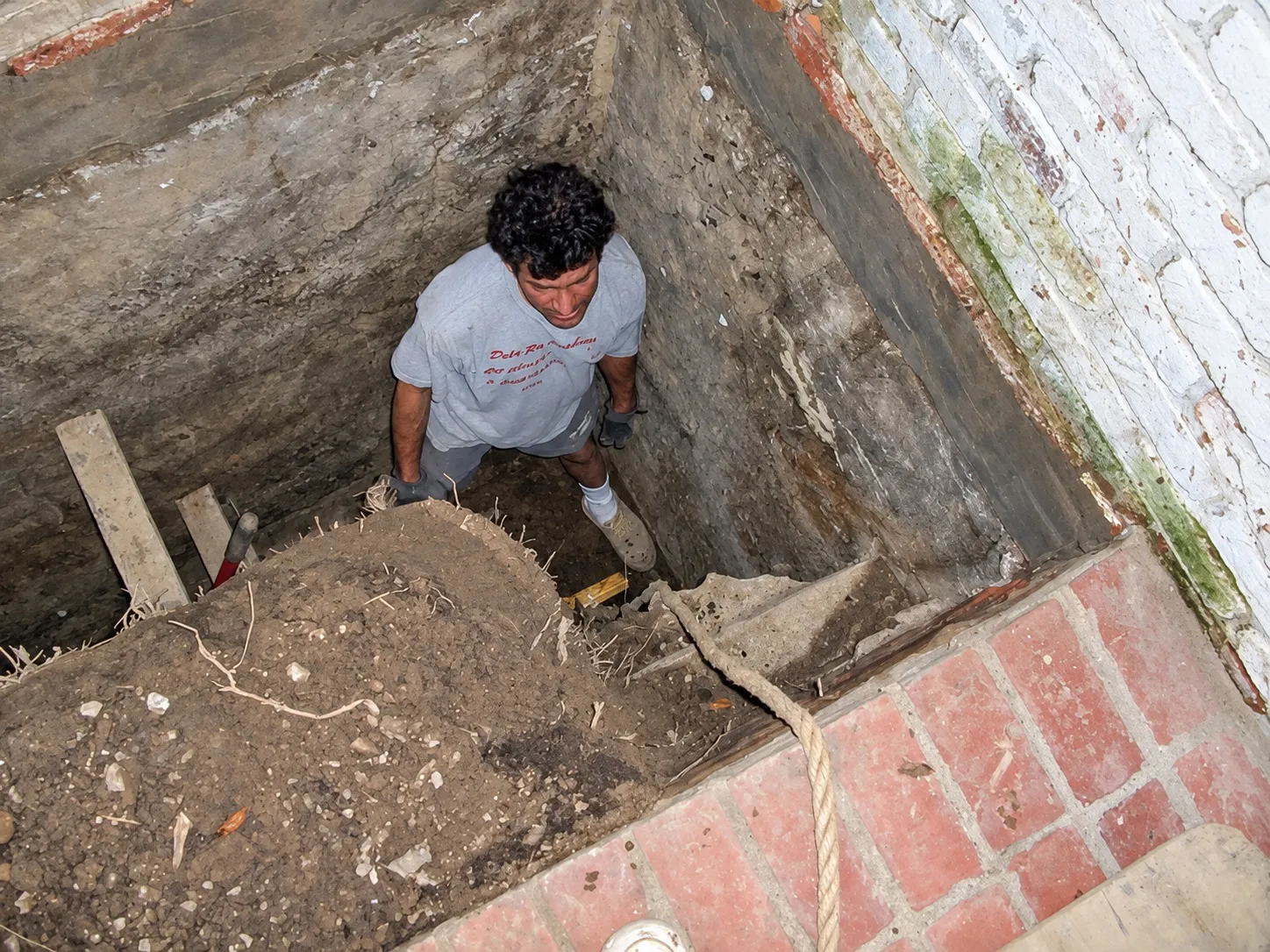
The crew hand-digs a trench along the wall down to the footing, the concrete base the wall sits on. That exposes the full wall so it can be sealed top to bottom.
2. Seal cracks with hydraulic cement
Cracks are packed with hydraulic cement from the outside, where the water actually gets in.

3. Coat the wall with tar
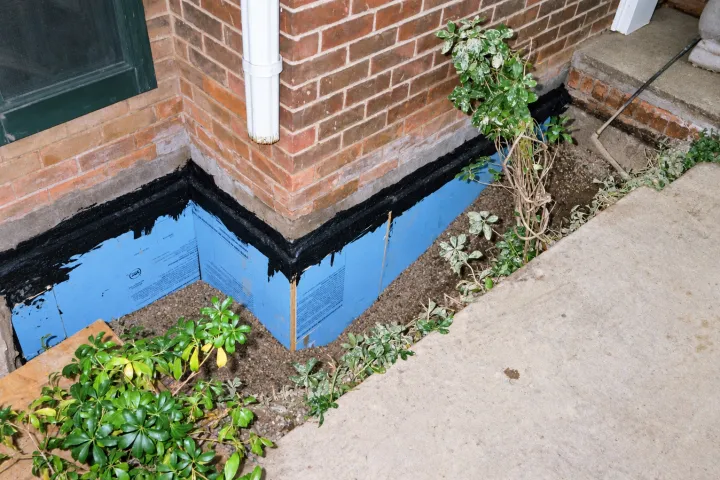
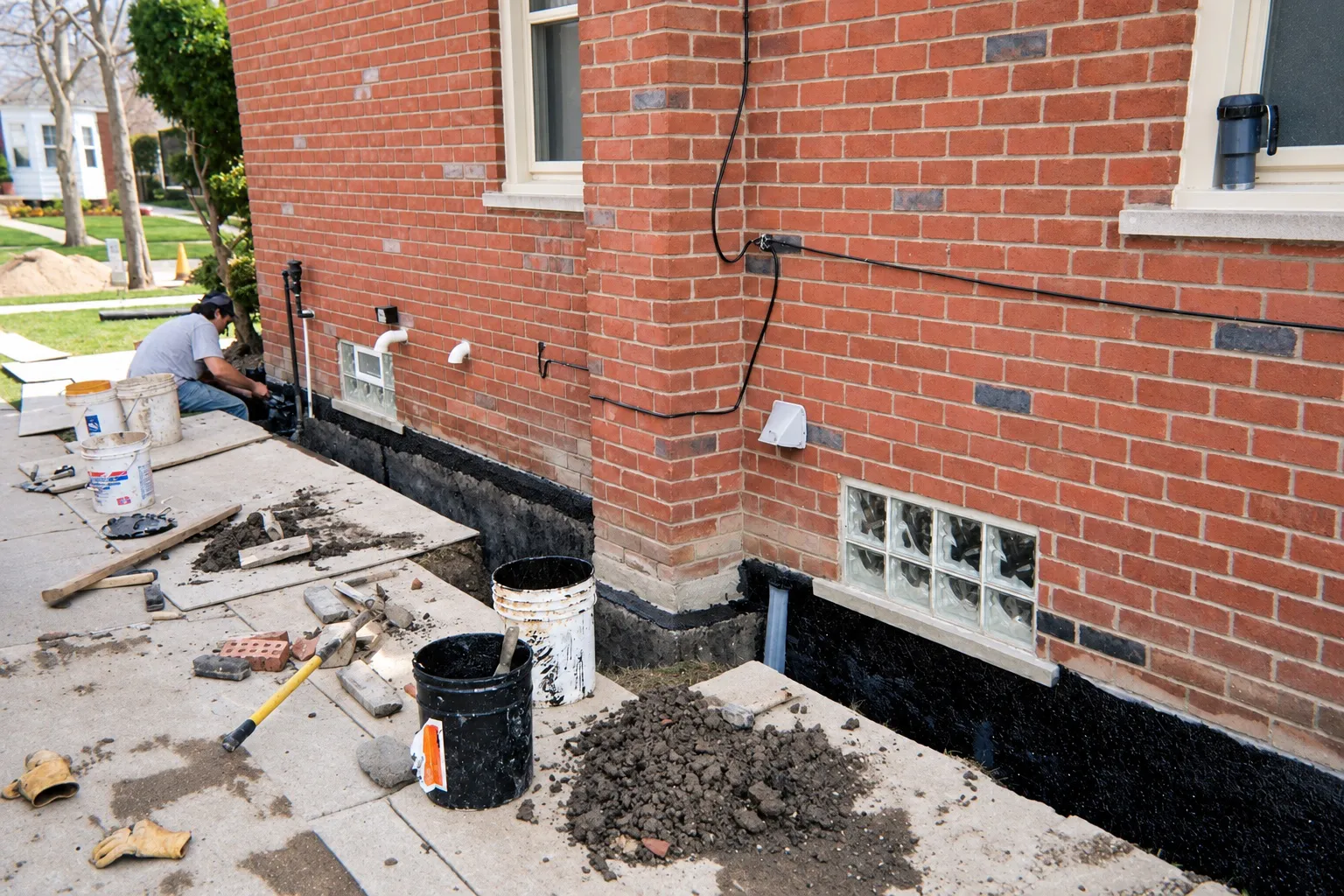
The sealed wall is coated with tar, a dampproofing layer that resists moisture from the soil.
4. Cover it with a waterproof membrane
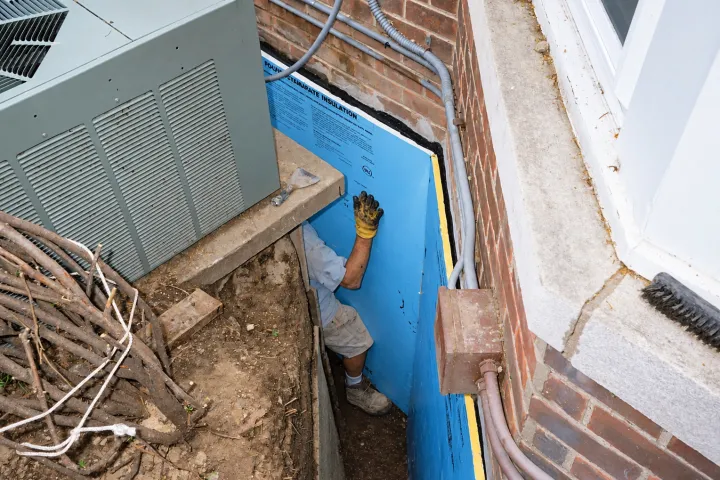
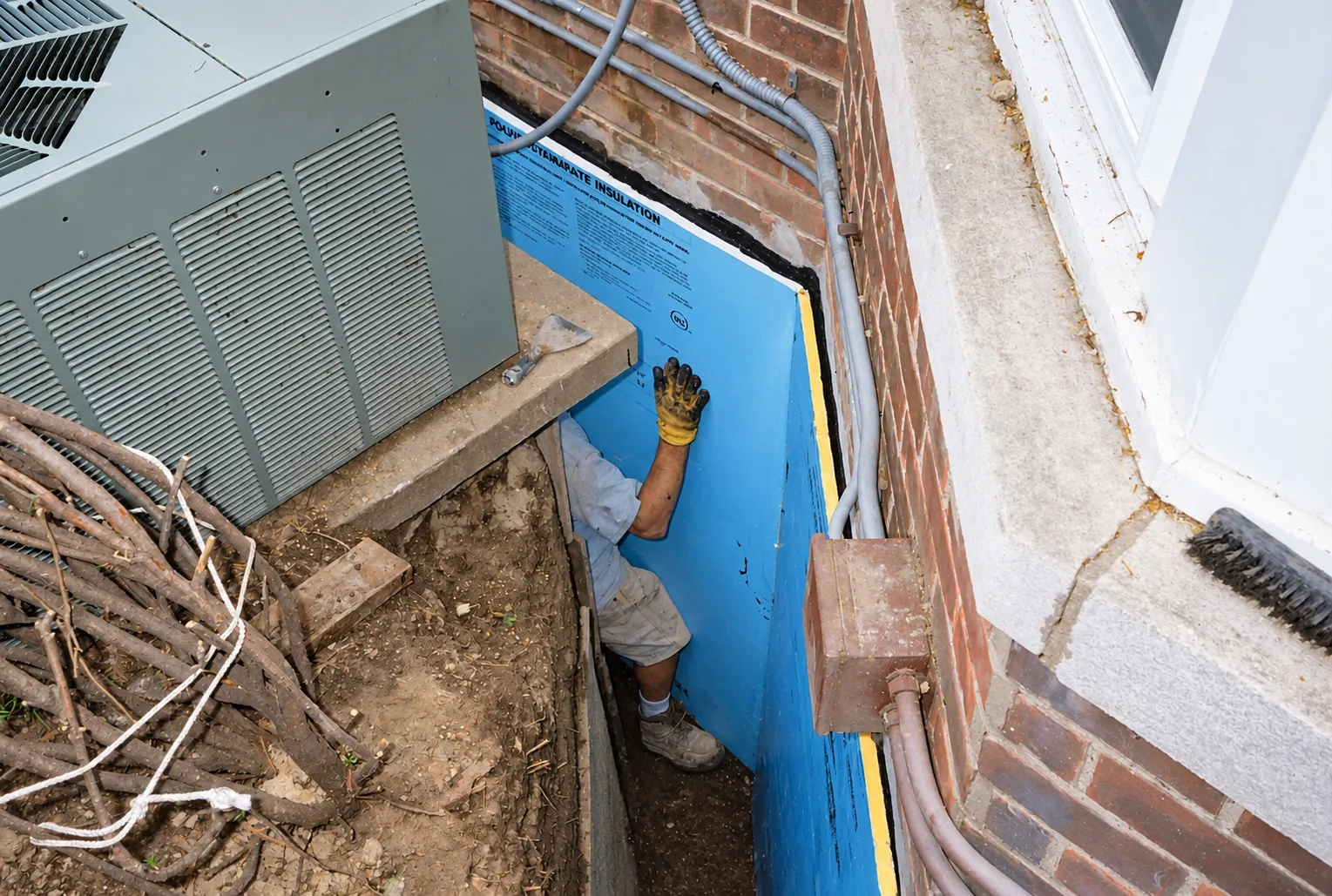
A waterproof membrane goes over the tar, adding a waterproof layer on top of the dampproofing.
5. Lay new drain tile in pea stone
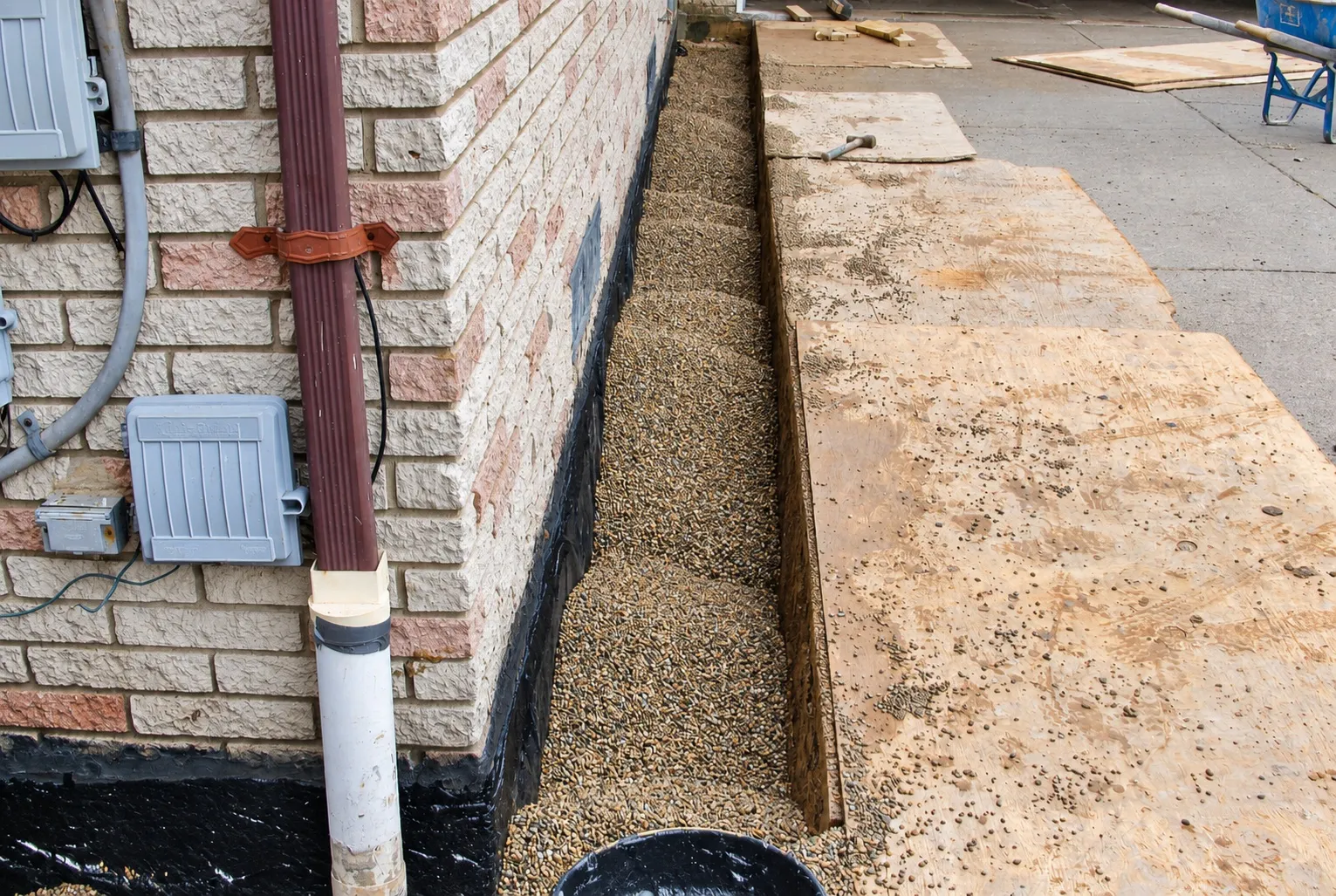
New drain tile goes in beside the footing, surrounded by pea stone, so groundwater has a path away from the wall. Where the tile drains depends on your house and your city’s rules (see the questions below and drain tile replacement).
6. Backfill and restore the yard
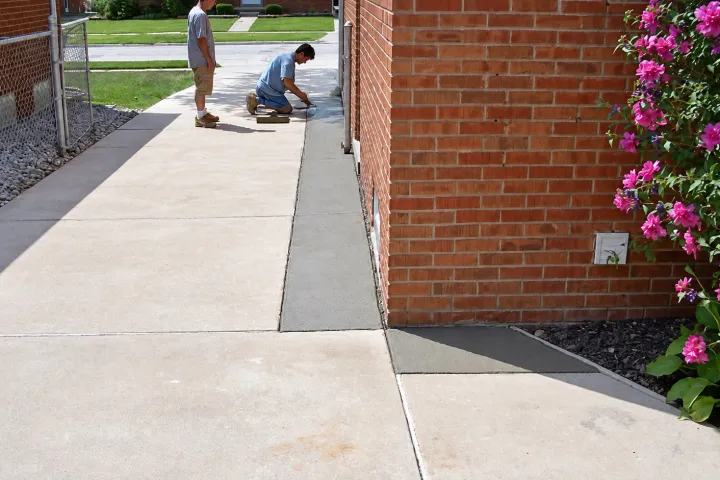
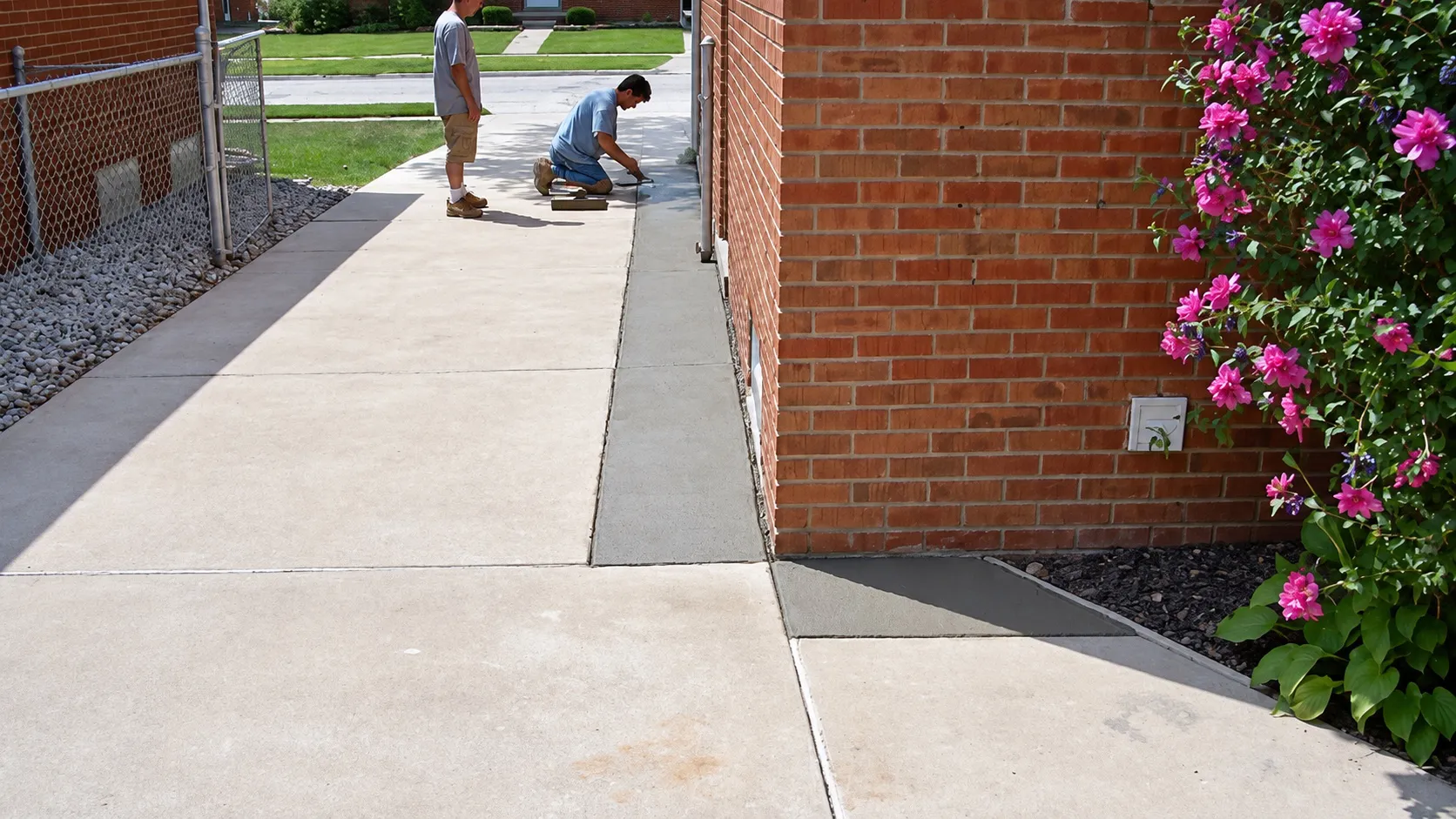
The trench is backfilled and the yard is restored. Any walk, driveway or patio cut to reach the wall is replaced, and Clark’s own crew pours the new concrete.
Why does Clark dig by hand instead of using a backhoe?
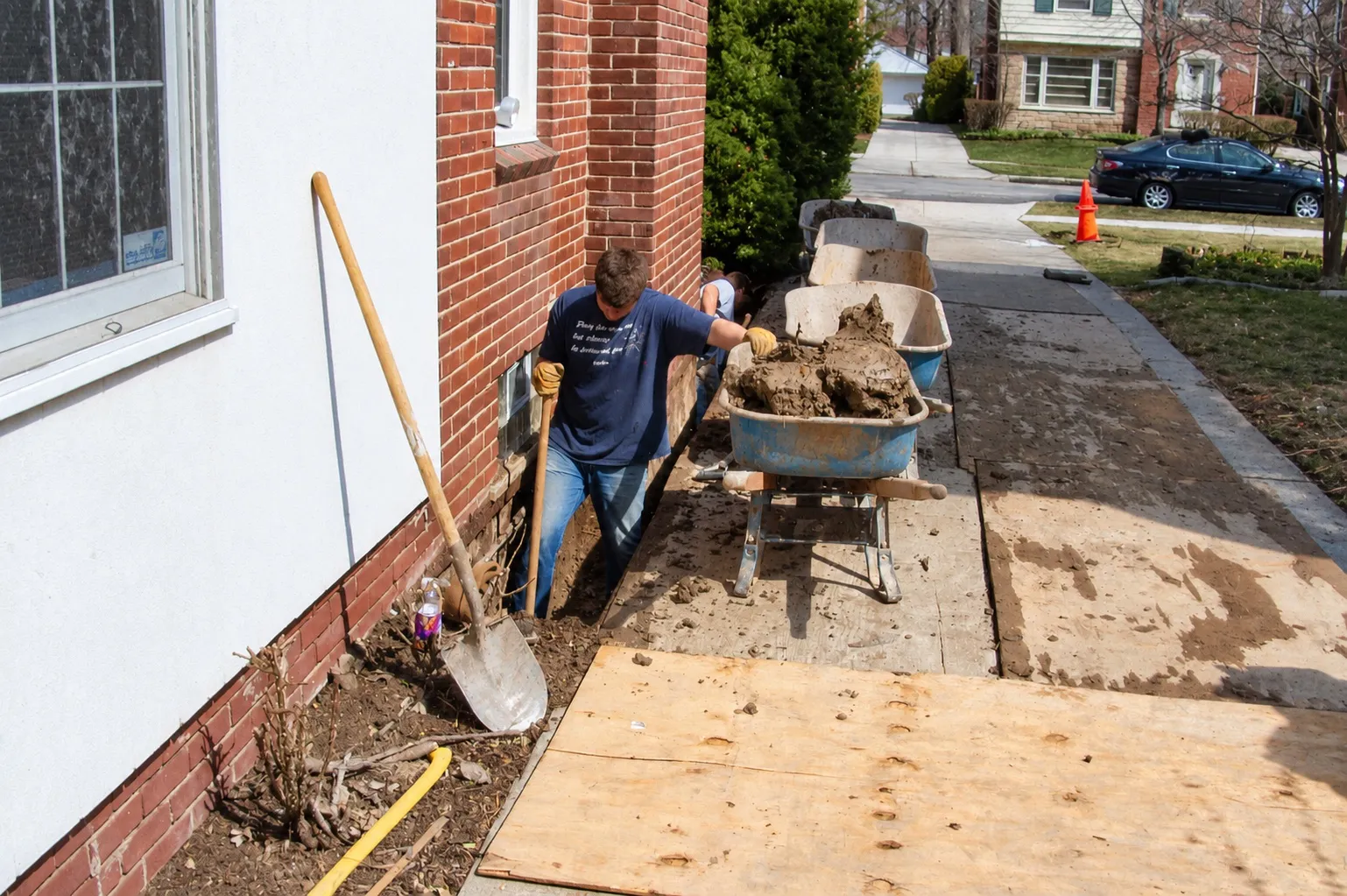
Hand digging reaches places a machine can’t and leaves less damage behind: a narrow side yard between two houses, a wall behind a porch or bushes, a walk right along the foundation.
The digging stays in a trench along the wall. On the job below, plywood covered the lawn and walkway while the soil came out. More in hand-dug vs. machine excavation.
Hand digging also matters near buried lines. We call MISS DIG 811 before every job. Michigan law requires notice at least 3 business days before digging, and within 48 inches of either side of a utility’s marks the lines have to be exposed by “soft excavation,” which includes hand digging. Utilities don’t mark private lines, such as sprinkler pipes, invisible dog fences or a line to a detached garage.
Is it better to waterproof a basement from the outside or the inside?
Where it can be done, outside is better: it stops water before it reaches the wall. Building Science Corporation reached the same conclusion in research prepared for the U.S. Department of Energy: “Exterior perimeter drainage is always preferable to interior perimeter drainage.”
The same research is candid about the limits: in an existing house, exterior drainage “may not be practical or possible,” interior drainage to a sump pump is a legitimate alternative, and “many problem cases can be solved with grading and surface drainage.”
| Exterior waterproofing | Interior drain and sump | |
|---|---|---|
| Where water is stopped | Outside, before it reaches the wall | Inside, after it comes through the wall or floor joint |
| What happens to the wall | Sealed, tarred and covered with membrane | Stays wet on the soil side |
| Where the work happens | In the yard, along the outside of the wall | Inside, along the basement walls and floor |
| Best fit | Leaking walls and cracks, failed outside drain tile, finished basements | Walls that can’t be reached from outside |
| Won’t fix | Sewer backups through floor drains | Sewer backups through floor drains |
Interior drainage can be the practical choice when a wall can’t be reached from outside, such as under an addition. If downspouts or grading are sending water to the wall, fixing those may be enough (see exterior water management). The full comparison is in interior vs. exterior waterproofing.
What won’t exterior waterproofing fix?
It handles groundwater and seepage through the walls. It does not fix:
- Sewer backups through a floor drain. Much of the basement flooding in the June 2021 storms was sewer backup. The Great Lakes Water Authority’s preliminary review said that kind of flooding can come from local sewer restrictions and trunk sewer capacity. Backwater valves are a licensed plumber’s job.
- Plumbing leaks from pipes inside the house.
- Condensation, moisture from indoor air that collects on cool basement walls.
- Structural movement. A wall that bows inward, or a crack that is horizontal or keeps widening, needs a structural engineer’s opinion first.
Not sure which problem you have? Start with basement leak diagnosis.
What does Michigan’s building code say about foundation waterproofing?
The code in force is the 2015 Michigan Residential Code; its 2021 update is on hold under a stipulated temporary court order during litigation (checked September 27, 2026). In plain English:
- Drains are required around basement foundations, except on well-drained sand and gravel soils (R405.1).
- Basement walls must at least be dampproofed, and a bituminous (tar) coating is one of the listed materials (R406.1).
- Walls must be waterproofed where a high water table or other severe soil-water conditions are known to exist, and the code lists membrane materials for that (R406.2).
- The ground should fall at least 6 inches within the first 10 feet from the foundation (R401.3).
Most homes here were built decades before this code. Clark’s method goes past the dampproofing minimum and adds both layers: tar, then a waterproof membrane.
Why do older Metro Detroit foundations leak?
Age, clay soil and water pressure. According to the 2020–2024 American Community Survey, the median home in St. Clair Shores was built in 1957 and about 91% were built before 1980. In Grosse Pointe Park, the same survey found about 62% were built in 1939 or earlier.
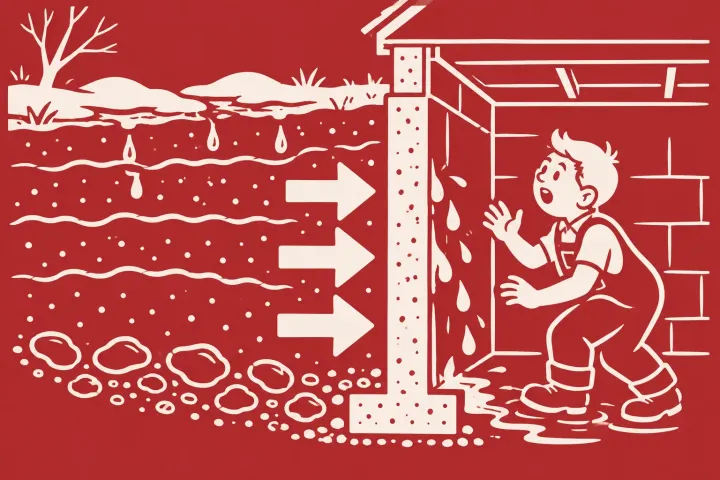
Soil makes it worse. The USDA soil survey maps most of St. Clair Shores as poorly or very poorly drained, much of it clay laid down by ancient glacial lakes, so the soil beside a basement stays wet for long stretches. Water in saturated soil pushes on a wall with about 62.4 pounds per square foot for every foot of depth, roughly 437 pounds per square foot at the base of a 7-foot wall. Building Science Corporation notes that this pressure “will push water through any available joints, imperfections, or cracks in the foundation.” More in hydrostatic pressure and poured vs. block wall cracks.
Owner Mark Rhoades has more than 40 years of hands-on waterproofing experience and runs every job. He is on site at the key stages of every job.
What affects the cost of exterior waterproofing?
Pricing comes from a free, written on-site estimate. The main factors:
- How much wall has to be dug, and how deep the footing is.
- Concrete in the way: driveways, walks, porches, patios or decks. See waterproofing under porches, decks and concrete.
- The wall’s condition: how many cracks, how large, and whether it is block or poured.
- Access (tight side yards, landscaping, buried lines) and heavy clay, which is slow to dig by hand.
- What your city’s permit rules require.
Clark offers a 10% senior discount. The work comes with a written 10–15 year warranty; the length depends on the job. See our warranty page, or book a free on-site estimate.
Updated