

Homeowners insurance in Michigan usually does not cover basement leaks caused by groundwater seeping through the foundation. Standard policies typically exclude seepage, and they exclude sewer or drain backup unless you add a backup endorsement. Flood insurance covers a flood as its policy defines it, not ordinary seepage. If a public sewer backed up into your home, Michigan law requires written notice to the public agency that runs the sewer within 45 days to keep a claim alive.
When water shows up in a basement, one of the first questions is whether insurance will pay for it. The answer depends less on how much water got in than on where it came from. Policies sort basement water by its source, and groundwater seeping through the foundation is the kind standard homeowners policies leave out.
This guide covers how a typical homeowners policy treats each kind of basement water, what a water and sewer backup rider adds, what flood insurance does and doesn’t cover, how to file a claim with your city after a sewer backup, and what to document. The rules come from the sources listed at the end: Michigan’s Department of Insurance and Financial Services (DIFS), the federal flood insurance policy, a standard homeowners policy form and Michigan law.
Clark is not an insurance agent. Check your own policy. This page explains how coverage commonly works. It is not insurance or legal advice, and the wording of your own policy is what counts. Ask your agent or insurer what yours covers before you rely on it.
Which kinds of basement water does insurance cover?
It depends on the source. Seepage through the foundation is usually excluded. A sewer or drain backup is covered only if you added backup coverage. Flooding needs a separate flood policy. A sudden leak from your own plumbing is usually covered. The table shows how each one is commonly handled.
| Water | Home policy | What can pay | Who fixes it |
|---|---|---|---|
| Seepage through a wall, a crack or the floor-wall joint after rain or thaw | Usually excluded as underground water | Usually nothing. Flood insurance only if a flood in the area caused it | An exterior waterproofer, or downspout and grading fixes |
| Sewer or drain backup up through a floor drain, toilet or tub, often with sewage | Excluded unless you add coverage | A water and sewer backup endorsement, up to its limit. Possibly a claim against the city | A plumber, and your city’s public works department |
| Sump overflow when the pump fails or can’t keep up | Excluded unless you add coverage | Backup coverage, for the water damage but not the pump | A plumber or sump pump installer |
| Flood: surface water covering two or more acres or properties, including yours | Excluded | Flood insurance, with limited basement coverage | No single trade. Know your flood zone |
| Plumbing leak from a burst pipe, water heater or washer hose | Usually covered as a sudden, accidental discharge, but not the part that failed | Your homeowners policy | A plumber |
The word “flood” is where many claims go wrong. After the April 2026 storms, DIFS reminded Michigan residents that “flood” may have a specialized meaning in a policy, and that water damage from causes such as storm-related rainwater intrusion, sewer backup or a failing sump pump may be covered, depending on the policy. So name the source correctly before you call. Water that came up through a floor drain is a different claim, and a different repair, from water that came through a wall. Our guide to sewer backup vs. seepage shows how to tell them apart.
Why is seepage through the foundation usually excluded?
Because standard homeowners forms exclude underground water by name. A sample of the standard ISO homeowners form (HO 3, 2000 edition), published by the Insurance Information Institute, excludes water below the surface of the ground, including water that “seeps or leaks through a … foundation.” The same form excludes wear and tear, deterioration, and the settling or cracking of foundations, walls and floors.
Newer editions exist and every insurer writes its own wording, so read the water damage exclusion in your policy. The pattern is common, though: water that works its way through a basement wall from the soil outside is not treated as a sudden accident the way a burst pipe is.
It also means the fix is up to you. Seepage tends to return whenever the soil outside is saturated, after a long rain or at spring thaw, because the water in the ground is still pushing against the wall. Our guide to hydrostatic pressure explains why leaks peak then, and why is my basement leaking? helps you find the source.
What does a water and sewer backup rider cover?
It covers water that backs up through a sewer or drain, or overflows from a sump, up to the limit you choose. It is not part of a standard policy. DIFS says water and sewer backup coverage is not automatically included in a homeowners or renters policy and tells homeowners to talk to their agent about adding it.
According to the DIFS consumer sheet on backup coverage (FIS-PUB 6380), it pays for:
- Water that backs up through a sewer or drain.
- Water that overflows from a sump, including a backup caused by the mechanical breakdown of a sump pump.
It typically does not pay for:
- Loss from a flood.
- Repairing or replacing a broken sump pump.
- Lack of maintenance, or wear and tear, of the sump pump.
Insurers sell it up to a set dollar limit or as a percentage of your dwelling coverage, and it pays only up to the amount you chose. DIFS suggests it for anyone with a finished basement or belongings stored downstairs, and says that if your insurer won’t offer enough, you may consider a different insurer. Compare the limit with what is actually in your basement.
On the east side, this rider often matters more than flood insurance. After the June 2021 storms, the Great Lakes Water Authority’s preliminary findings said basement flooding can result from restrictions in local sewers, from the capacity of the regional trunk sewers, or both. Water that comes up through a floor drain that way is a backup. To keep sewage out next time, the fix is plumbing: ask a licensed plumber about a backwater valve and the permit your city requires. Exterior waterproofing does not stop a sewer backup.
Does flood insurance cover a basement?
Only partly, and only for a flood as the policy defines it. Ordinary seepage isn’t covered. The federal flood policy sold through the National Flood Insurance Program (NFIP) defines a flood as a general and temporary condition in which two or more acres of normally dry land, or two or more properties including yours, are partly or completely under water from overflowing waters, unusual and rapid runoff of surface water, or mudflow.
Three limits matter for a basement:
- Seepage and backups are excluded unless there is a flood in the area and the flood is the proximate cause. A wall that weeps after a hard rain, with no flooding in the neighborhood, is not a flood claim.
- Basement coverage is limited to a list. For the building, it includes furnaces and water heaters, central air conditioners, electrical boxes and outlets, sump pumps, fuel tanks, attached stairs, unfinished drywall, insulation, footings and foundation walls, and cleanup. For contents, it covers clothes washers and dryers, food freezers and the food in them, and portable or window air conditioners. Carpet, paneling, furniture and most stored belongings are not on those lists.
- There is a 30-day wait. A new NFIP policy takes effect 30 days after purchase, with a few exceptions, such as buying it while taking out or renewing a mortgage. Buying it once a storm is in the forecast is too late for that storm.
Few east-side households that asked FEMA for help in 2014 had it. Of 761 households in St. Clair Shores ZIP codes that registered for FEMA assistance after the Aug. 11, 2014 storm, 30 had flood insurance. In Warren, fewer than 4 percent of the more than 6,500 households that registered had it (OpenFEMA registration data, pulled Sept. 27, 2026).
Whether it is worth buying is a question for your agent. If you live near the lake, a canal or a drain, start by checking your flood zone. The City of St. Clair Shores walks residents through looking up a property on Macomb County’s GIS map or on FEMA’s flood map site (see Sources). Our St. Clair Shores page covers the city’s flood history.
Can you file a claim with your city after a sewer backup?
Yes, but you must notify the city in writing within 45 days. Under Michigan law (MCL 691.1419, added by Public Act 222 of 2001), you can’t be compensated for a sewer backup unless you give written notice to the governmental agency within 45 days after you discovered the damage, or should have discovered it. The law covers storm and combined sewers as well as sanitary sewers.
The notice doesn’t need to be long. The law limits what it has to contain to:
- your name, address and phone number
- the address of the damaged property
- the date you discovered the damage
- a brief description of the claim
In St. Clair Shores, the city’s claim page asks residents who had sewage or storm water back up into the home to call the Department of Public Works (sewer) at 586-445-5363, citing Public Act 222, and to email a completed Flood Claim Form to the Finance Department. Our guide to sewer backup vs. seepage lists where to file in other cities. If you report a backup by phone first, the law requires the city to tell you in writing how to file and who receives the notice. Send the written notice either way, and keep a copy.
Filing preserves a claim. It doesn’t guarantee payment. To be compensated, the law requires showing that the public sewer had a defect the city knew or should have known about and didn’t fix in a reasonable time, and that the defect was a substantial proximate cause of the backup and the damage. A backup caused mainly by a blockage in your own sewer lead, or by a sump, downspout or other drain connected on your property, doesn’t qualify. And a city claim is only for backups: groundwater seeping through your walls is not a sewer event.
What should you document after water gets in?
Everything, before it is cleaned up or thrown away. DIFS tells residents to document the loss with photos or video and not to get rid of damaged items until the insurance company says so. The standard homeowners form also asks you to give prompt notice, protect the property from further damage, keep a record of repair costs and prepare an inventory of damaged belongings. A city claim needs reasonable proof of what damaged belongings were worth, and photos count.
- Where the water came in. Photos of the floor drain, the wall, any crack and the floor-wall joint. This is what separates a backup from seepage.
- How high it got. The water line on walls, boxes and appliances, with something in the frame for scale.
- What it looked like. Clear water, or sewage and debris.
- When it happened. The date and time you found it and the weather that day. The 45-day notice period for a city claim starts when the damage is discovered.
- What was damaged. A room-by-room list with photos, rough age and value. Keep the items until the adjuster says you can discard them.
- What you spent. Receipts for pumping, cleanup, fans, dehumidifiers and urgent repairs to protect the house.
- Who you talked to. Claim numbers, names, dates of calls, and a copy of any notice you sent the city.
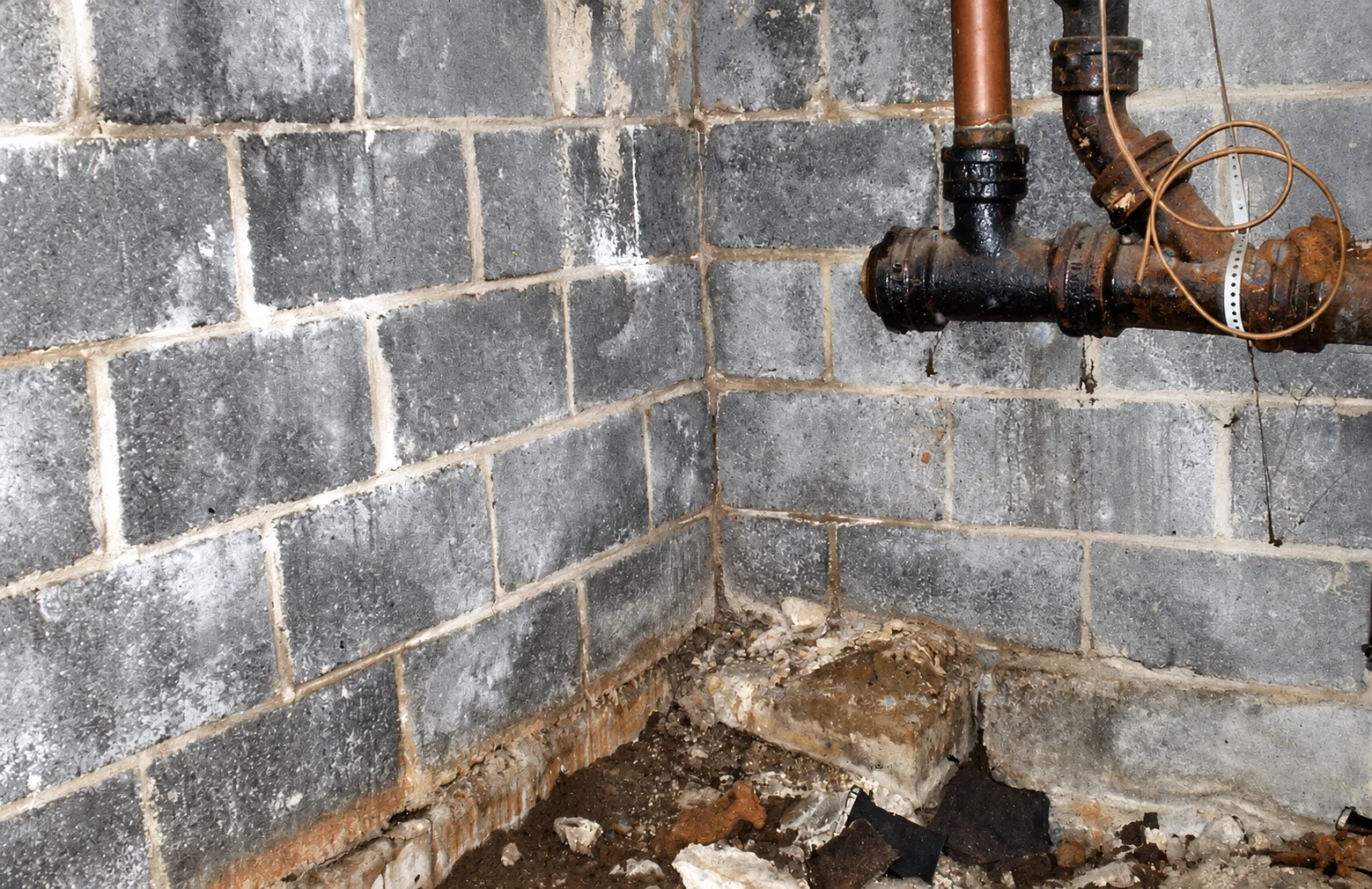
Keep those records after the claim is settled. Michigan’s seller disclosure form asks, “Basement/crawl space: Has there been evidence of water?” Photos, claim papers and repair invoices help you answer it accurately when you sell.
Be careful who you hire after a storm. DIFS warns that people posing as adjusters and contractors often go door to door after severe weather, and it advises checking a contractor’s licenses, references and insurance. Clark Basement Waterproofing is licensed and insured. If you can’t settle a claim dispute with your insurer directly, DIFS’s consumer hotline is 877-999-6442.
Will insurance pay for waterproofing?
Usually not. Insurance pays for sudden, covered damage. It isn’t written to pay for fixing the cause of seepage, and the exclusions for groundwater, wear and tear, deterioration and foundation cracking all point the same way. Even when a backup rider or a flood policy pays a claim, the payment is for the damage. Plan on paying for waterproofing yourself.
That makes it a planning decision, and the first step is matching the fix to the source:
- Water through walls, cracks or the floor-wall joint: exterior waterproofing or crack repair from the outside.
- Water at one spot below a downspout or low ground: often downspouts and grading first.
- Water up through a floor drain: a plumber, and backup coverage on your policy. Waterproofing won’t stop it.
- Not sure: a leak diagnosis at your home.
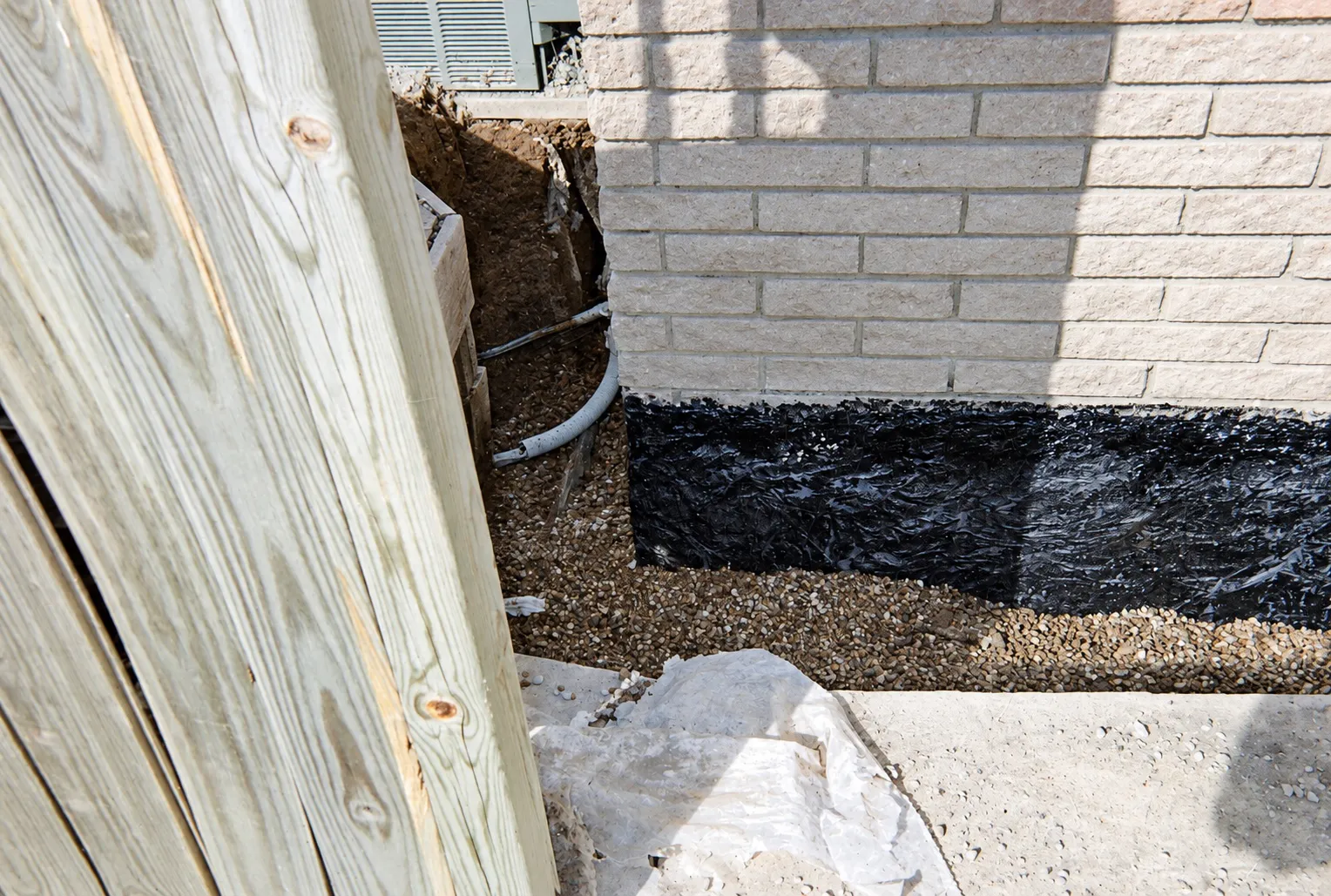
Clark Basement Waterproofing does exterior work only, dug by hand. We dig to the footing, seal cracks with hydraulic cement, apply a tar coating and a waterproof membrane, lay new drain tile and pea stone, then backfill and restore the yard. Most jobs take 3 to 7 days. Clark gives a written 10–15 year warranty; the length depends on the job. See our process and the warranty, and keep the warranty and invoice with your policy papers.
Estimates are free, written and done at your home. Request one, and we’ll show you where the water is coming from and what it takes to stop it.
What should you ask your insurance agent?
Ask before you need to file. These questions cover most of what matters for a basement:
- Does my policy exclude groundwater seeping through the foundation?
- Do I have water and sewer backup coverage? What is the limit, and is it enough for my finished basement and what’s stored there?
- What does my backup coverage exclude?
- Is my home in a mapped flood zone, and should I consider flood insurance?
- If water gets in, what do you need from me to file a claim?